
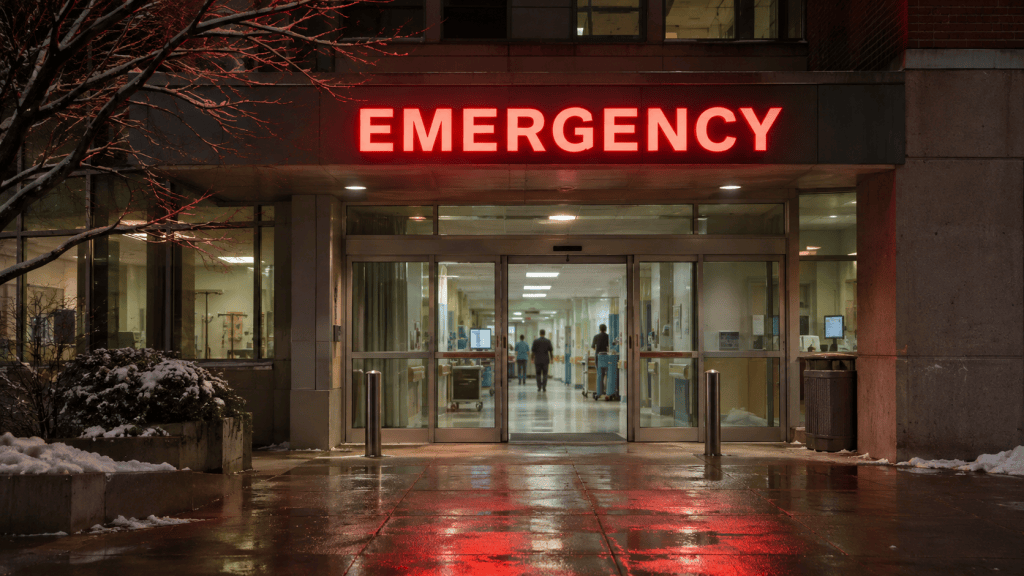
The speciality of “emergency medicine” is a lie.
New graduates flock to it, with visions in their head of high drama and quick splinting. It promises excitement—an extreme way of living that appeals to the young and restless, where quick thinking and a vast repository of knowledge are required. It sounds so sexy, too. Traumas. Cardiac arrests. Mangled cars. Open fractures. Life and death. Just another Tuesday. What do you do with your life? Excel spreadsheets? Ha!
All lies.
So what is emergency medicine (EM) then? Well, here in New York, you are essentially the primary care physician of last resort. It’s very difficult work, and nothing about it is sexy. Most PAs I know last about five years in the ED.
It is the end of December, and I just finished my EM rotation. As a student, there wasn’t much I could do, so I spent a great deal of time watching. While pondering the nature of my existence, I slowly realized there are three general types of patients who present.
I used to think the whole “hairspray bottle stuck in the rectum” thing was a medical urban myth.
It’s very common to see an individual having a mental health crisis. Maybe he was exposing himself. Maybe he (or she) was screaming at people (or no one) on the sidewalk. Maybe the patient was found in overdose and unresponsive on a park bench. Perhaps mom or dad with advanced dementia wandered off and was picked up by EMS. Occasionally, folks incapable of managing their chronic disease, like diabetes, are found down by a neighbor and brought to the emergency department (ED) against their will. Now, because of the untreated ulcer, they are at risk of dying imminently from septic shock.
Collectively our society has decided not to care for these people in any meaningful way, leaving it to our nation’s first responders and hospital staff instead. Individuals in mental crisis absolutely do not belong in a busy ED. The risk of violence, against themselves or others, is high. EDs are geared for fixing physical threats to life, not disorders of the mind. While psych EDs exist throughout the city, they are few and often at capacity. A cycle of “treating and streeting” endlessly frustrates health care workers who want to help, but exist in an indifferent system shaped by our public priorities and polices. It is here where burnout, a cancerous force that poisons a person’s empathy, takes root.
Another common type of patient is the chronically ill patient who experiences a sudden exacerbation of their chronic illness. An 85-year-old patient who cannot swallow ate food, which aspirated into the lungs, and now arrives with a life-threatening lung infection for the fourth time this year. A patient with advanced heart failure has an exacerbation, and presents filled to the brim with fluid and cannot breathe because their lungs are compressed and juicy. (Lungs should not be juicy.) I’ve treated patients who begged their caregivers to let them die at home, but the caregiver, a human doing their best during extraordinary emotional duress, cannot stand the suffering and calls 911 anyway hoping for some type of relief. The patient dies in a noisy hallway waiting for a bed upstairs. They were never going to get better because there was nothing to be done except provide comfort. EDs are not comfortable.
I’ve almost died, and it wasn’t scary. Imagining dying, however, is terrifying. In U.S. culture, we do not give it much thought until we have to. This is a mistake. Those who think about it least tend to have the hardest time when you-know-who arrives for a loved one. As healthcare workers we want to help. Everyone tries so hard, but we often find ourselves constrained by hospital systems buckling under overwhelming patient volumes.
The last group of patients are otherwise healthy people who have experienced a life threatening trauma. Without intervention they will die within hours. Or less, depending. These patients are the focus of television shows, at least until The Pit. These are the stories ED workers tell at cocktail parties. Often they have positive outcomes because the U.S. medical system excels at treating acute trauma. A person comes in with chest pain, and through immediate intervention heart muscle is saved. A patient has a stroke, and through immediate intervention we bust the clot and save brain tissue. A person is shot or stabbed, and we stem the bleeding and save their life. A person dislocates a shoulder, and we reduce it. A male presents with a hairspray bottle lodged …
You know, I used to think the whole “hairspray bottle stuck in the rectum” thing was a medical urban myth, like the guy you knew who microwaved his cat. Never really happens, I never expected to see it. Imagine my surprise, then, staring at an abdominal and pelvic CT scan depicting a slender, tall, tapered metal can firmly lodged into someone’s colon.

I digress.
I came this into rotation expecting to learn what to do when someone was dying. I hadn’t expected to spend so much time feeling helpless while listening to how they lived. That’s not the sales pitch, nor does it make for compelling television. ED workers are asked to solve in a few hours a problem months or years in the making. There is no procedure for that.
But we did get that hairspray bottle out.
See you in 5 weeks.
News of the Rotation
| Date | Major event |
|---|---|
| Nov. 12 | The record U.S. government shutdown ended. Trump signed a funding bill after 43 days of disruptions to federal pay, air travel and food assistance. |
| Nov. 19 | Trump signed the Epstein files disclosure law. The legislation directed the Justice Department to release investigative records, following intense bipartisan pressure. |
| Nov. 22 | COP30 ended with a disputed climate agreement. The U.N. summit in Belém, Brazil, reached a deal to increase support for vulnerable countries but omitted an explicit commitment to move away from fossil fuels. |
| Nov. 26 | A catastrophic fire swept through Hong Kong apartment towers. The Wang Fuk Court blaze engulfed seven residential buildings, killing more than 100 people and prompting arrests and scrutiny of renovation safety. |
| Nov. 26–27 | Two National Guard members were shot near the White House. Sarah Beckstrom died the following day; Andrew Wolfe was critically wounded. The attack intensified debate over troop deployments and immigration policy. |
| Dec. 10 | Australia’s under-16 social media restrictions took effect. Major platforms were required to prevent children younger than 16 from holding accounts—a world-first policy watched internationally. |
| Dec. 13 | A mass shooting at Brown University killed two students and wounded nine people. The attack in Providence, Rhode Island, triggered a major search for the shooter. |
| Dec. 14 | Gunmen attacked a Hanukkah celebration at Sydney’s Bondi Beach. Fifteen victims were killed in an attack Australian authorities described as antisemitic terrorism. |

