A Guest Dispatch from Dianne
From Singapore we flew almost southeast to Darwin, a good-sized port city on the northern coast of Australia. It’s not much of a tourist destination itself, but Darwin is the jumping-off point for visiting Kakadu and other national parks. There are lots of natural wonders to explore in the area.
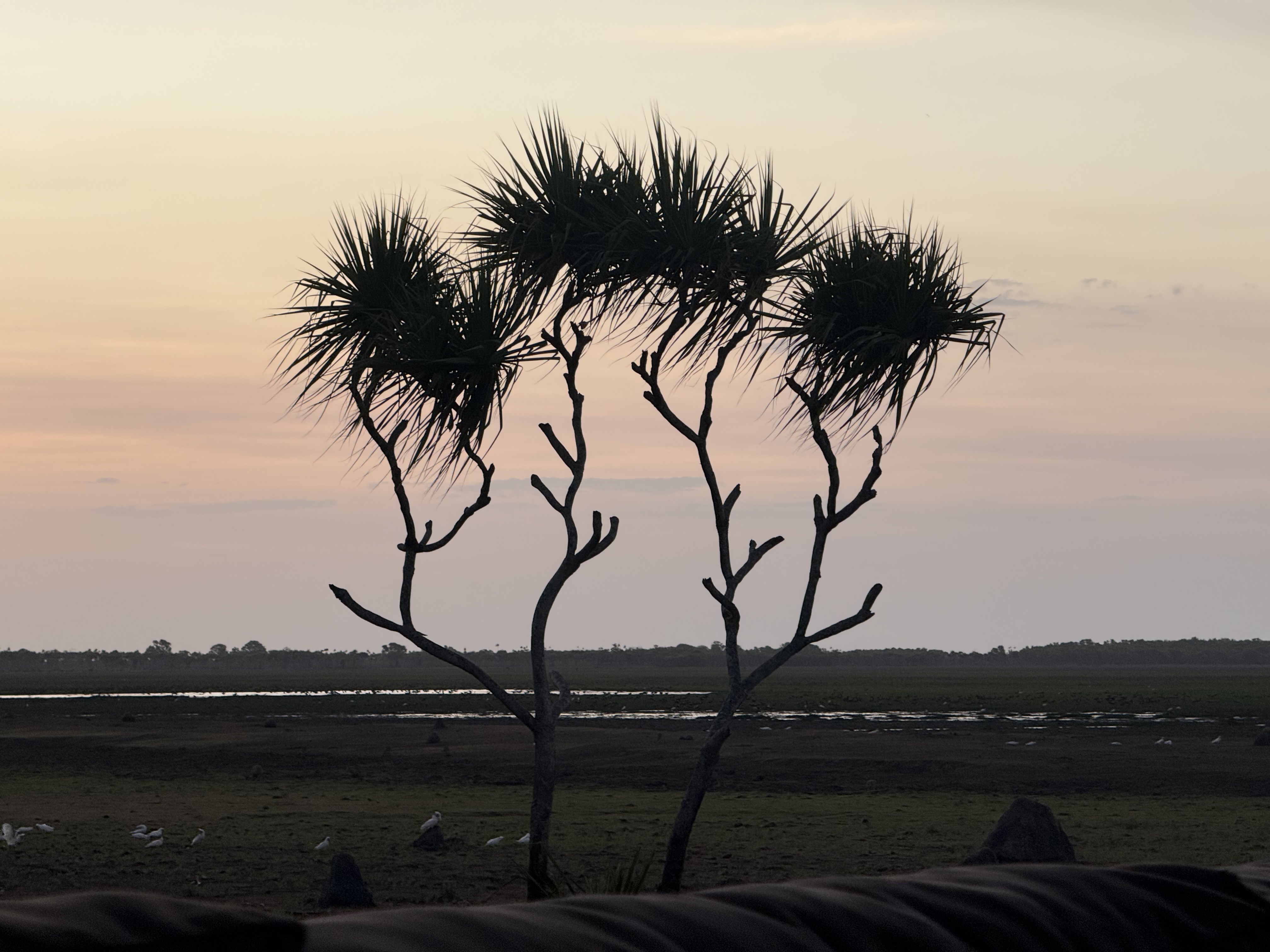
I wanted to visit the Australian Outback because a friend of mine had raved about its spectacular beauty. She was right that it’s beautiful, but it’s also strangely inhospitable. Like, you could disappear and nobody would ever find you. It’s an eerie feeling, being so isolated.
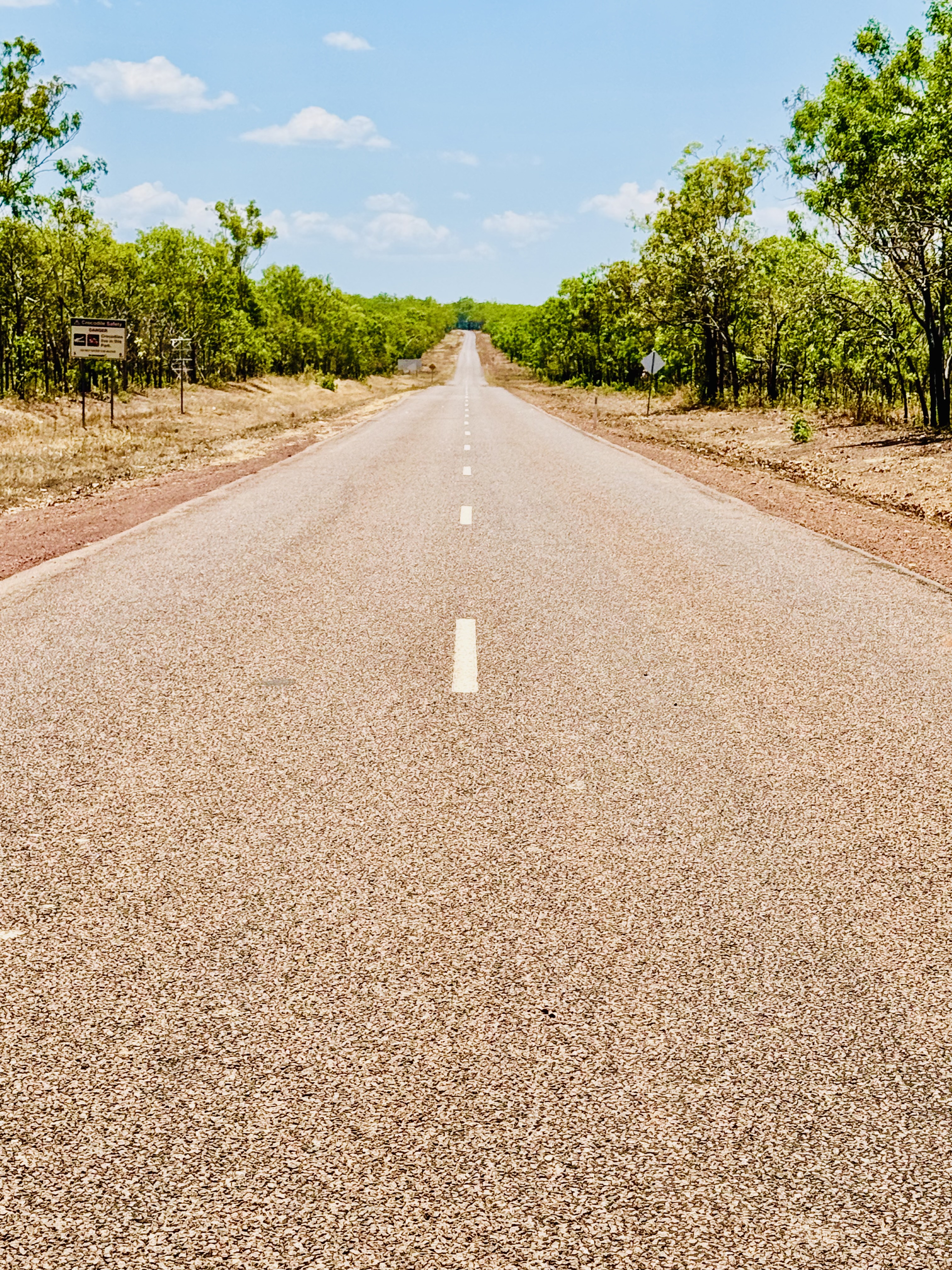
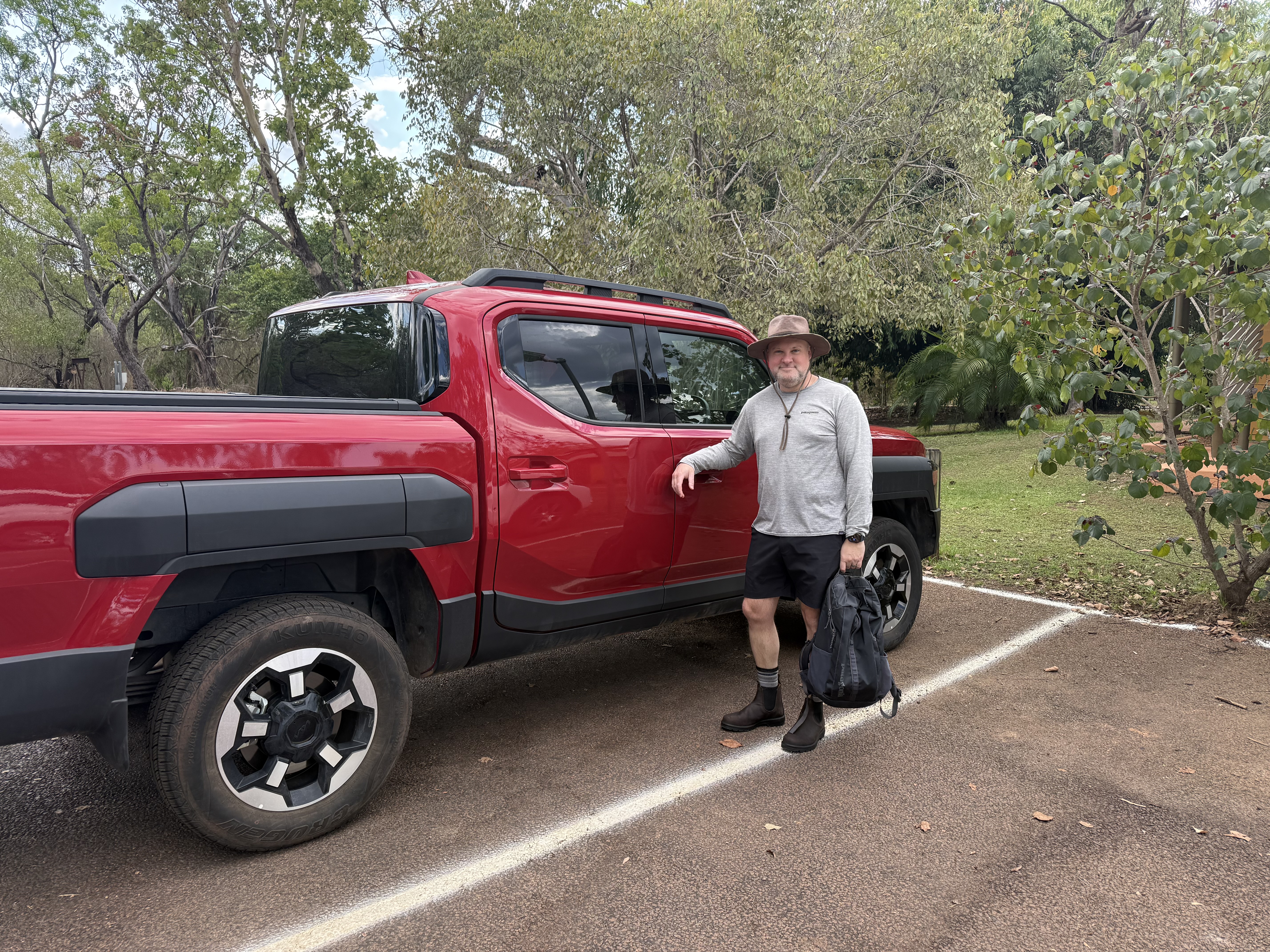
In Darwin the rental car company supplied a red truck, which Lance drove expertly on the left. It helped that the roads were well marked and traffic was sparse. One surprising sight was semi-trucks pulling three or four trailers behind them. They’re called road trains and are crazy long. However, they are an efficient method of transporting goods in a country that encompasses so many miles — sorry, kilometers — of empty land.
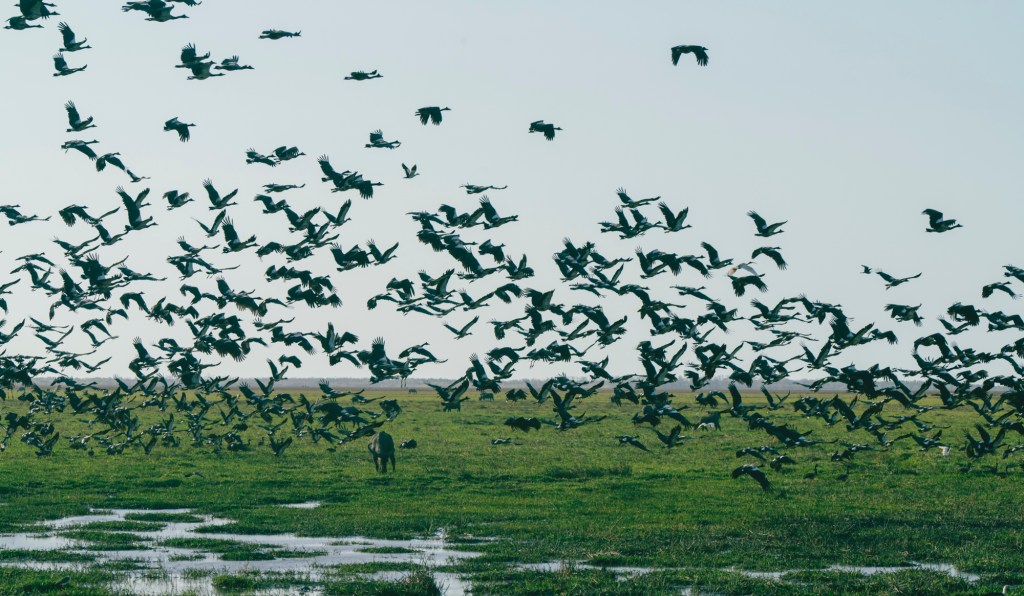
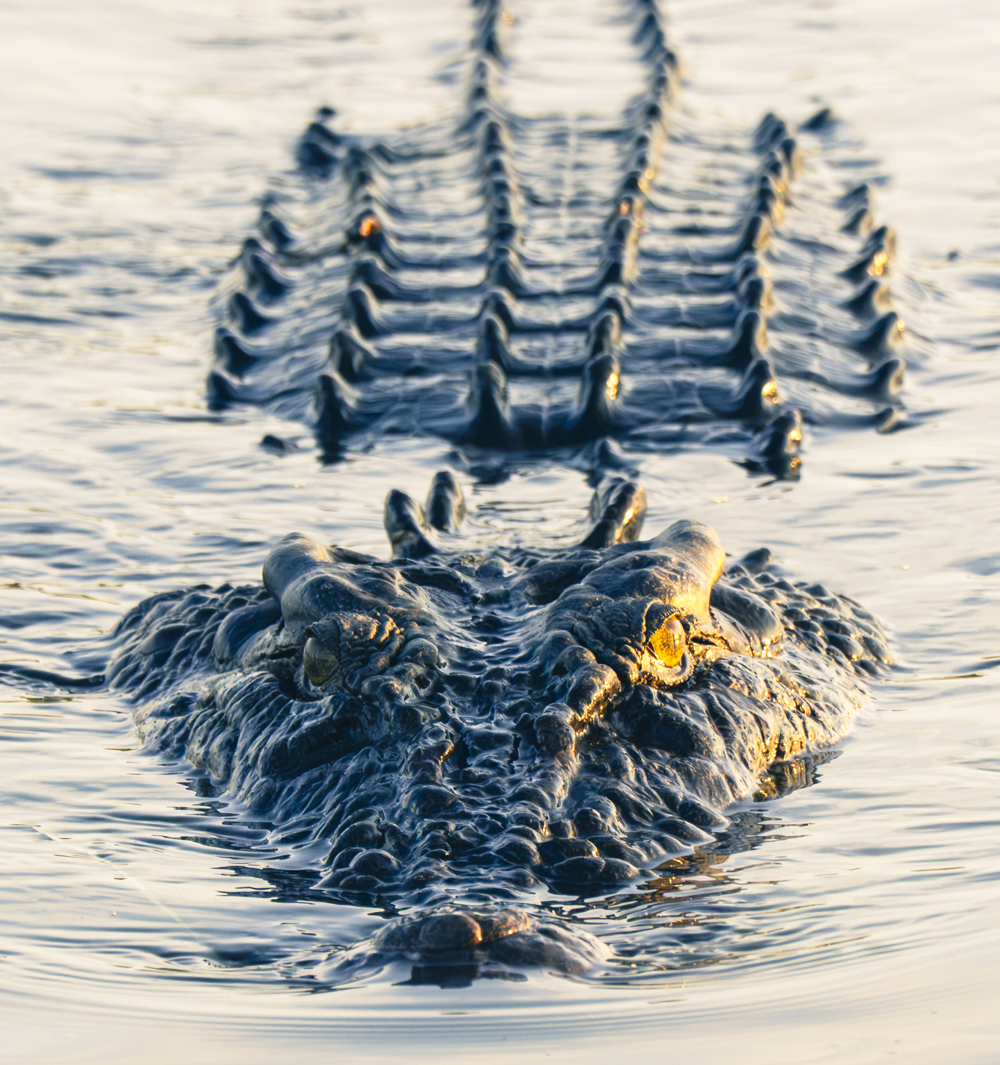
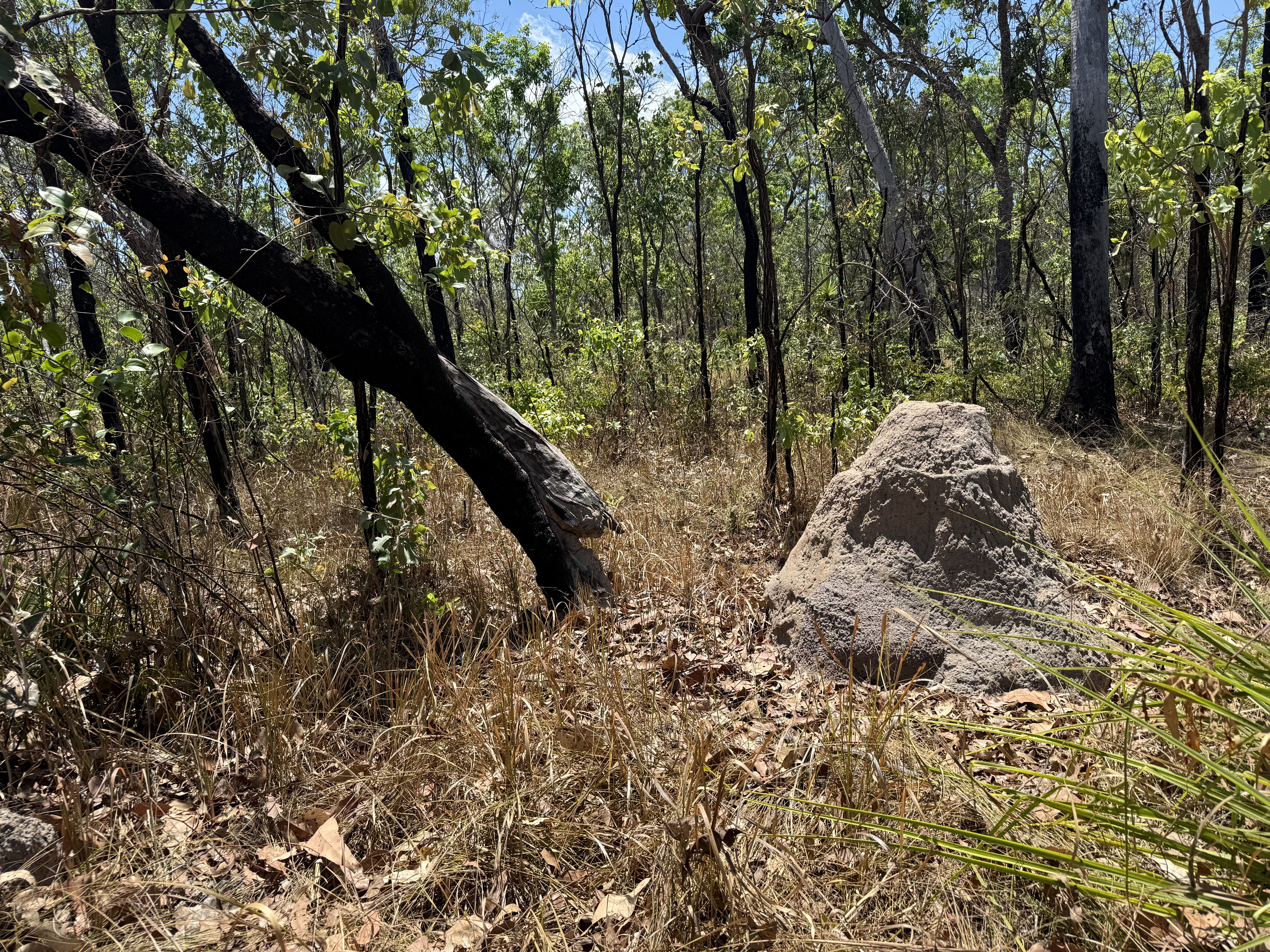
It was late September, so we were at the end of the dry season, which meant that water levels in the rivers were low. Fortunately, not too low, because boat rides were a highlight of our stay. For one thing, the wildlife — mostly crocodiles, birds, and buffalo — gathered near the water. Lance brought a camera with a super-long lens, which enabled him to take photos of the crocs as if he were nose-to-nose with them. Maybe they’re not evil. But they look evil. The termite mounds were cool, though, and the wallabies super cute.
We also visited an Aboriginal cultural museum, which explained how Indigenous peoples adapted to an environment that felt so inhospitable to us. They recognized six seasons rather than four, defined by changes in rainfall, weather, plant and animal life, and the availability of food.
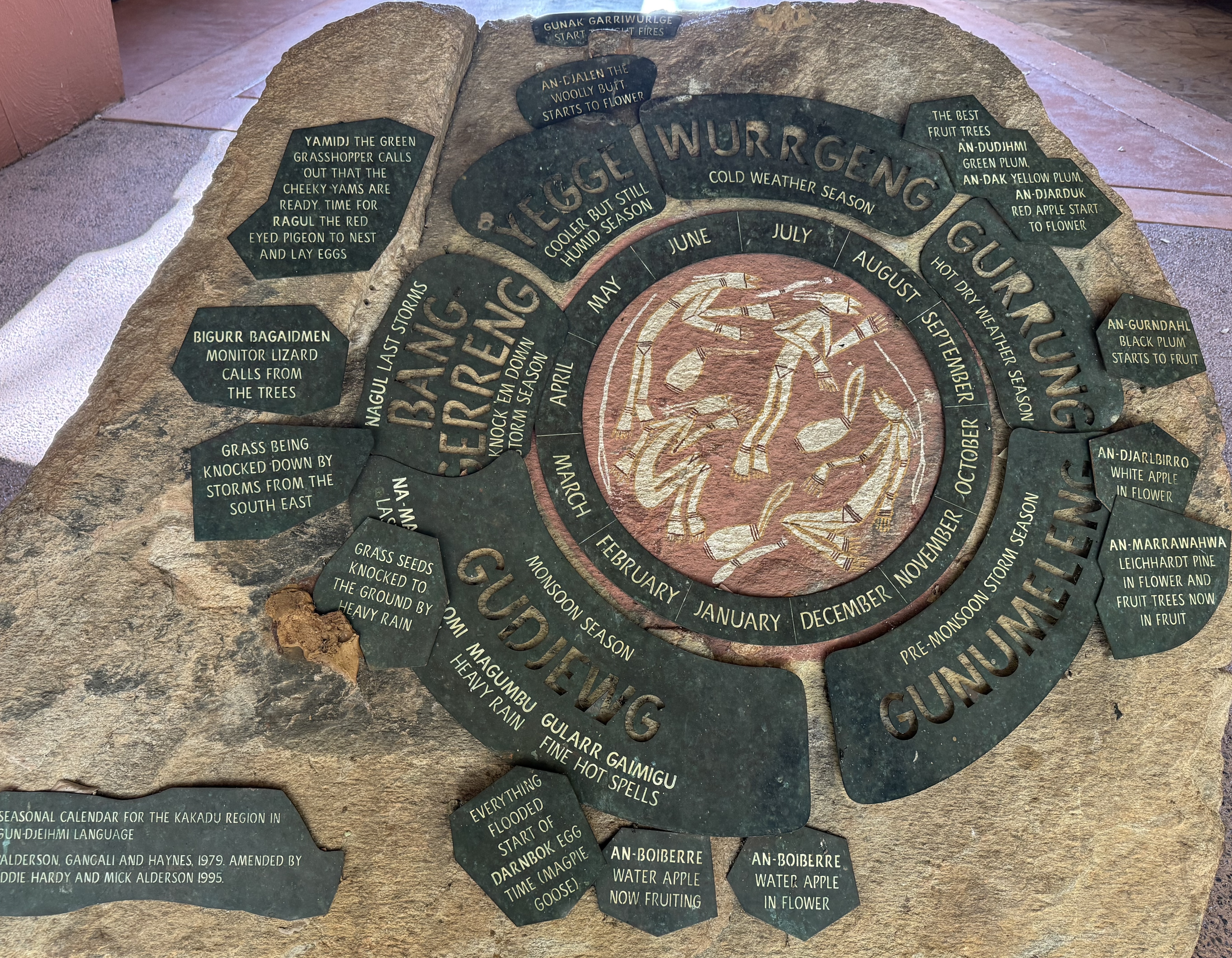
The Outback was interesting and certainly memorable, but the whole time we were there I felt like an interloper. It takes a lot of effort and resources to provide modern comforts so far away from population centers. Those comforts felt fragile. I was grateful for air conditioning and running water. Internet was limited, cell service nonexistent, and wildfires an omnipresent possibility. Visiting this unforgiving place was something I had always wanted to do. And will never forget.

