

We meet again, on an anonymous taxiway, inching our way to the runway and freedom from this concrete purgatory. I wonder if the Wright Brothers envisioned their heavenly invention would cause such Earthly traffic congestion. We have some time to discuss our destination.
New Orleans, or Nahorlens (one syllable), as the in-the-know say, is a city of roughly 370,000 people, or is about the size of Cleveland. New Orleans punches above its weight though. Cleveland, known for being a city in Missouri1, lacks the cultural gravitas New Orleans brings to the United States. About 1.2 million people live in the NOLA metro area, which encompasses 2,000 square miles. Chicago’s metro area is five times the size. New Orleans is a small city with an outsized influence on American culture.
America has only three cities: New York, San Francisco, and New Orleans. Everywhere else is Cleveland.
Tennessee Williams
New Orleans owes its existence to the Mississippi. Indigenous peoples called it The Misi-zibbi, which translates to “great river.” The French arrive on the scene in 1718, but the place had been a hub for many centuries prior. Native populations lived off the delta’s fertile soils and used the river to support a sophisticated society long before Europeans sailed westward.
After the French moved in, people the world over brought their business to New Orleans. Their culture followed. With everyone living smashed together, cross pollination flourished. New styles of music, cuisine, language, architecture, and religious tradition emerged as old cultural bits coalesced into something new. These contributions grew to have impact well beyond US shores.
Annually 19 million people visit New Orleans. About 8% are international tourists, who endure jet lag and soul crushing humidity to visit this gem that is convenient to neither coast.
There is no place on Earth even remotely like New Orleans.
Anthony Bourdain
Today, New Orleans remains one of the busiest ports in the world. In another timeline, it probably would have become one of America’s dominant cities. But the construction of the Erie Canal in upstate New York shifted the balance of power northward, helping make New York the dominant port of the young United States instead of New Orleans. Before the canal, New Orleans was the only efficient gateway between the growing American interior and global trade. New York gets a lot of attention, sure, but before New York dominated American commerce, New Orleans was already shaping it.
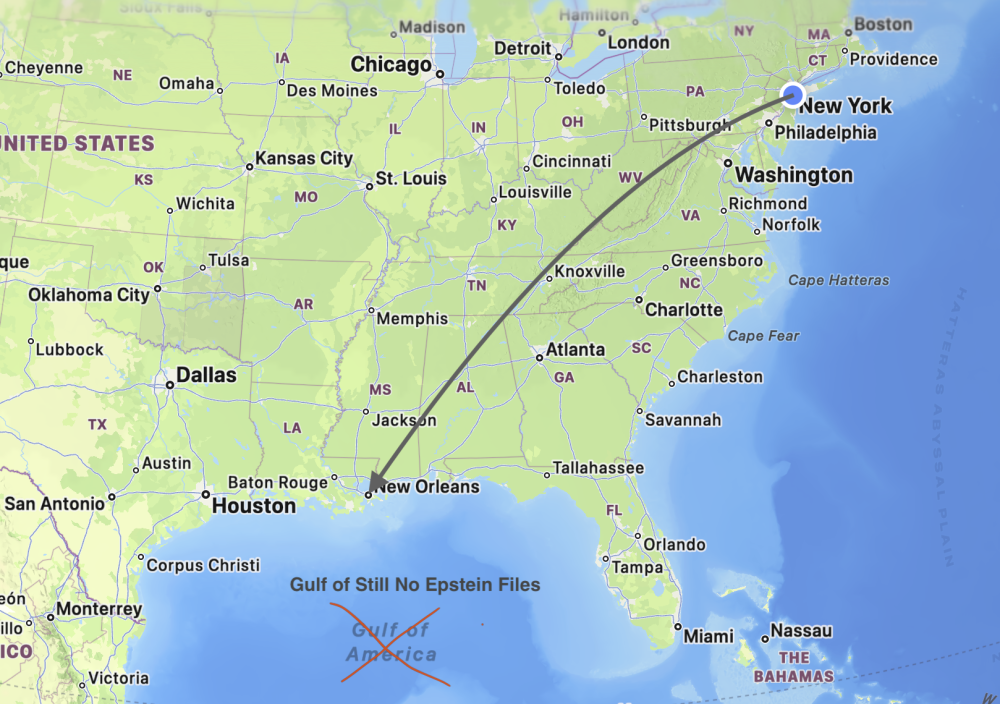
Both gateway cities occupy a large part of the US psyche, both cites are quintessentially American in my opinion: weird, contradictory mixes of things that shouldn’t, but somehow, work together, and together thrive beyond expectation. If these kind of cities exist in other nations, I haven’t found them.
In New Orleans, culture doesn’t come down from on high, it bubbles up from the streets.
Ellis Marsalis Jr.
The juxtaposition is not all marching bands and beignets. Denial and engineering collided to make modern New Orleans possible, but an inescapable fact is much of the city sits below sea level and continues to subside. Graves are built above ground because of this. Massive pump houses move water back toward the sea, held at bay by levees and aging infrastructure put brutally on display during Hurricane Katrina.
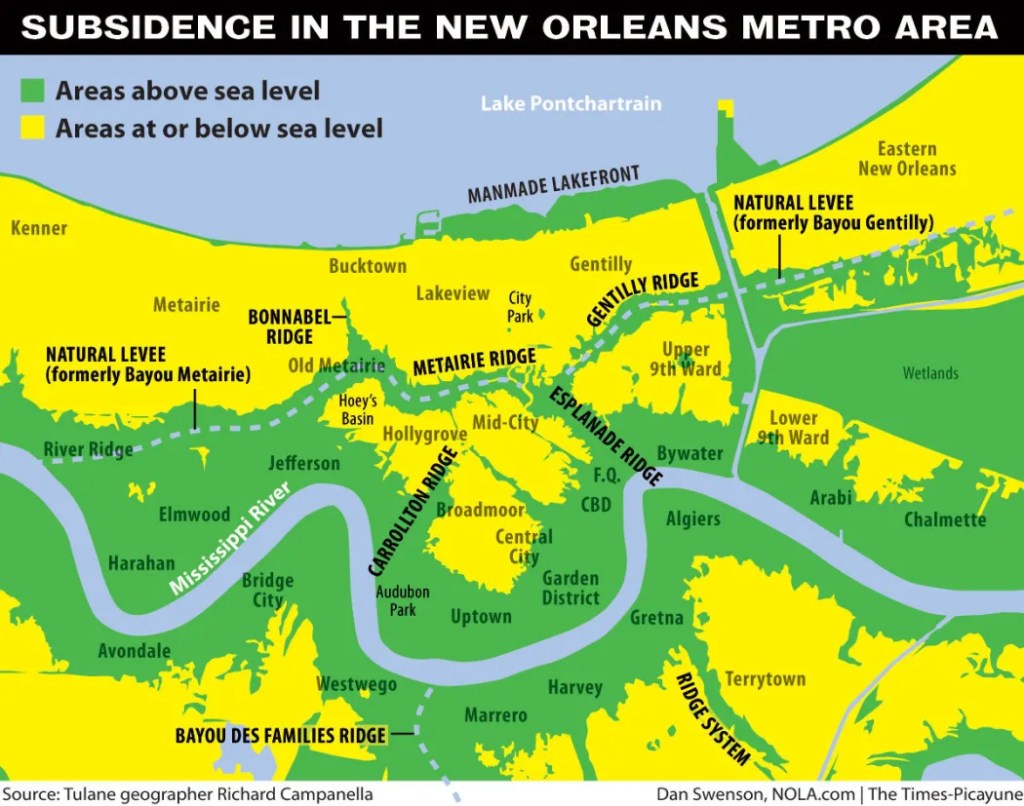
The city lost over half its population in the aftermath of the storm in August 2005, and many never returned. 2,000 died, and hundreds of thousands were displaced. New Orleans, against reason, stubbornly continues on.
Seems like once people get here, they don’t know exactly why, but they really don’t want to leave.
John goodman
Today, multiple overlapping economies give the city its punch: tourism, medicine, oil and gas, shipping, and the arts. If we have to pump out the entire Gulf of Mexico to keep it alive, then by God, that’s what we’ll do.
From Delta 1368, departing JFK and heading to MSY, via runway 3 1 Left, we are cleared for departure. Let’s go visit the city that exists because centuries of stubborn humans collectively decided it would.
- I know, I know. It’s actually in Michigan. Relax. ↩︎
- Campanella, Richard. 2018. “New Orleans Was Once Above Sea Level.” Open Rivers: Rethinking Water, Place & Community, no. 11. https://openrivers.lib.umn.edu/article/new-orleans-was-once-above-sea-level/. ↩︎


You must be logged in to post a comment.