
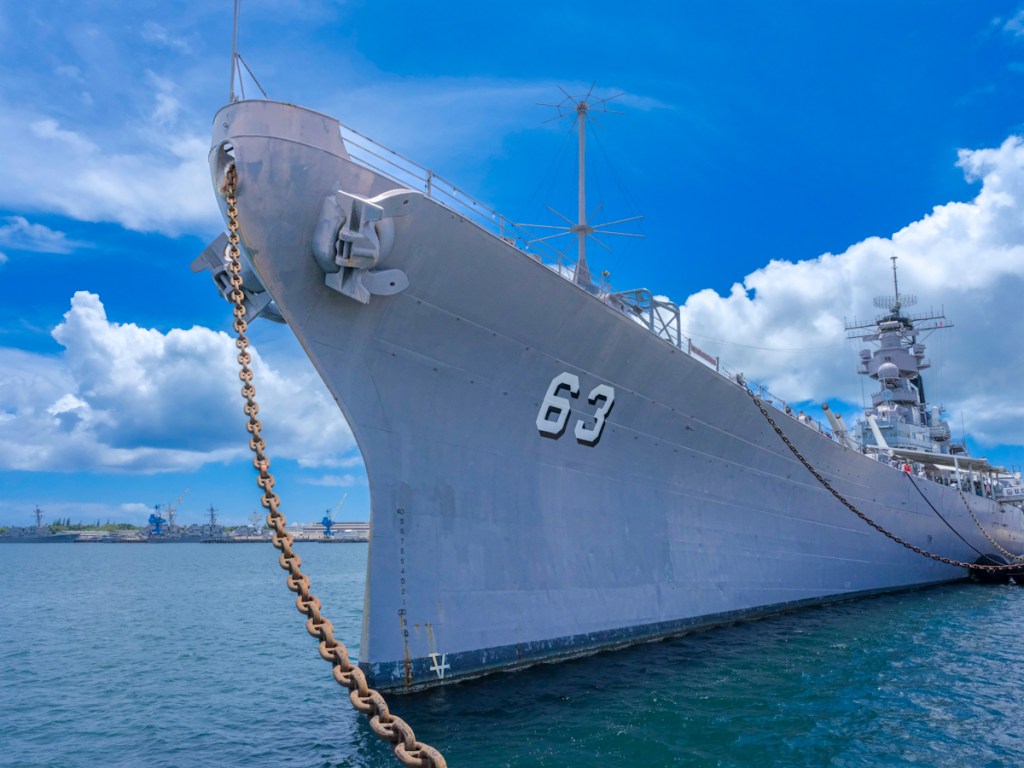
On our way home, we flew through Honolulu. I wanted to mention our tour on the Iowa-class battleship, USS Missouri. We paid extra for a below deck tour of the engineering spaces, which included the boiler room, the generator room, and one of the firing rooms.

The Missouri was built in the late 1930s/ early 1940s and commissioned in 1944. Nicknamed Mighty Mo, its top cruising speed was an impressive 33 knots, or about 40 MPH. That’s fast for a boat this size. The official surrender of Japan on September 2, 1945 took place on her deck. She was decommissioned in 1955 but returned to service when Regan wanted a 600-Ship Navy (we got to 594). The need for a Navy that size had long past, but his mandate was actually to deter the Soviet Union from attacking. The message: If you dare attack, it won’t be easy. Our large navy meant they also needed a large navy, which strained their economy.
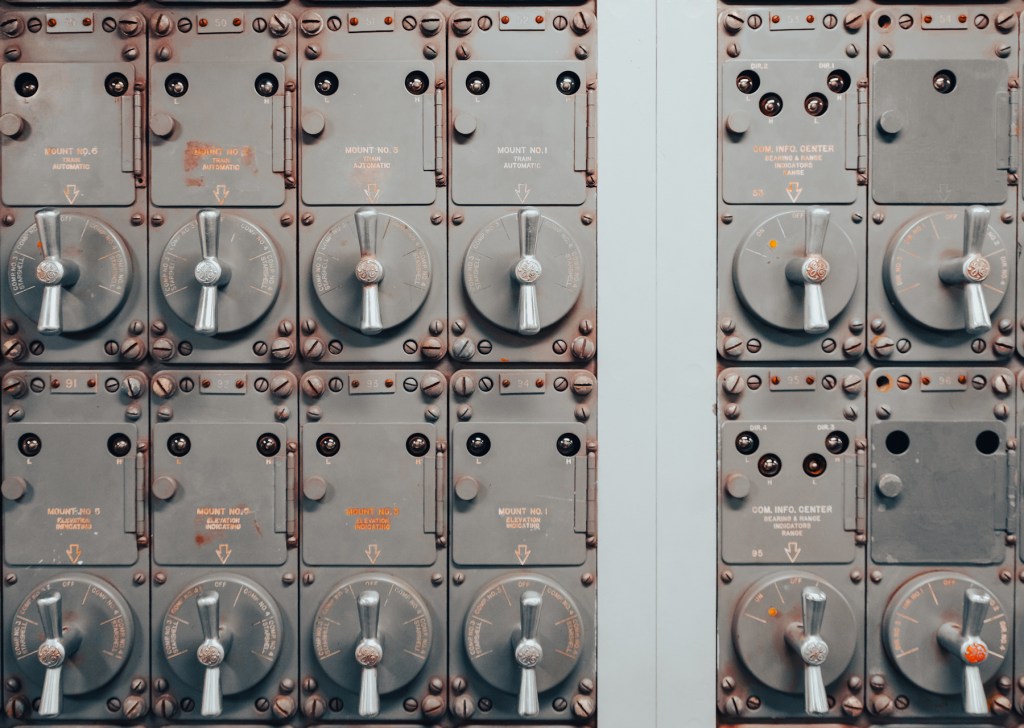
The Missouri was retrofitted in the ’80s and served in the first Gulf War. I, too, had a hard time remembering the reason for this incursion. Cast your mind back. Saddam invaded Kuwait thinking nobody would care. He invented some bullshit reason for the military action, his own Gulf of Tonkin. Turns out it was another massive tactical miscalculation: everyone did care. Unlike the Russia-Ukraine conflict, we got directly involved because Saddam did not have nuclear weapons and we didn’t like him. The Iraqi military heeled after a few weeks, and no doubt Russia’s army, if you can call it that, would too. However, the nuclear bomb thing puts everyone in a tough spot.
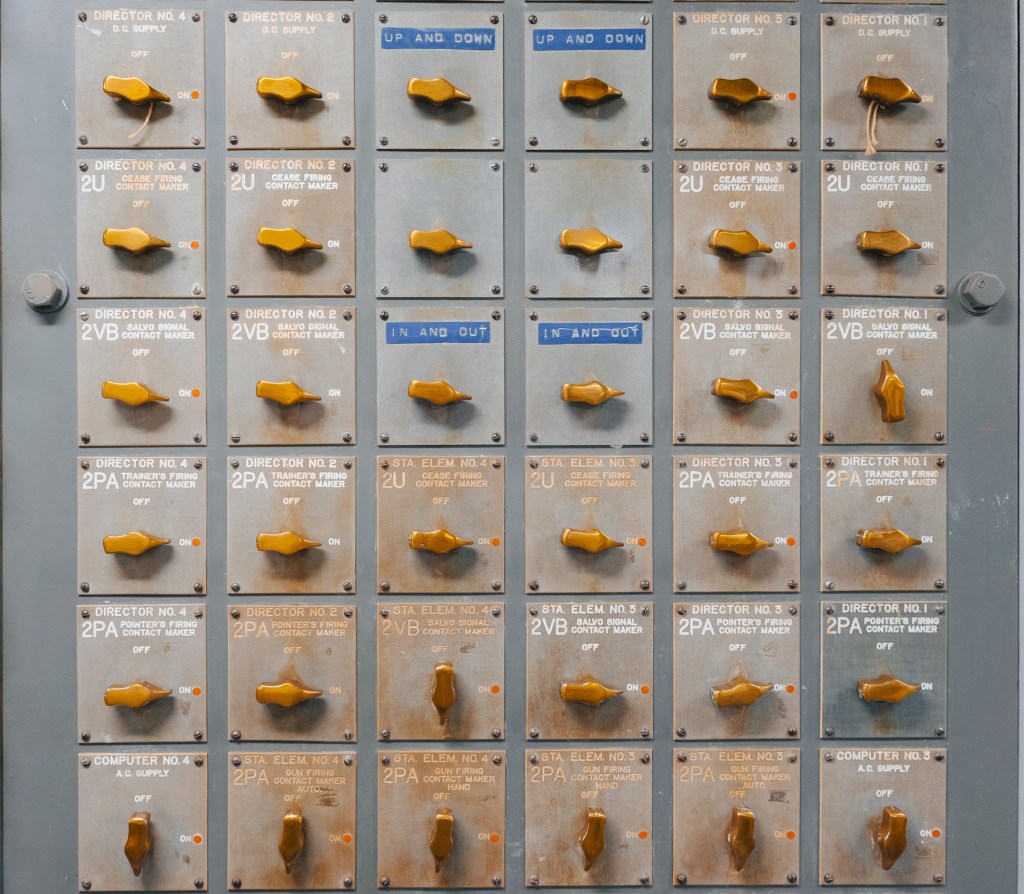
I digress. For the builders of the Missouri in the ‘30s to build a machine still functional 60 years later tells me a lot about who we were and the types of things we used to build. The Missouri came to rest at Pearl Habor as a museum piece in 1999. Now the boilers and generators are cool and quiet.
Ships essentially run on steam. A boiler (the Missouri has four) super-heats water which spins fans in turbines. These turbines generate electricity, and it’s this electricity that powers the ship. Nuclear powered vessels use a nuclear reactor to heat the water instead of burning diesel but` after the fission bit, it’s the same technology. Before diesel, sailors used coal. Ultimately, we’re just heating water. To “turn on” the Missouri, you lit a kerosene soaked rag and stuck it into the boiler, hoping the whole thing didn’t explode. This makes the “keys” to the ship a Zippo lighter. After ignition, it would take about 12 hours to get underway.
If you want to see more of the USS Missouri in action, check out the movie Battleship. The USS Missouri saves the day because of its age. The alien technology renders the modern ships inert but has no effect on our aging, heroic analog ship. I’m not sure why a space faring alien species would wage a sea battle. I’ve never watched the movie, it is apparently terrible. The Missouri is also the subject of many documentaries.
Before signing off, below are a bunch of dials and buttons from the submarine Bowfin. I do love a sexy instrument panel; probably why I got into lighting in the first place.

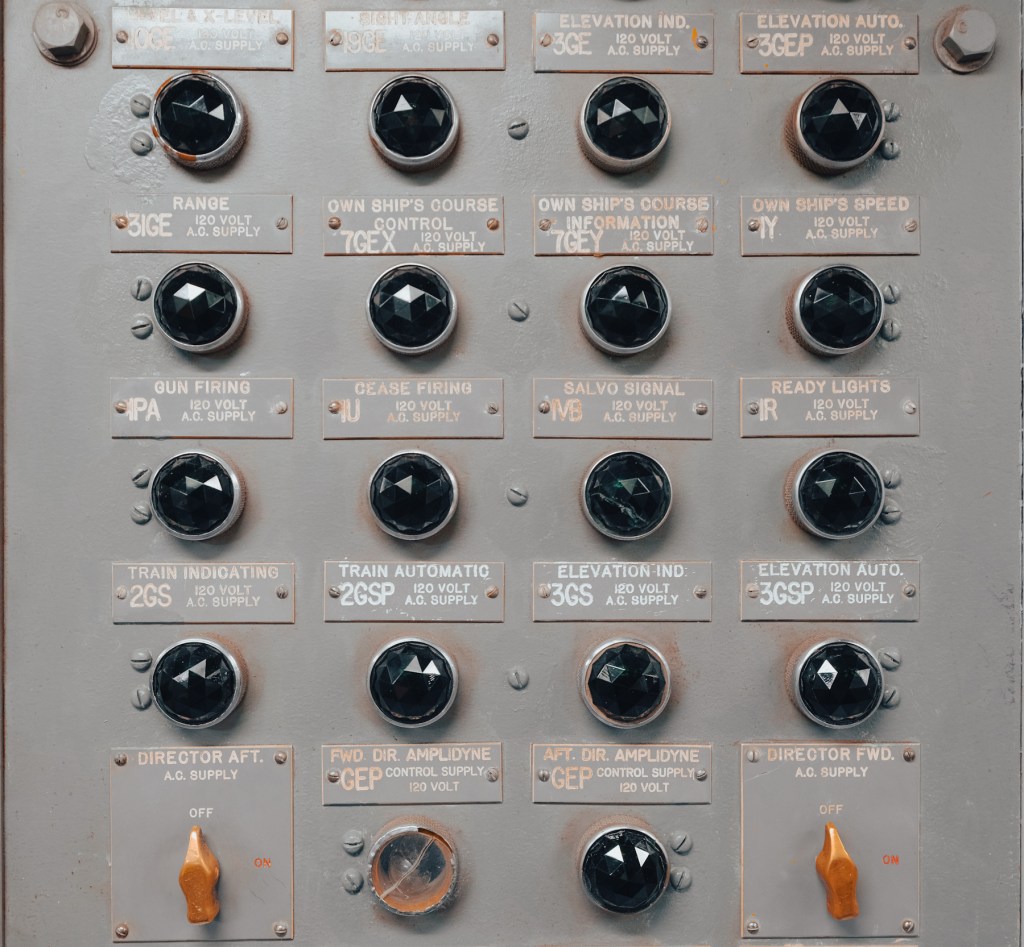
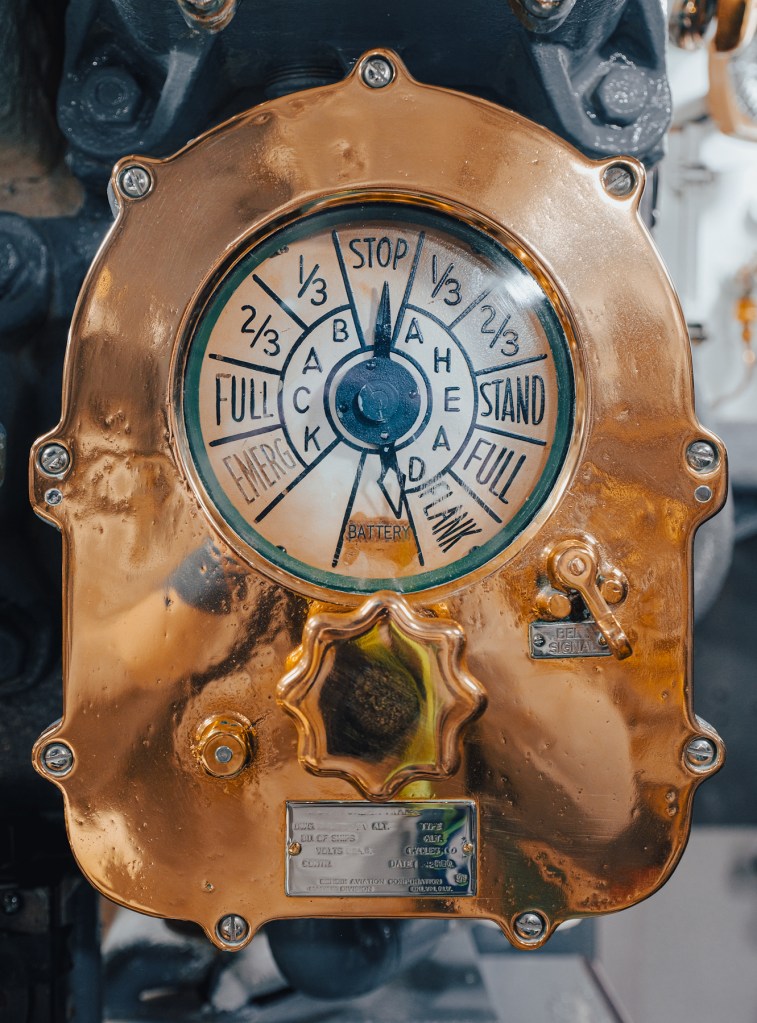
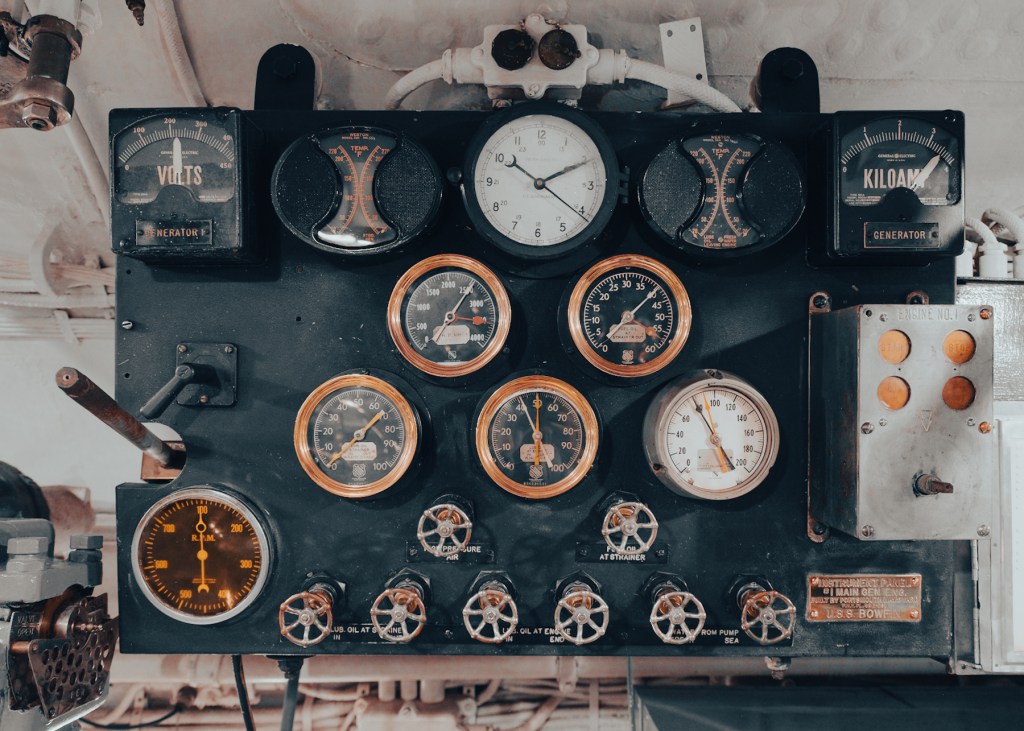
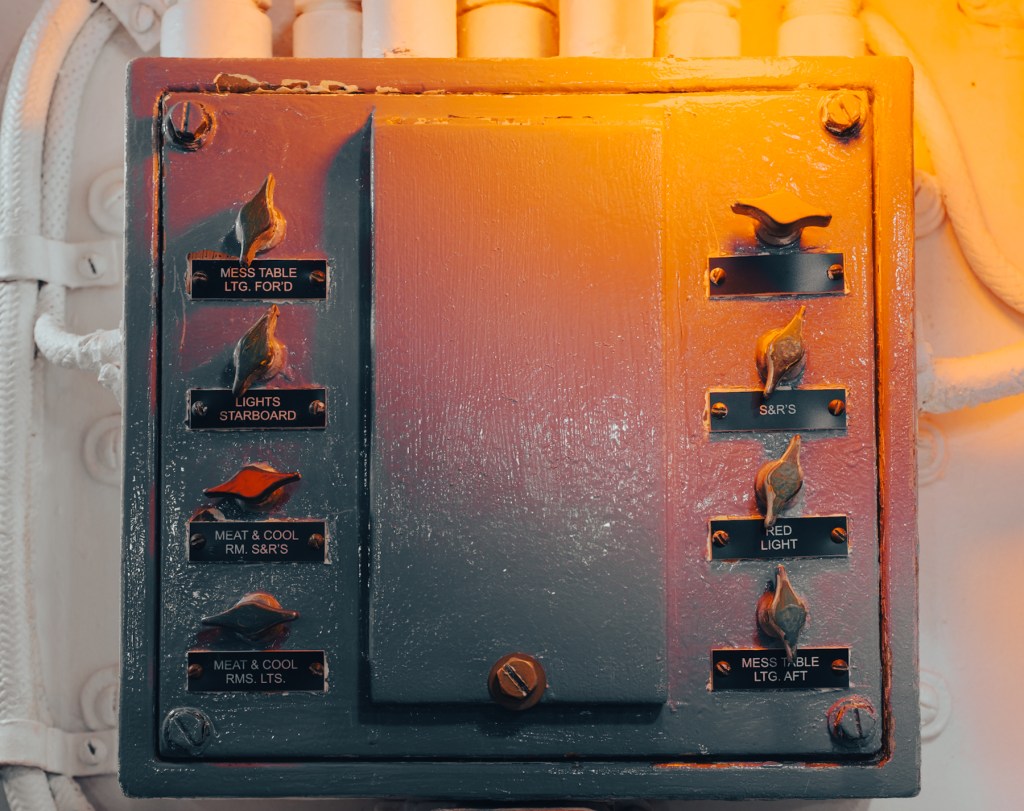
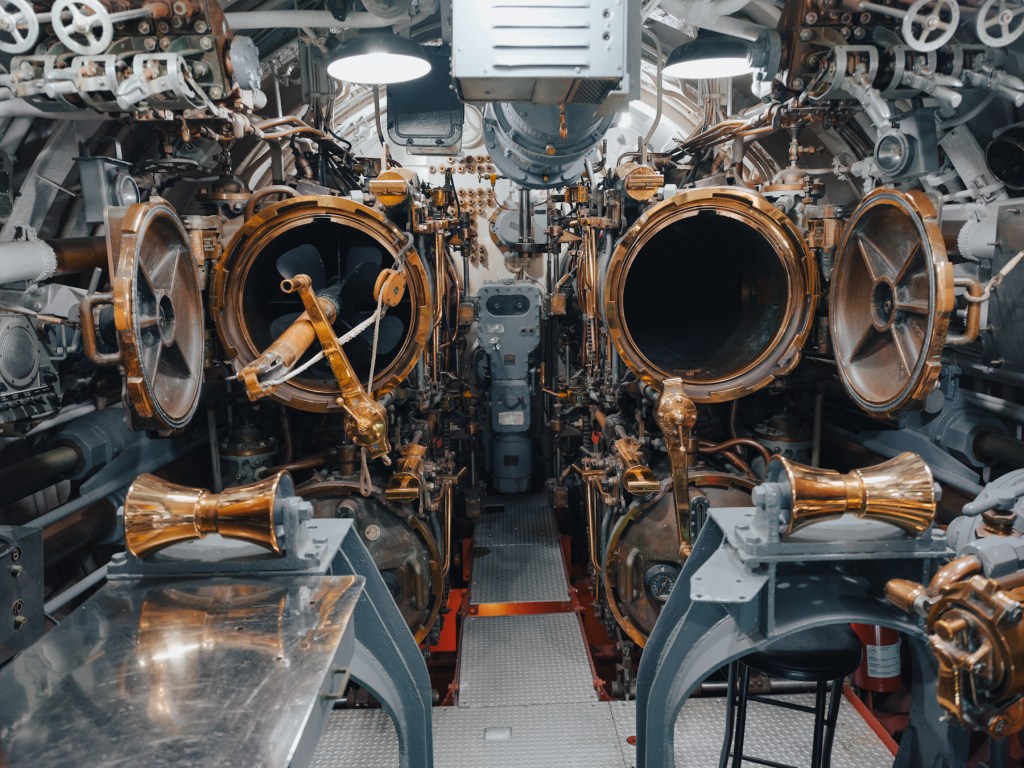
I was heavily recruited to join the military before graduating high school. The Navy guy who pitched me said, “We have a lot of buttons in the Navy.”
You’ll get this around the time we land, unless something goes horribly wrong. I’ll be asleep, so, don’t feel bad. One last post before I go back to school.
 Cleared for Departure
You must be logged in to post a comment.