
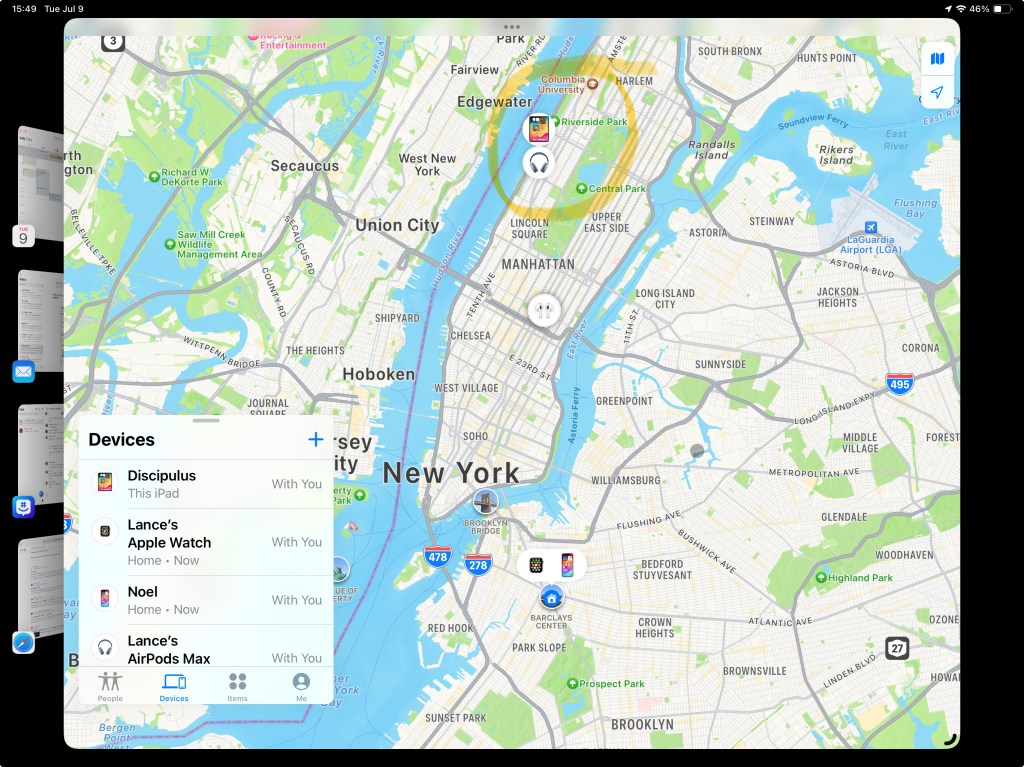
I’m not thrilled to live in Brooklyn. Apparently, my devices were recalcitrant at the new reality as well. My computer and headphones, which can be tracked geographically (because I tend to lose things), insisted for days after the move they still resided in the old apartment on Manhattan’s Upper West Side. Even after changing my home address, rebooting, cursing, staring in wonder at how this random error so cleanly created a metaphor too trite for fiction, nothing I could do compelled these objects to accept their new home in Brooklyn. In time the error quietly fixed itself. I know not how. I assume the devices just gave up the fight. I know the feeling. My phone and me, united in resignation. We moved July 4th weekend. I didn’t actually spend a weekend at our apartment until August 24th, choosing instead to hide in North Carolina.
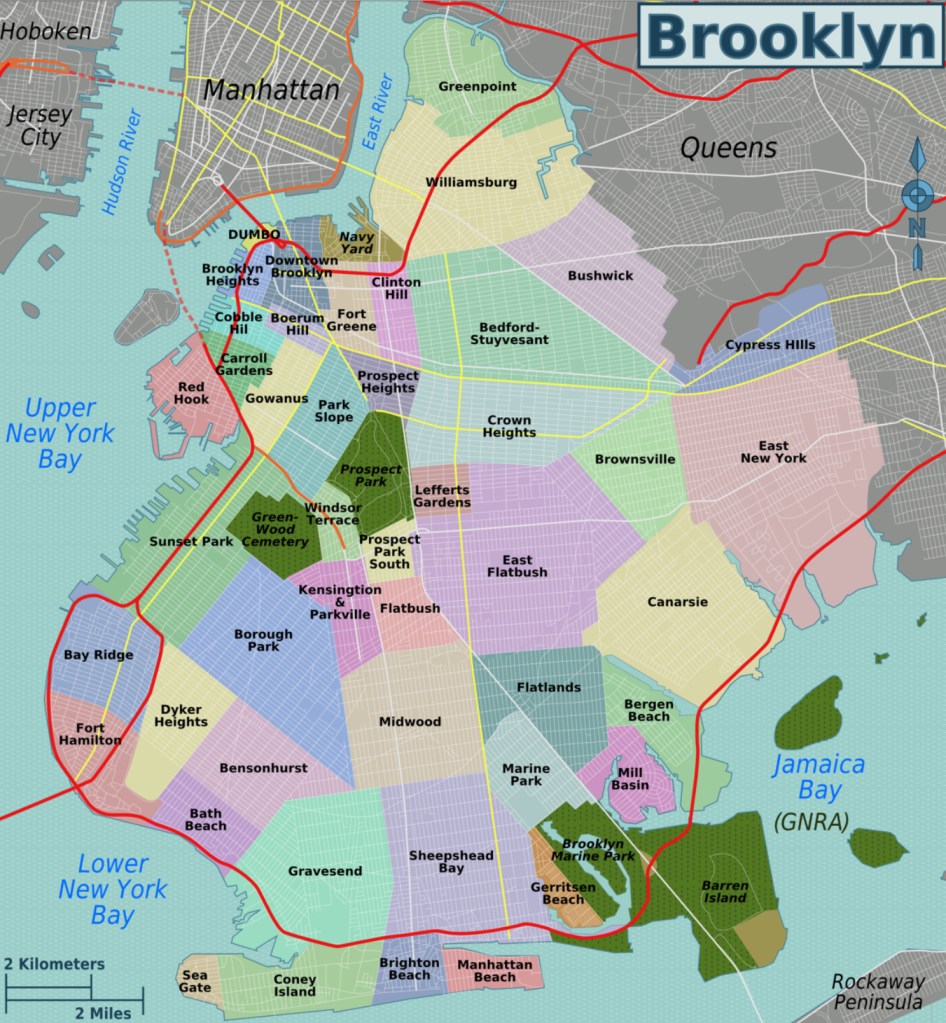
If you include a reluctant me, about 2.7 million people live in Brooklyn in roughly 70 square miles, making it the most populous borough in New York City. Unattached, it would be the 2nd largest city in the U.S. (In this scenario, L.A. would be first). With some fancy math, we come to a population density of 62 people per acre of land. Manhattan is 117 people per acre, whereas the U.S. average is 1 person per 7 acres of land. Brooklyn is 455x denser than much of the U.S. To visualize an acre, picture an American football field without the end zones.
Packed in tight is an incredibly diverse population. Whites comprise about 36%, African-Americans 27%, Latinos 19%, and Asians about 13%. Manhattan is similar except for two main differences. Whites constitute about 46% of the population, while African-Americans only 12%. This echos my experience on the Upper East and West Sides of Manhattan: super duper white.
I’m attending Long Island University located in Downtown Brooklyn, a neighborhood just off the Manhattan and Brooklyn Bridges. The main campus is located in Brookdale, on Long Island’s north shore, which I will never visit. I hear it’s nice. The Brooklyn campus is known for its business and medical programs, with connections to companies in New York City. Apparently the pharmacy school, The Arnold & Marie Schwartz College of Pharmacy and Health Sciences, is one of the oldest and most prestigious in the country. Or so I’ve been told.
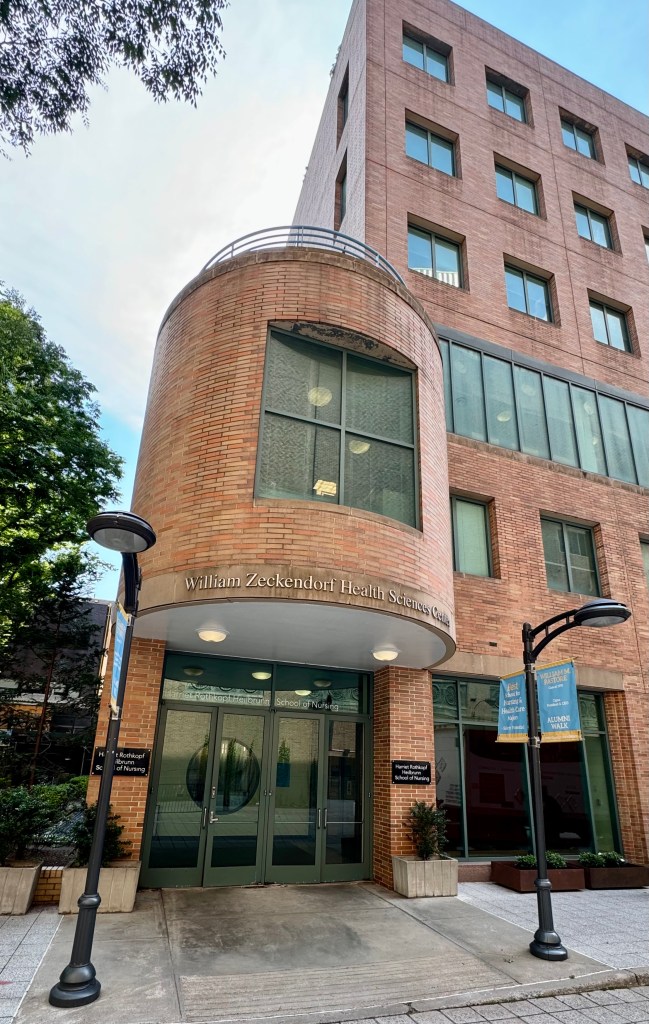
I opted for LIU for various reasons. One, they offered me a seat. That’s most important. Two, I like the close connections the school has to NYC’s healthcare industry. Three, their symbiotic relationship to Brooklyn Hospital (located across the street). Four, I got a good vibe during the interview from the faculty, which didn’t happen with every school that interviewed me. Five, it’s deliciously close to Juniors Restaurant (the original one), the well-known Brooklyn diner and cheesecake maker visited by tourists from all over the world.
About 40% of Brooklyn residents are foreign born. Half of Brooklyn speaks a language other than English at home. Originally the Dutch settled Brooklyn, called Breukelen in the 1640s, and their influence never left. The irregular, maddening street angles follow property lines of old farmland. Names like Brooklyn, Bushwick, and Flatbush with a little tweaking are Dutch words that mean, “Broken land”, “Town in the woods”, and, “Flat woodland” respectively. The word “stoop” comes from the Dutch as well and means a small porch or staircase in front of the house. In the Netherlands, the town of Bruekelen is a place you can visit, though I think it’s part of a larger municipality now. Just like our Brooklyn, which merged with New York City in 1898. Brooklynites have been butt-hurt about it ever since.
The Physician Assistant (PA) profession started in the 1960s at Duke University, a fact Duke has not let anyone forget. Originally, it was for military folks who had extensive experience in medicine while deployed but were not (and never going to be) doctors. We needed more health care practitioners and this seemed like an obvious solution. By the late 1990s, PAs were allowed to prescribe medicine in all 50 states and the profession has been growing aggressively ever since. There were about 170,000 PAs in practice as of 2022, a 75% increase from 2013.
Much of this growth is fueled by young people who should be doctors, who in years past would have been doctors, but for whatever reason (and there are many) decided it was not worth the effort or expense. The American Medical Association is concerned but have backed themselves into a corner politically. MDs and DOs are much more comprehensively trained, which means nothing if your area has no one. The Association of American Medical Colleges (AAMC) estimates by 2034 there will be shortfall of between 40,000 to 120,000 doctors depending on the discipline. Don’t get sick, not that most Americans can afford to.
Acceptance rates of all PA programs generally average around 20%, though for individual schools it can drop into the single digits. For Duke, it’s about 4%. They brag about it. There were 2,200 applicants for 90 slots. LIU’s acceptance rate is likely much higher, but specific numbers are not published. An entire cottage industry of consultants has arisen to help shape your application to be the best it can be. These services cost thousands of dollars and come with no money-back guarantee.
PA school is more “crash course” than typical graduate degree program. By design class meets 8 to 10 hours a day, 5 days a week. We are trained heavily in basic medicine and general practice. Tests and practicals are frequent. The academic load is extreme. During our clinical rotations we will continue working 70 hours a week in whatever specialty is assigned. Many are required — like OBGYN, pediatrics, geriatrics, emergency medicine — while others are elective, like neurosurgery. It differs by school.
This endeavor is, by far, the hardest thing I have ever done. The material is not complicated, just voluminous. Failure means removal from school, not to mention the time and money wasted. The constant hours of hunched over studying have altered my gait, shortened my stomach muscles, slowed my metabolism, worsened my eyesight, and my libido is but a distant memory of a bygone era. (Okay, I exaggerate, but not by a lot.) One student got shingles at the “advanced age” of 30. Others have had mass acne breakouts over parts of their bodies when none existed prior, and the OCD-like rituals of anxious classmates trying to soothe themselves could fill a psychiatric ward in a county hospital. People also cry a lot. Lots and lots of crying. Needless to say, I find all this chaos amusing … particularly the changes to my own body. “Oh,” I might think, “My teeth are falling out now. How novel. Whelp, time for class. Not like I eat anyway!”
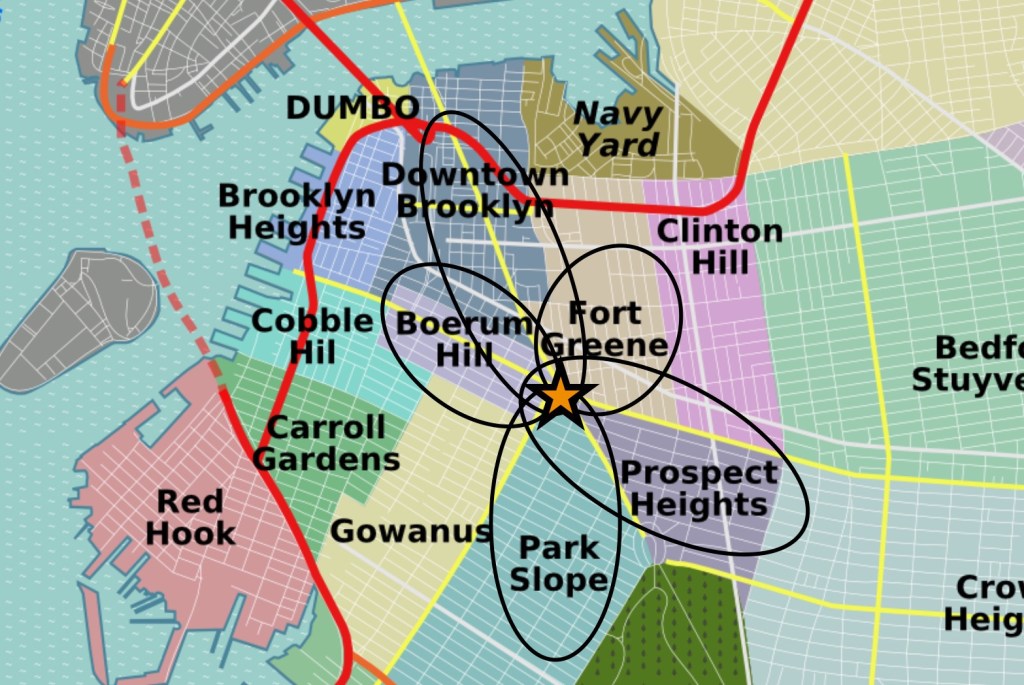
We live in a tall, glass building completed a few years before the pandemic. The building sits at the edge of several neighborhoods. The famous, well-heeled Park Slope is to the south, Boerum Hill to the West, Downtown Brooklyn and Fort Greene to the North, and Prospect Heights to the East. We belong to no specific neighborhood, but instead live in an odd vortex that’s centered on The Barclay’s Center, our next door neighbor. During basketball games or rowdy concerts the building noticeably sways. Events cause gridlock in the surrounding streets, and the frustrated honking is incessant for hours. It is so loud here.
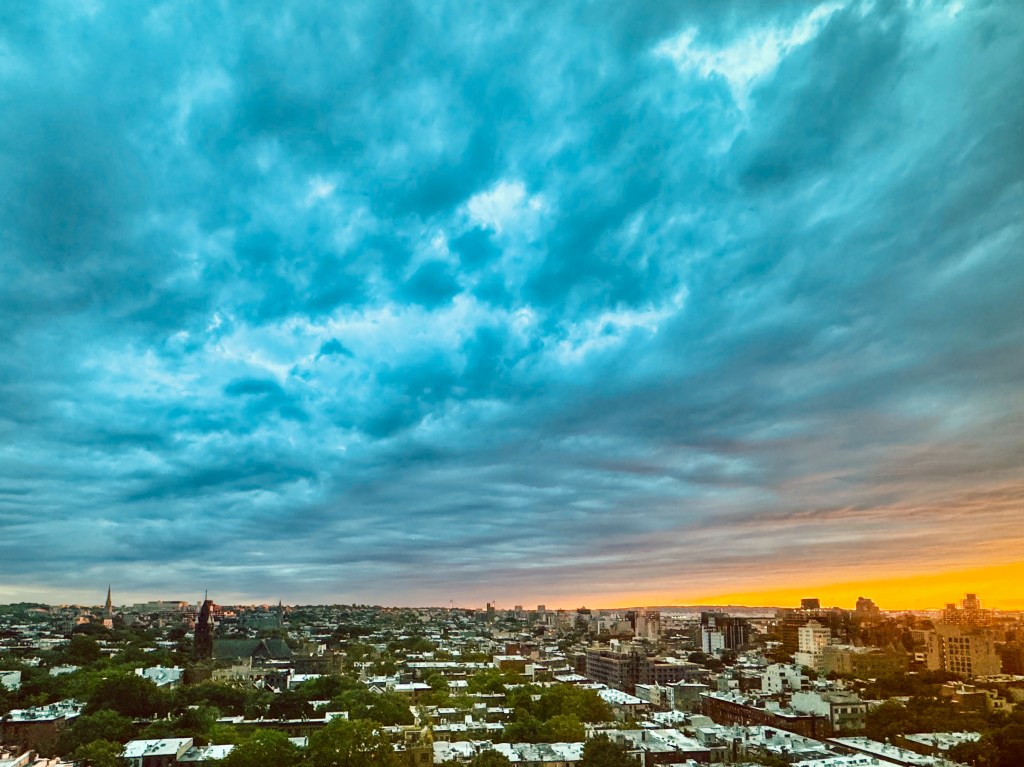
While the neighborhood sucks, our home is superior in every way to our Manhattan co-op. The view of Southern Brooklyn is divine; we can see for miles. I often watch the sunrise during morning coffee. Both RBD and I enjoy watching summer thunderstorms blow through. There is a roof deck with spectacular views. I feel connected to the solar cycle and sky, which I never felt in Manhattan and always missed.
Manhattan buildings are all about “the block” or “the courtyard,” with windows either facing the street, the main stage of city life, or the quiet inner sanctum hidden behind buildings. The world beyond those two places is an afterthought for us New Yorkers, which, I think, is what gives NYC its infamous, insular feeling of being the only place on Earth that matters. In Brooklyn, we see so much world and get so much light we never need to run the heat. At night we sleep with the AC on regardless of the outside temperature. I would love to sleep with the windows open, but the screaming, thick aroma of pot smoke, and lack of window screens preclude that option.
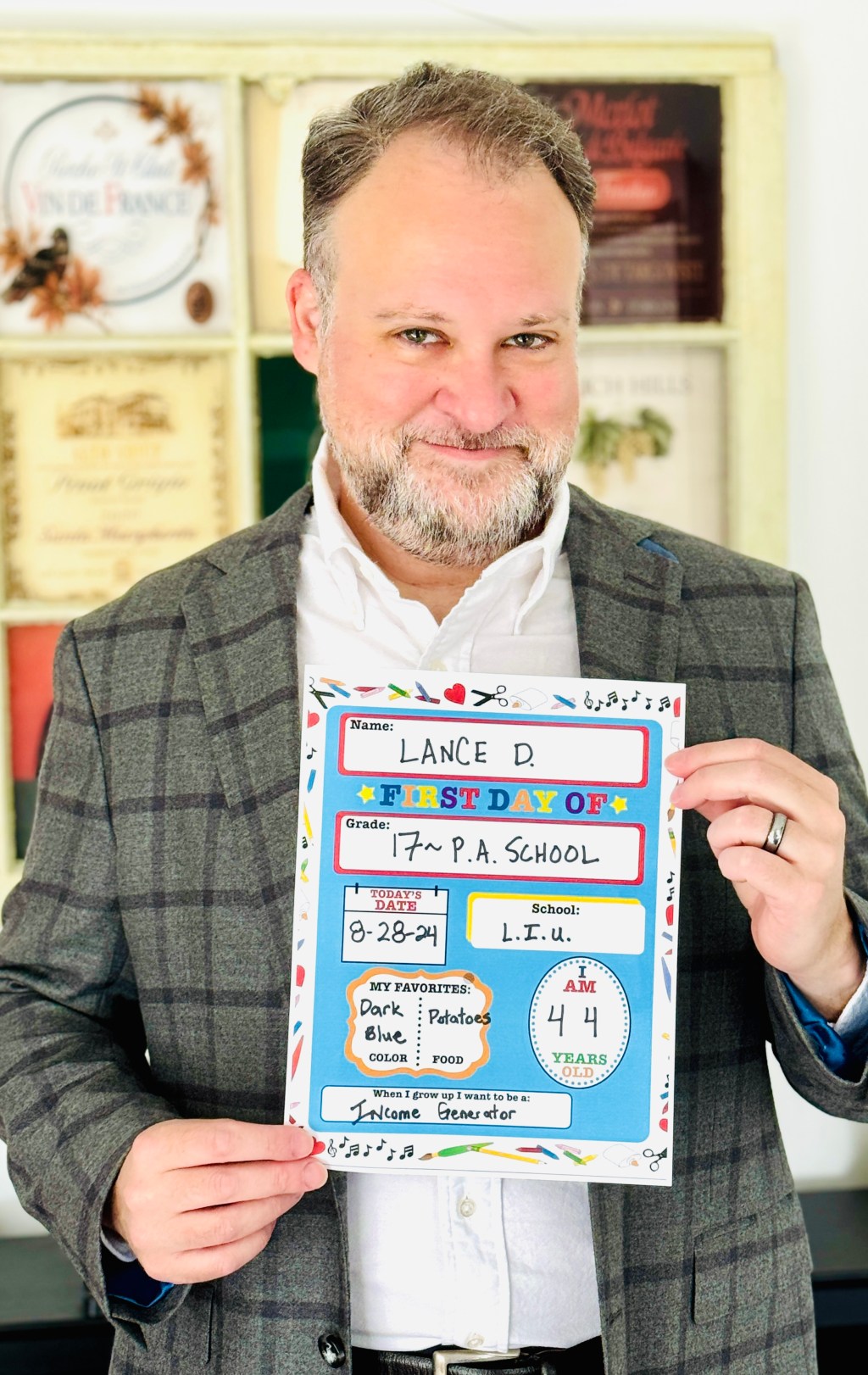
My PA program started with 42 people. One dropped out for unknown reasons after the first exam. Another dropped the week before Thanksgiving. I am the oldest by far. My classmates are young and beautiful, the way you automatically are in your 20s before bad habits and entropy establish a foothold in your body. If RBD and I had children, they would be a few years younger than these folks. My role here is to play the class uncle, a supportive and calming influence to their exaggerated youthful worries. Mostly this translates to me making sure they drink water at the bar and constantly reminding them they are all brilliant. Some of them drink concerning amounts of alcohol at a time, no doubt due to the pressure.
Academically, they are more gifted than I am or ever will be. I don’t say this as false modesty, my GPA hovers around a 3.0, the lowest allowed. It’s also the lowest GPA I have ever had in all my years of schooling. I had to have a talk with my advisor about my test scores and study habits. Looking at the testing statistics, one professor said, “You have an above-average understanding of the processes and below-average performance in straight recall.” This makes total sense. Tell me once the story of TB and I will never forget it. Ask me to memorize a 2nd generation Cephalosporin (a type of antibiotic) and my uncooperative brain drifts off into whatever dimension my outlandish dreams come from. It says to me as it flounces, “this bullshit can be looked up later, so don’t bother me with such a pedestrian task.” I try to reason with my brain, imploring it to pay attention because in PA school memorization is absolutely required. My brain, however, is an arrogant prick, and you can’t reason with arrogant pricks.
Despite all this, I am fine. I am still married. I am still healthy. I am still very fortunate to be where I am. My problems are good problems, faceable problems, and I count my blessings every night when I remember to. Usually, I pass out and dream dreams of tests I am unprepared for or diseases I should know more about. (Once I woke up reciting nerve innervations to muscle groups.) Still … all of this has been done before by many others before me. I follow in their footsteps. I will be okay.
In February, we will take a winter break to St. Barts. Stay tuned for pictures and commentary from the island only rich assholes visit.
Graduation is November 2026. Mark your calendars.
For now, I am going to sit back and let this plane take me to North Carolina, where a proper suburban Christmas awaits me and RBD. For a few days, I will be an adult again, and it will be a glorious change of circumstance.
January 2nd we go again for didactic semester 2 of 3.
Delta 5103 is cleared for departure from JFK on runway 4 Left, departing to the north with a right turn over Long Island. I’d best be going. I wish you all a most wonderful holiday season. Thanks for subscribing. We will talk again in February.
Goodnight.
 Cleared for Departure
You must be logged in to post a comment.