
The Lodge
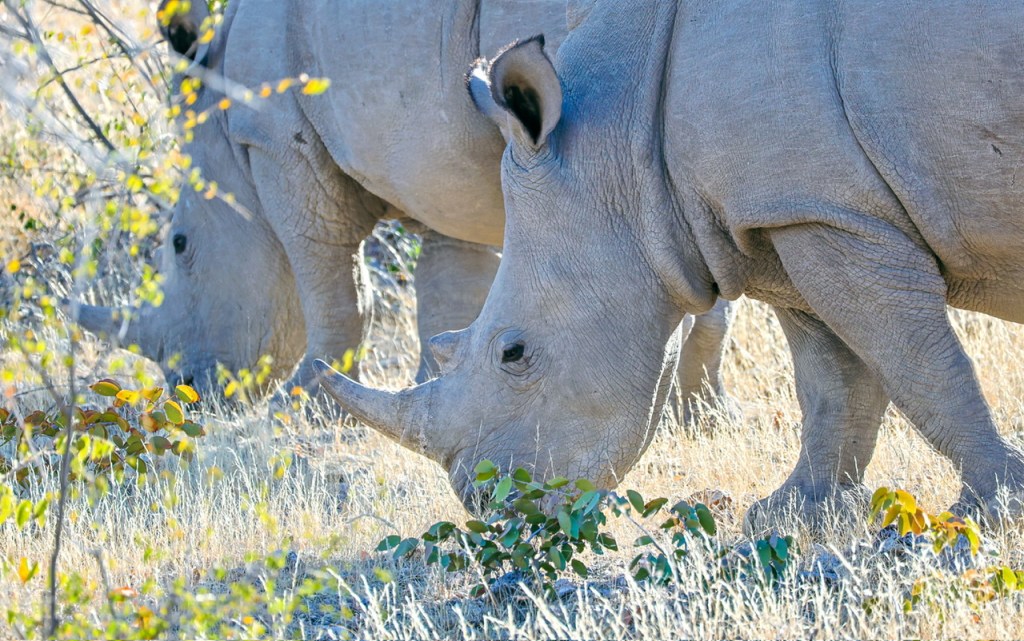
The Ongava Private Reserve hosts several lodges, all catering to different types of travelers. The owners (it’s not clear who they actually are) originally bought four underproducing farms, and have used the property to protect and research endangered animals, specifically the rhinos. “Ongava” means rhino in the Herero language. The preserve is about 84,000 acres. Onsite is a Discovery Center, which goes into interesting detail about the history of this region and Ongava specifically.
Water is considerably more abundant here than our prior two stops. It is also much cooler. The landscape more resembles the African bush we experienced in Botswana or South Africa, unlike the abject desert landscape of Sossusvlei or dry, hot, rocky flats of Damaraland.
Ongava Reserve abuts Etosha National Park. “Etosha” means “false water,” a nod to the illusion where distant asphalt or concrete will look wet in summer. Except here it’s sand. They have plans to expand the reserve, and I hope they do.
Anti-Poaching Efforts
Much of what Ongava does is protect black and white rhino. Poaching is less of a problem here than in South Africa, where it is endemic. In Botswana, they are allowed to shoot poachers on-site. Supposedly. Unfortunately, South Africa’s government just isn’t up to the task. The amount of poaching in Kruger National Park is enormous. Here at Ongava the rhinos are better protected with gates, fences, drones, patrols, and cameras. The anti-poaching unit even has its own helicopter – it’s new – the last one crashed. (Everyone survived.)

Rhino horns are used in Traditional Chinese Medicine to “reduce” fevers and “provide” insecure men stronger erections. Keratin is the main ingredient, which is found in fingernails, hair, and the skin of mammals … including you. There is no evidence it does anything medically. The Placebo Effect has almost wiped out these magnificent creatures, a testament to the havoc men will wreak to help stiffen their desires. Having worked in medicine for about four years now, I can confidently say men are super weird about their dangly bits. A guy will come in to the urgent care and say, “I’ve had intermittent chest pain for three months now, but, also, can you look at this small bump on my … you know? I saw it thirty minutes ago and came straight here.”
Environmental Conservation

Tourist dollars help fund Ongava’s conservation efforts, which involve not only protecting the animals but studying them in their habitats. A research center produces academic papers. They even have a blog. So 2000s.
Uncommon Construction

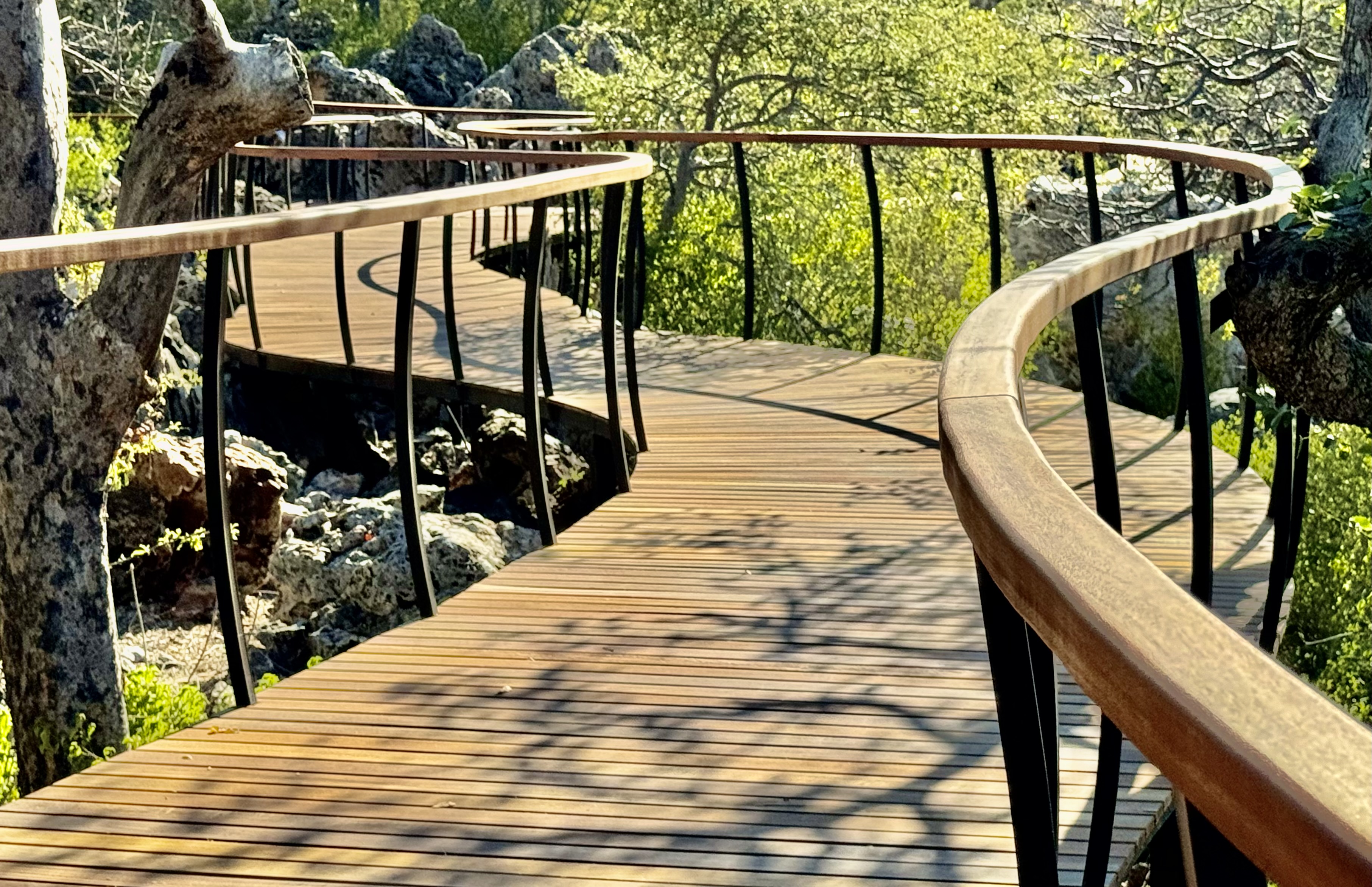


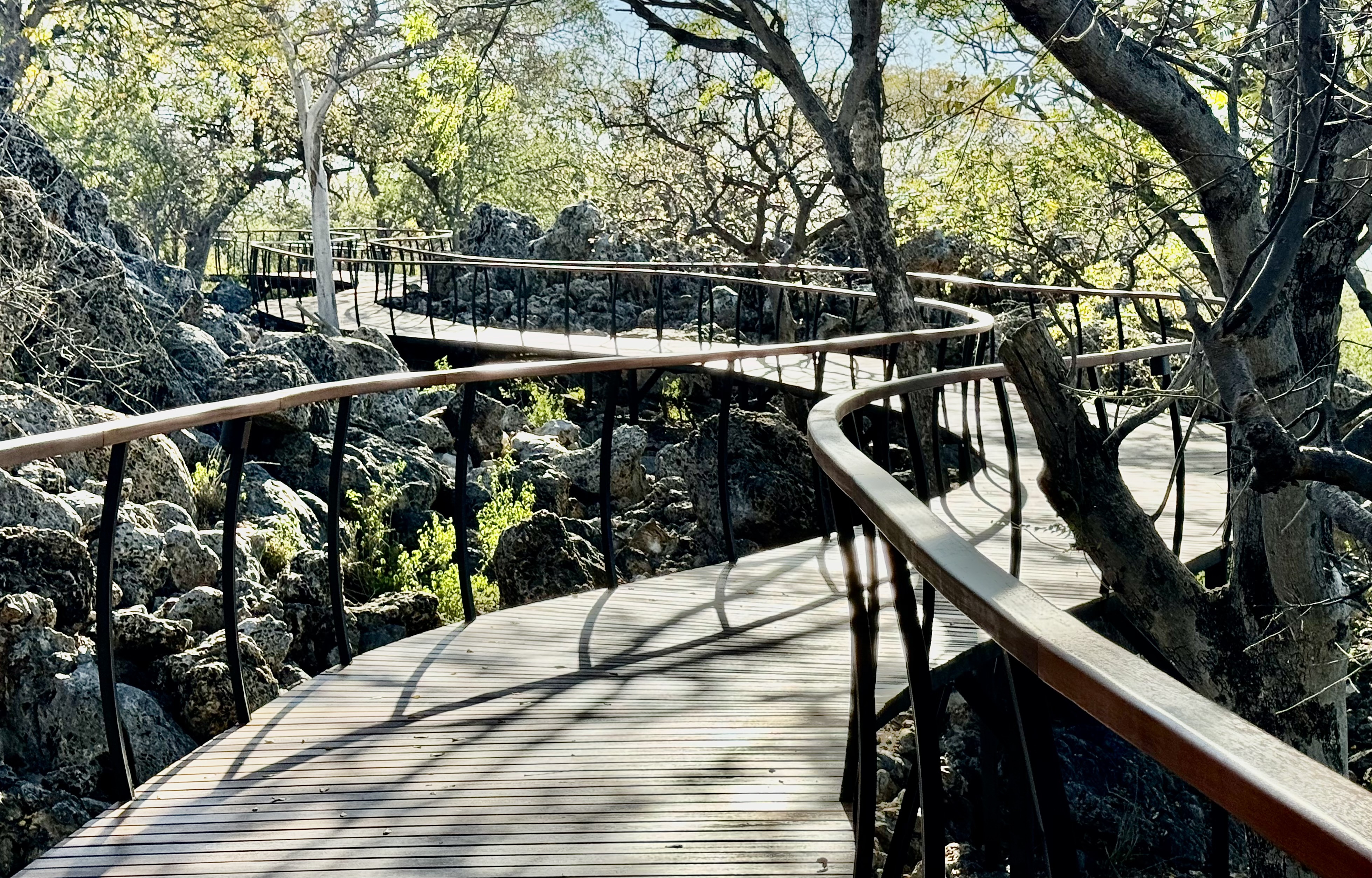
The architects of our lodge took time (and I’m guessing money) to make the entire experience a visual feast. One example was this walkway that connected the rooms to the main lodge. I loved it. Perfectly lit, artfully constructed, I had real feelings for this thing. The pathway skims above the porous igneous rocks, created from a long dead volcano.
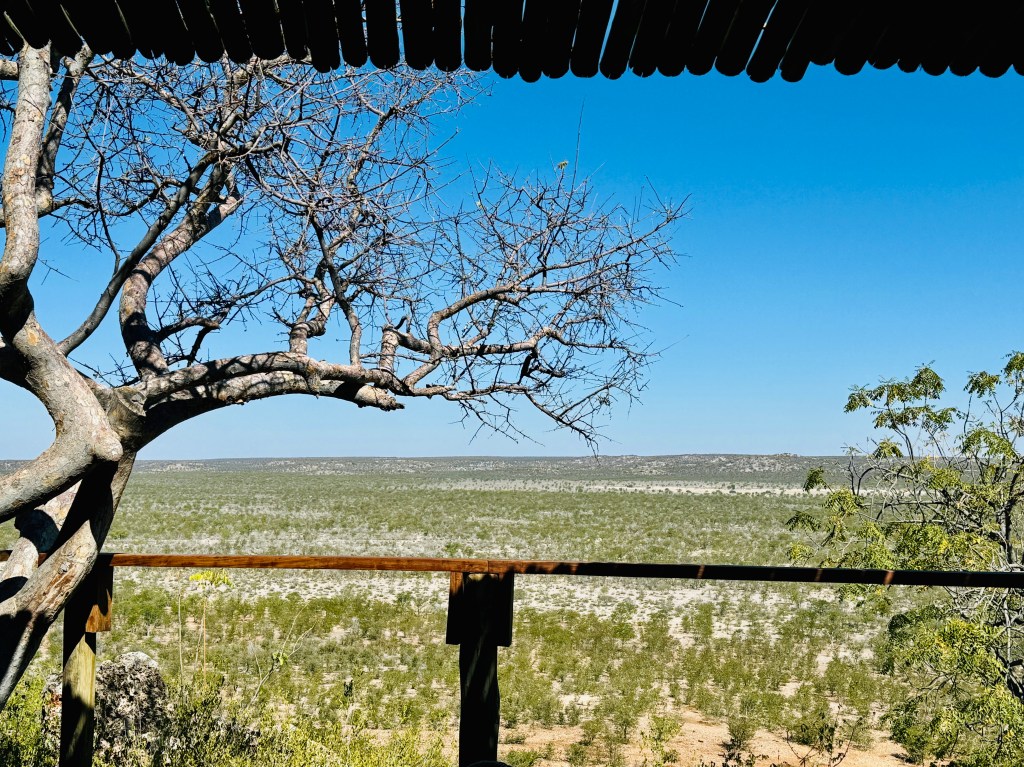
Another example of thoughtful construction are the carefully crafted views and watering hole placements, where guests can safely watch animals come and go. They gave us an iPad to watch one specific watering hole, which we binged. Best TV I have seen in awhile.
Guest Follies
The Lion Ate My German

Our guide told us an interesting story.
Inside Etosha National Park is a small community and school near the western gate. He grew up here; his father was a Ranger and worked for the government helping resolve conflicts between farmers and conservationists.
When he was a boy, a German tourist was snagged by a lion and eaten at the very watering hole we now sat. Small, rentable chalets surrounded us, an oasis of civilization in an otherwise empty landscape. Apparently, the tourist had been out by himself enjoying the tranquility of night and spotting nocturnal animals. All reasonable things to do. The lion slipped through the fencing meant to keep humans and animals apart.
“Just awful,” RBD says.
“Yes,” our guide says.
“Considering all the terrible things the Germans did to Namibia, maybe the lion was just welcoming him back?”
“Lance!” RBD exclaims.
“Wow,” our guide says, shaking his head and laughing.
Conclusion
If you visit three places in Namibia, make sure Little Ongava (or the other surrounding camps) is included.

 Cleared for Departure
You must be logged in to post a comment.