Next to our lodge, Little Ongava, is Etosha National Park. Pretty much everyone who travels to Namibia comes here. The park covers 22,000 square kilometers and has a lot of wildlife to see. Without a guide, you will see very little of it. There are watering holes along the various routes which concentrate game for some sublime viewing opportunities if you’re patient and not on a schedule.
Mostly, however, it’s self-drive tourists motoring too fast to see animals on vehicles not meant to handle the rough road conditions while doing stupid things outside their vehicle, which is expressly forbidden. What also amused me were discount operators using super-sketchy vehicles that looked precariously overloaded. When one did a sharp U-turn, I was pretty sure it was going to tip.
Our guide could barely contain his disgust, and did a good job of keeping us away from the masses. It made a huge difference in the experience. We drove slow and shied away from the main roads. We were rewarded with many great encounters. Viewing the natural world requires patience and a deliberate slowness our modern world actively discourages.
The faster you move, the less you see.
Stills
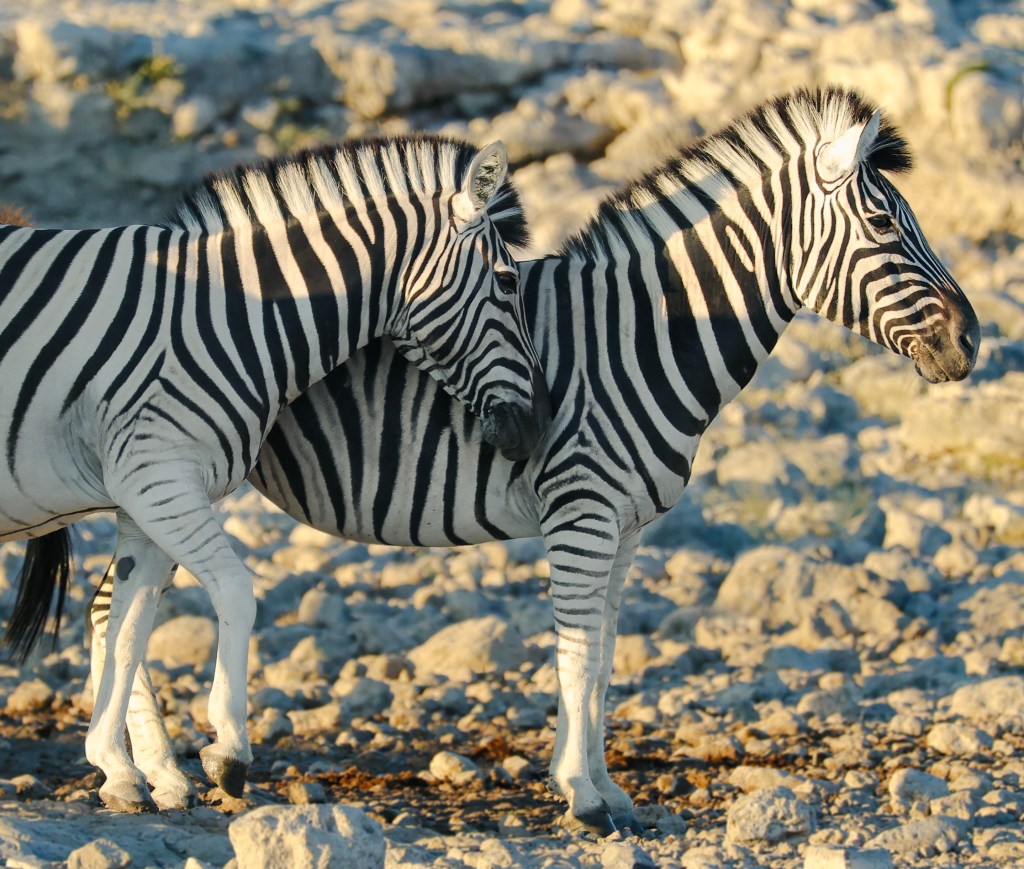
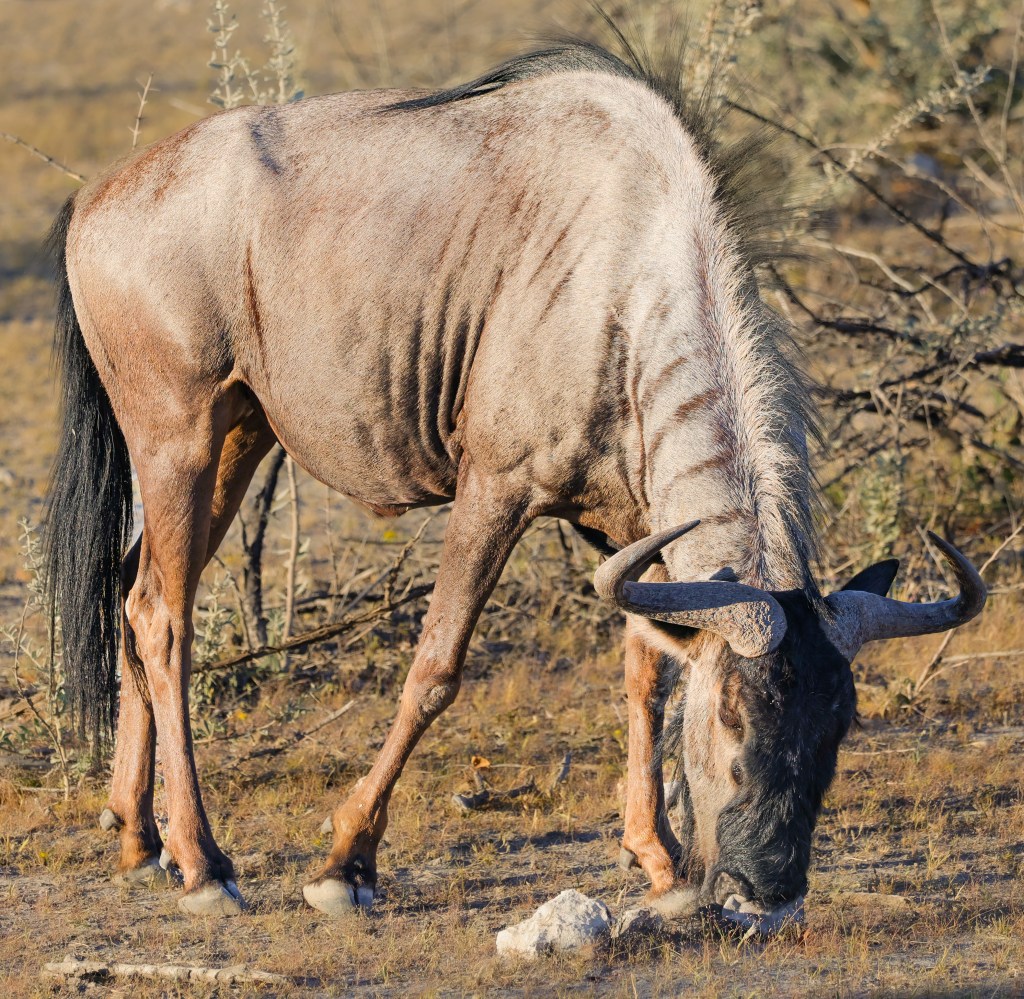
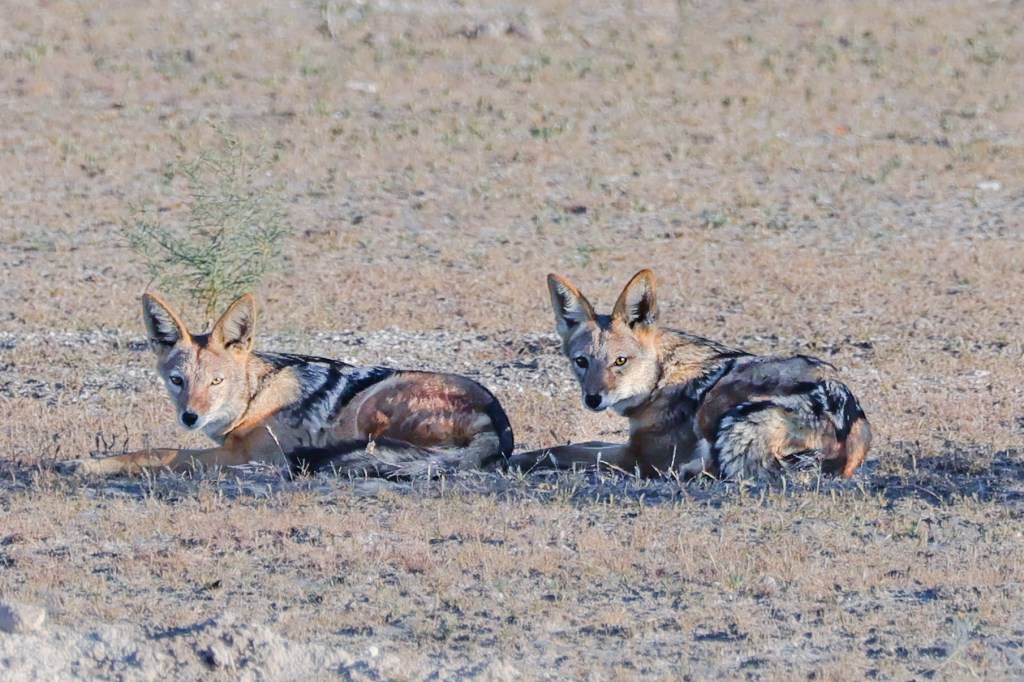
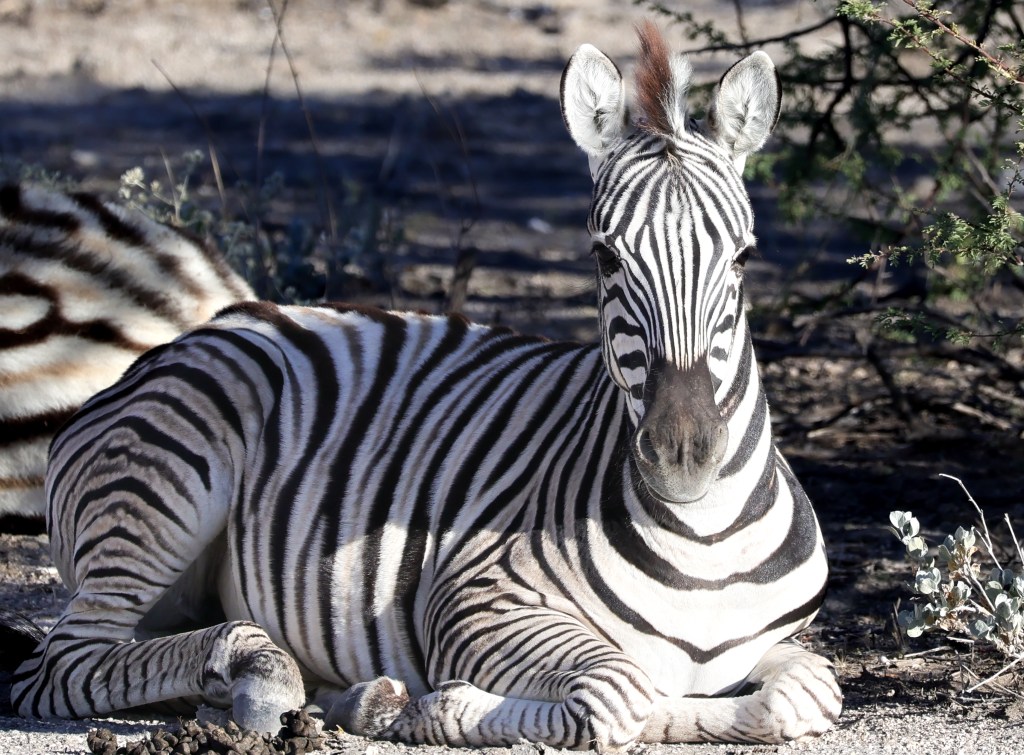
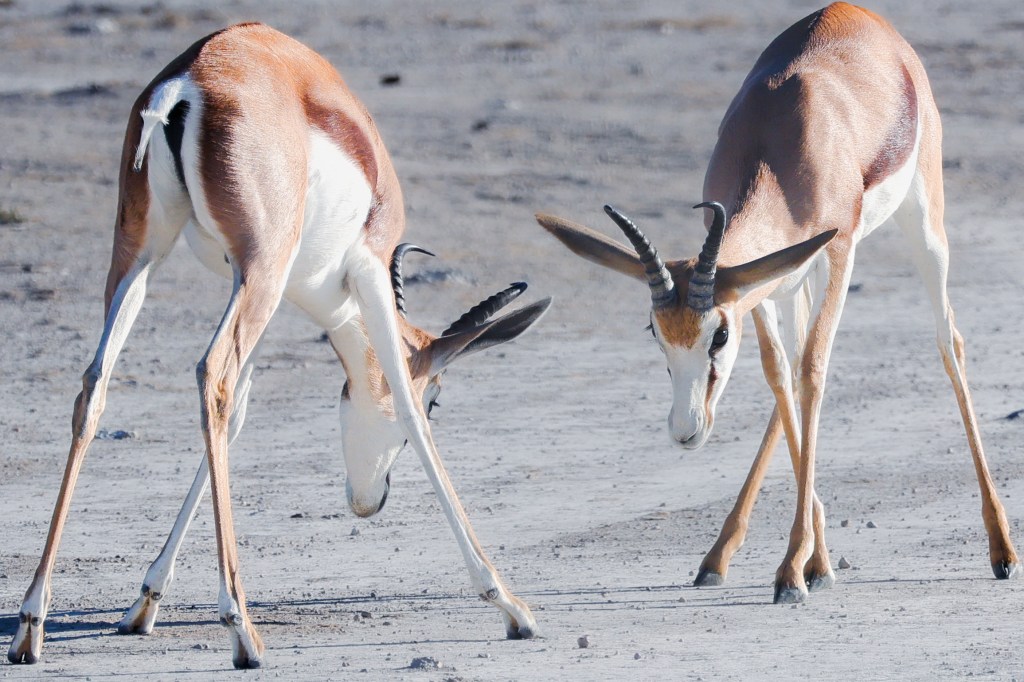
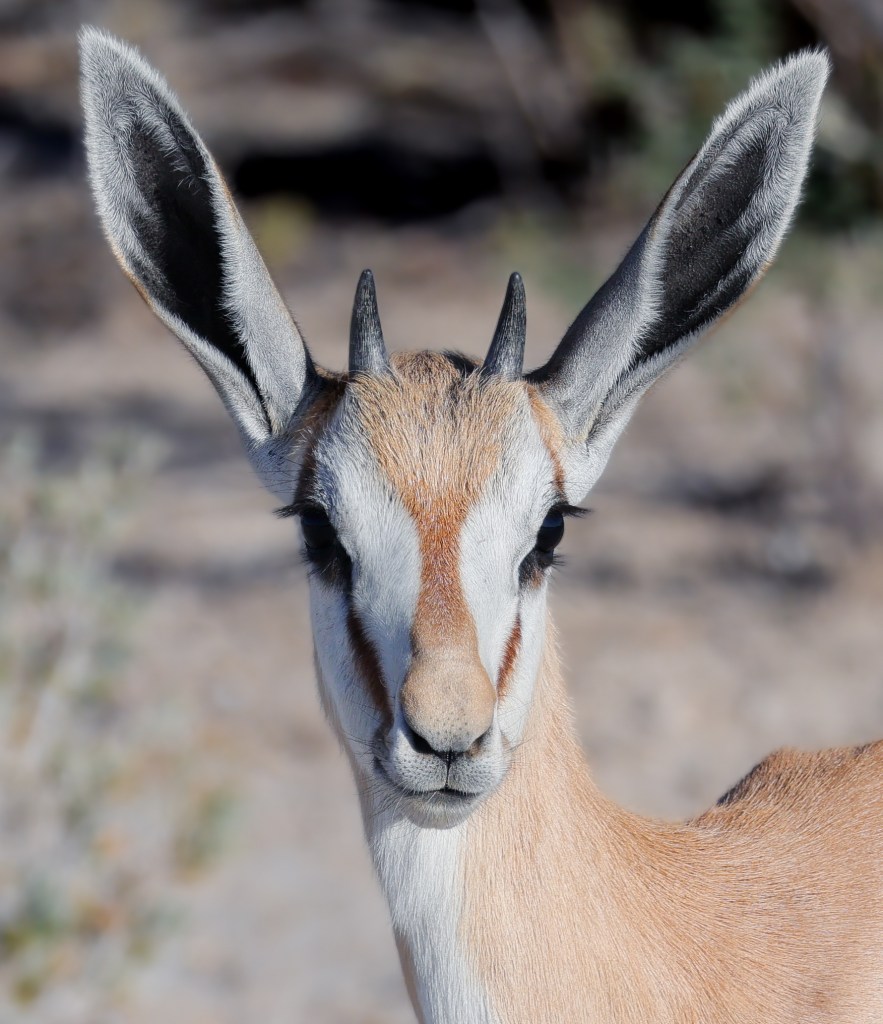
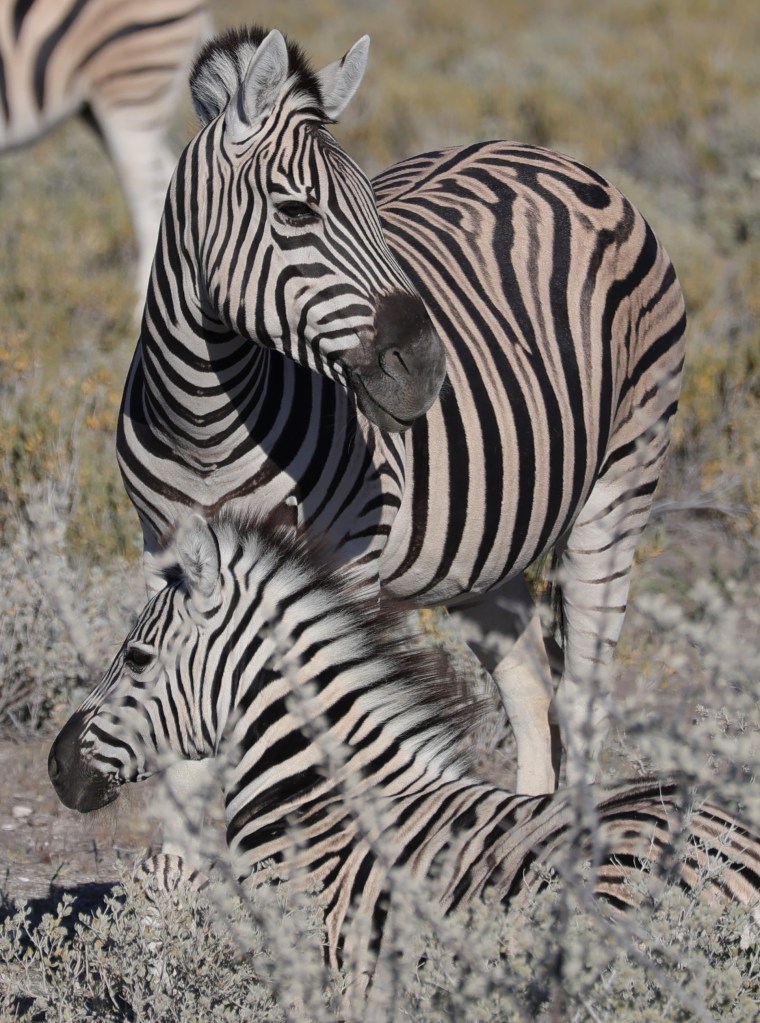
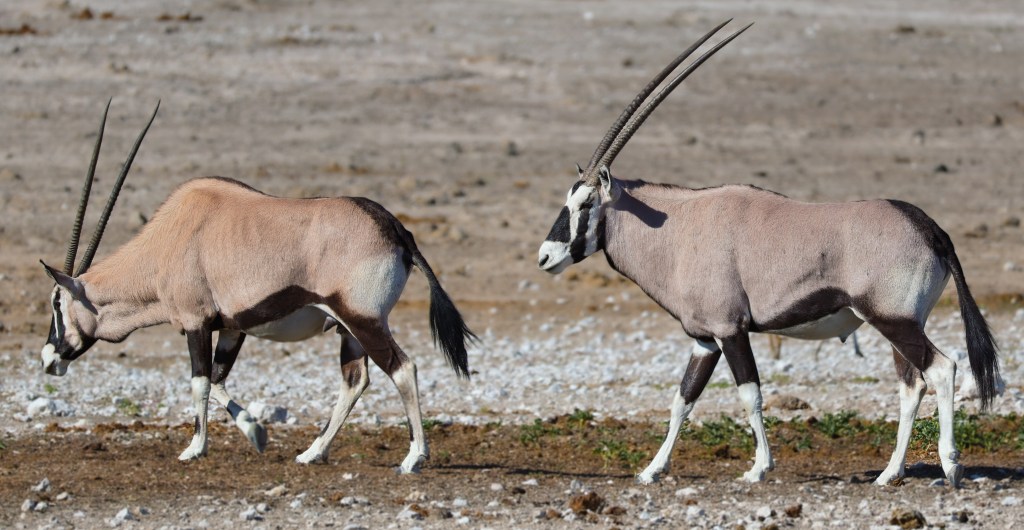
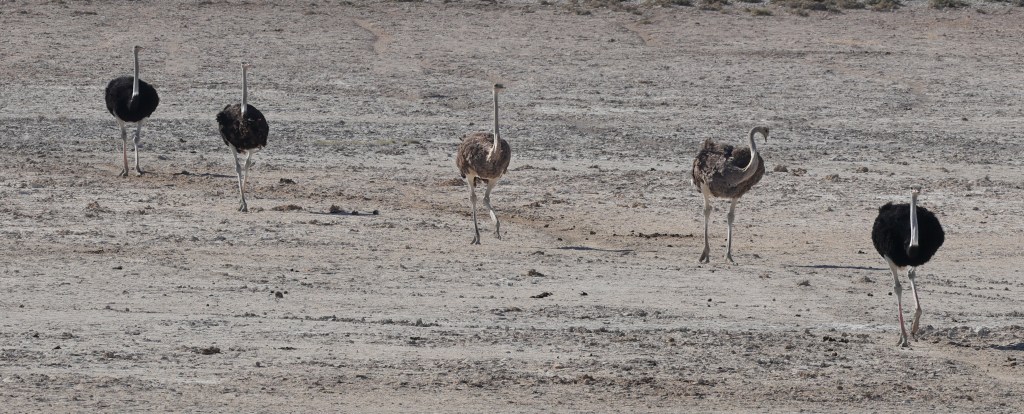
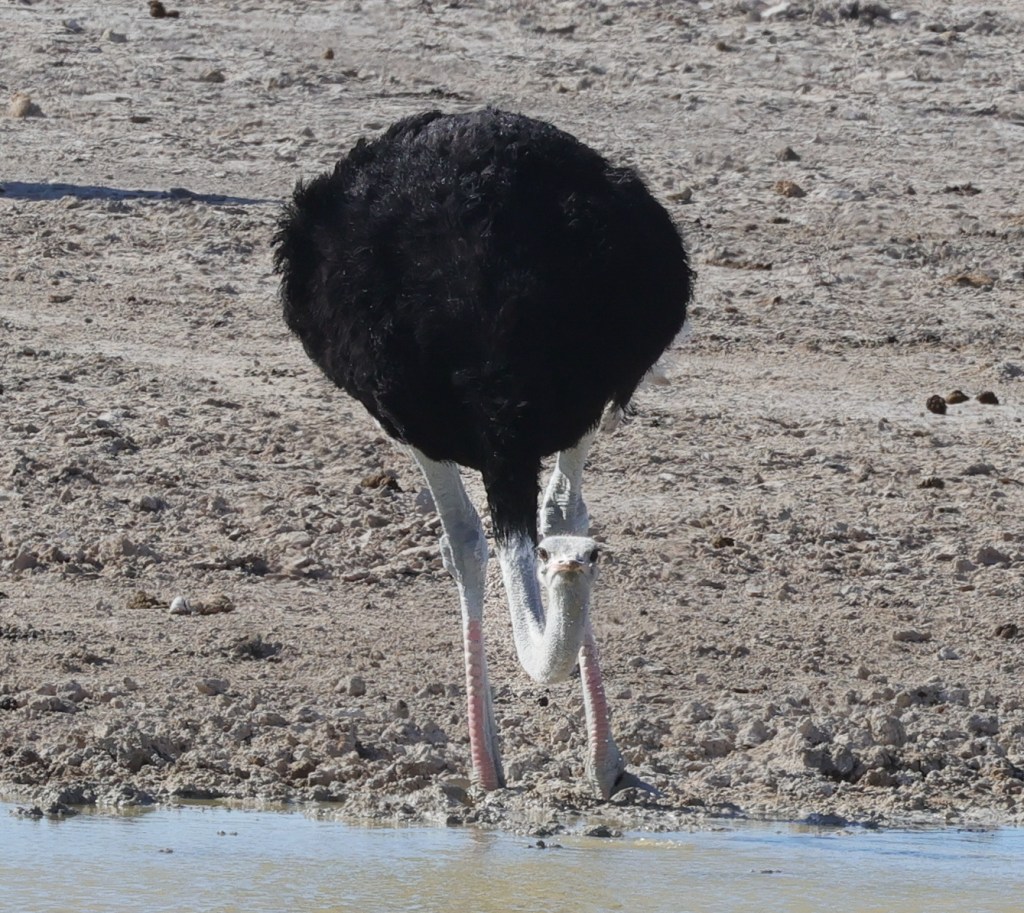
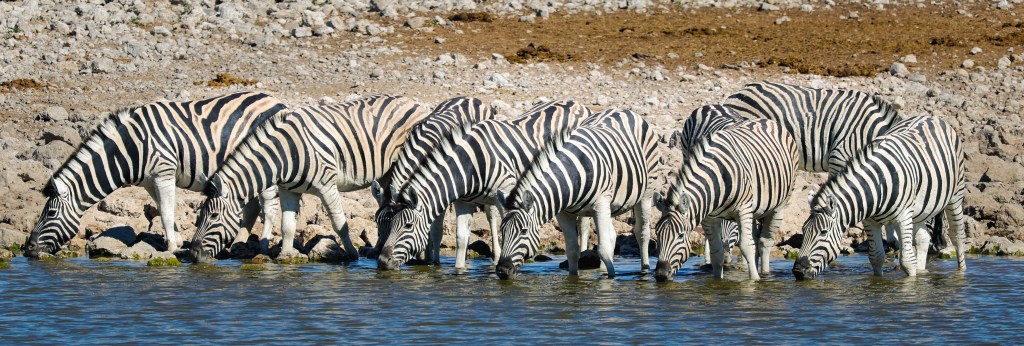
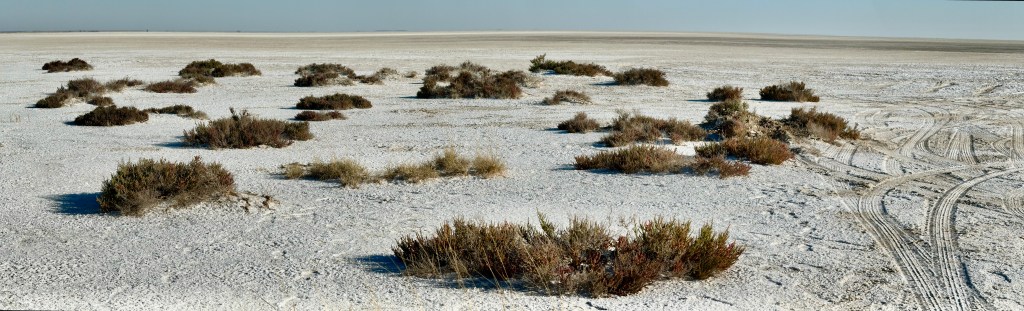
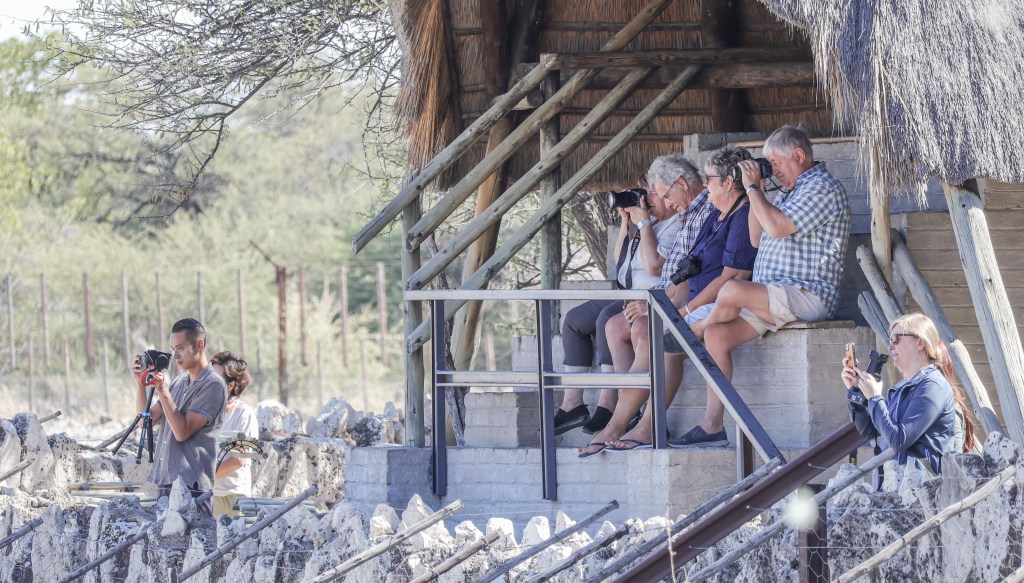
Zebra nuzzle each other at dawn. It was neat to see Zebra so relaxed. They are skittish and will flee at the slightest noise. You have to be slow and patient for these animals.A wildebeest, common game species in Southern AfricaTwo jackals eye us suspiciously. They are scavengers, and while they look like some dog species, they would not make good pets.Two young male springbok are practicing rutting. This is how males establish dominance and “win” the right to mate with a group of females. These play fights are never serious, but adult males can kill each other. Mating season is coming. A female springbok.Relaxed zebras, taking a break in the hot sun.The oryx right is chasing the oryx on the left. He does not like another male getting too close to his harem. The interloper is teasing the established male, un-seriously charging him and running around him.Even a Jackal’s gotta drink.I know what you’re thinking and, yes, they are tasty.A herd of ostrich also comes to drink. They are the largest living birds on the planet.To drink, they scoop water into their mouths and then raise their necks so the water falls down the throat. It seems like a lot of work.Groups tend to dominate the watering hole for a period of time, then once they’ve had their fill, relinquish it for another species or group to assume dominance. Thus, once zebras are done elephants take over. Once elephants have drunk, a crush of rhinos make an appearance, and so on. This can go on for hours and is fascinating to watch.Our guide arranged for us to have breakfast near the salt pan, which is 4800 square kilometers and visible from space. It is the ruminants of a large lake. During heavy rains the area floods and flamingos come, which must be quite a sight. Otherwise, it is a lonely, lifeless place. Humans. Dangerous, do not approach except in rare circumstances. It helps to be trained when doing so.



 Cleared for Departure
You must be logged in to post a comment.