
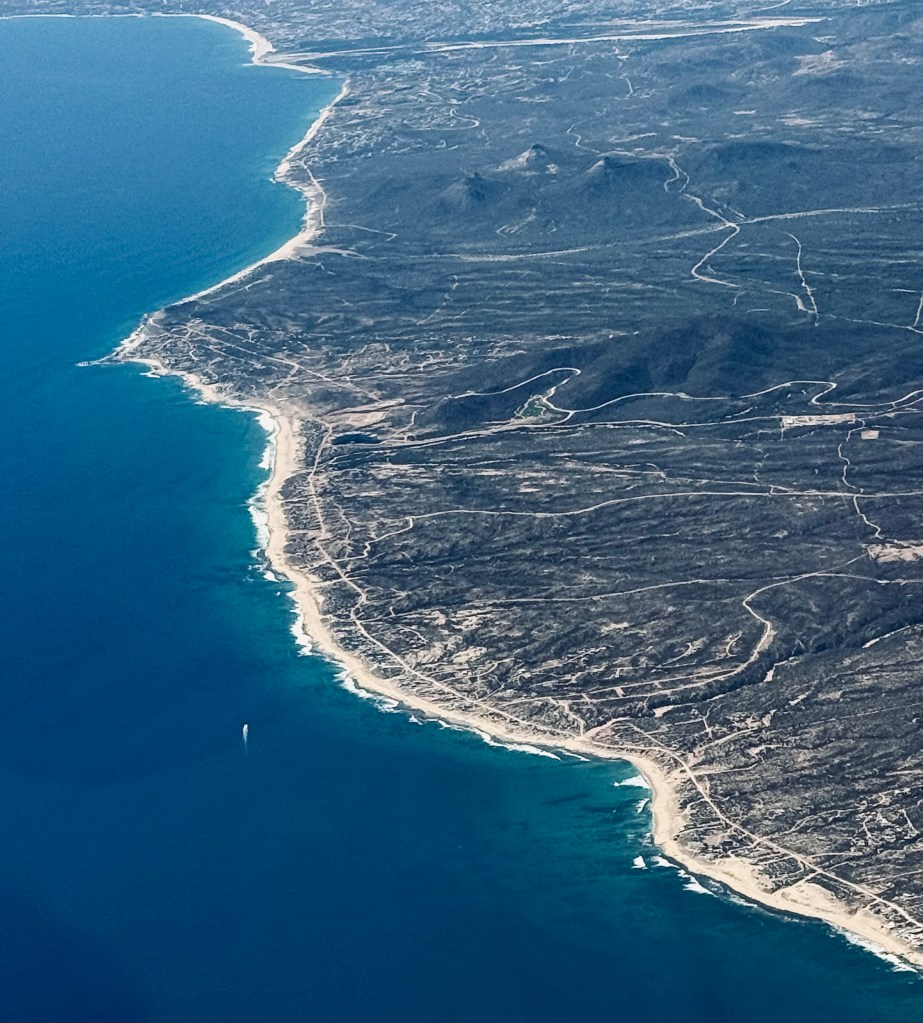
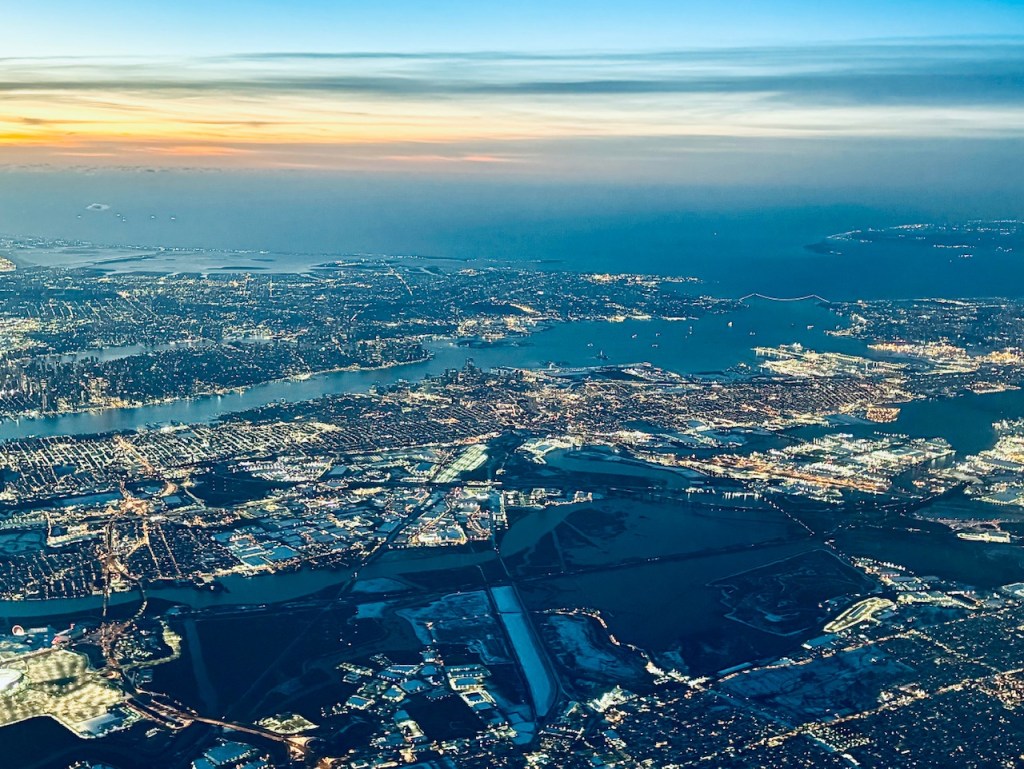
I remember the day when I discovered you could not see borders of states and countries from space. This would have been around 1985 while mom and I were watching Headline News. I had only ever seen the Earth depicted with visible lines on it, like spinning globes or pull-down maps at school, as well as the meteorological segments on TV news … like the one we were watching. Turns out these black borders don’t actually physically exist. We just made them up and pretend they’re important, like some type of mass delusion.
I have always found humanity’s fondness of borders odd. We use borders for a variety of reasons, both nefarious and practical. They make us feel safe and secure, which is echoed in our rhetoric. Borders provide a demarcation between order and chaos, which some part of our brain seems to require to fully function. We lock our doors at night. However, they also give us permission to behave poorly, as with Redlining or its younger, sexier, sibling Redistricting, where we weaponize imaginary lines that end up having very real consequences for populations.
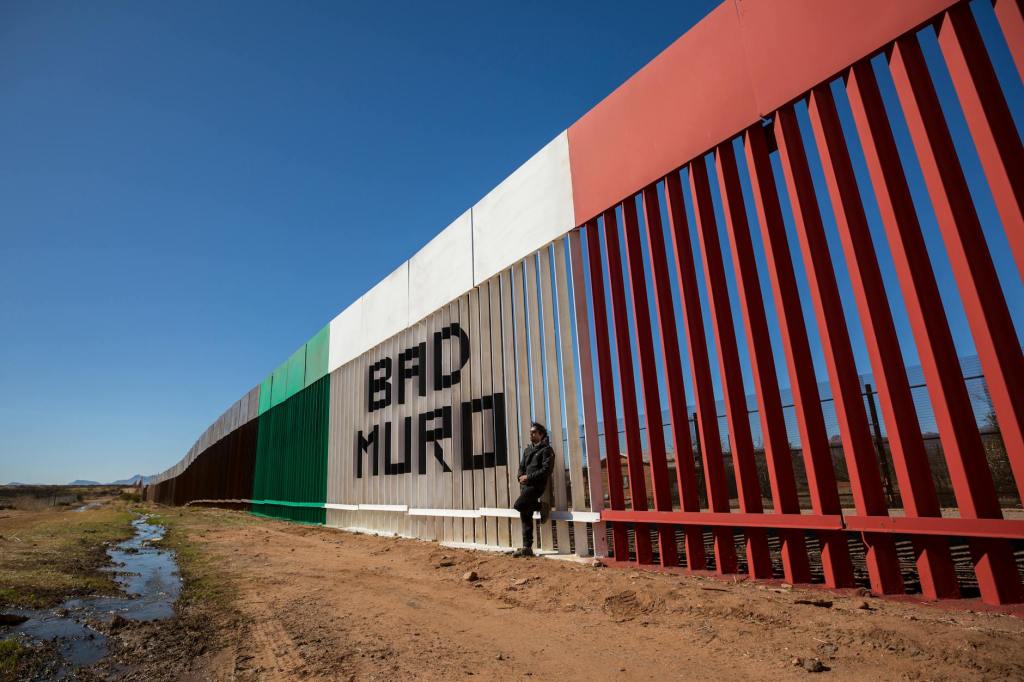
One such imaginary line, which, again, you cannot see from above (I recently checked), is the U.S.-Mexico border. The infamous border is 1,954 miles long, spanning very rugged, remote, and diverse terrain. It’s the most heavily crossed border in the world and, also, among the longest between two countries.
The current border mostly follows boundaries set in The Treaty of Guadalupe Hildago, which ended the Mexican-American War. This was when Mexico lost over half its territory, which included the modern day states of California, Arizona, New Mexico, Texas, and a smattering of other states I am not certain exist, like Wyoming. The U.S. wanted the land and resources, so we invented some bullshit incident as an act of war to take what Mexico owned, a Gulf of Tonkin for the 1800s.
It was a savvy economic move. Over the two centuries since, we’ve pulled tons of natural resources from these annexed lands, from oil to ore, and benefitted hugely from their agricultural output that fed an … ahem … expanding nation. Today, large metro areas in these “liberated” territories, like L.A., Dallas-Ft. Worth, Houston, San Jose-Sunneyvale, Phoenix-Scottsdate, to name only a few, contribute huge sums to the U.S.’s GDP and are partly responsible for our country’s economic might. We all gained (and continue to do so), while Mexicans, past and future, lost. Such is the way of war, its consequences far-reaching and rarely understood at the time.
It is not possible to know exactly how many illegal crossings occur annually. Estimates vary according to political agenda, though most agree in recent years the numbers have grown tremendously. Most undocumented immigrants arrived in the U.S. via an airplane (which flies over walls by design) and just never returned. Even legal crossings are hard to quantify as the numbers are huge. One source said about 350 million annually, which is greater than the population of the U.S.

Closing the border would be economically crippling for both countries, as hundreds of millions worth of goods cross annually. This includes silly things like food. Which we need. To live. Some folks commute daily, residing in Mexico (it’s cheaper) but work at jobs just inside the U.S. It is also logistically impossible to fully seal a border. The movement of populations is incredibly complex and ostensibly unstoppable with regressive immigration laws or a physical structure. If you think otherwise, then complex, nuanced thought is likely not a huge part of your life. I’m surprised you’ve even read this far.
Let’s imagine magically transporting to the Southern Border to confront a desperate family about to cross. After all, this is what closing the border really means — keeping people like this off our balance sheet. You appear out of nowhere. They’re surprised to see you, but figure you’re a hallucination due to dehydration and heat. People like us made the world hotter, a little added gotcha to the world’s poor and huddled masses yearning to breathe cool air. You say to them, “This line,” make sure to specifically point out where it is because only you can see it, “makes me feel safe and matters greatly to me. Even though I have everything compared to you,” they will own only what they’re carrying, “I would appreciate it if you crossed at a specific place and got a pretty stamp in your stamp booklet.” Likely nobody speaks English but you, so expect blank stares. Particularly since you are gesturing emphatically at the dirt. “And once you enter legally,” emphasize that word, “le-gal-ly,” you say again, drawing out the syllables, “make sure to leave after a specific amount of days because of very important rules I don’t know much about.” Satisfied, you snap your fingers and return to a life of comparative opulence, made possible by other immigrants. A day’s job protecting the homeland well done.
Of course the scenario is ridiculous. Denying desperate people sustenance and shelter is ugly business when done in person. It’s easier to have bureaucratic systems in place, like borders or esoteric regulations that “those” people can’t fulfill, which do the heavy lifting of exclusion for us. We rely on the good people at I.C.E. and the Border Patrol to be the muscle, kicking people when they’re down and desperate, putting them in cages, separating families, etc. Easier for our sense of self. We’re all good Christians here, right? It’s not me, it’s them.

I have bias here, but I actually don’t know any lazy immigrants, the kind Fox News whines about. I work with folks from all over the world, from asylum seekers to run-of-the-mill expats, who work harder than any native born person I know. Me especially. They put themselves through school at great personal cost, they are not eligible for scholarships, often working multiple jobs to level up in their professions. They build our buildings, farm our crops, prepare our food, work in our food processing plants, take care of our young and old … none of it easy or glamorous work and usually for shit pay.
This manufactured hysteria prevents “those” immigrants from ever becoming our immigrants, our friends, co-workers, partners, and family members.
 Cleared for Departure
You must be logged in to post a comment.