

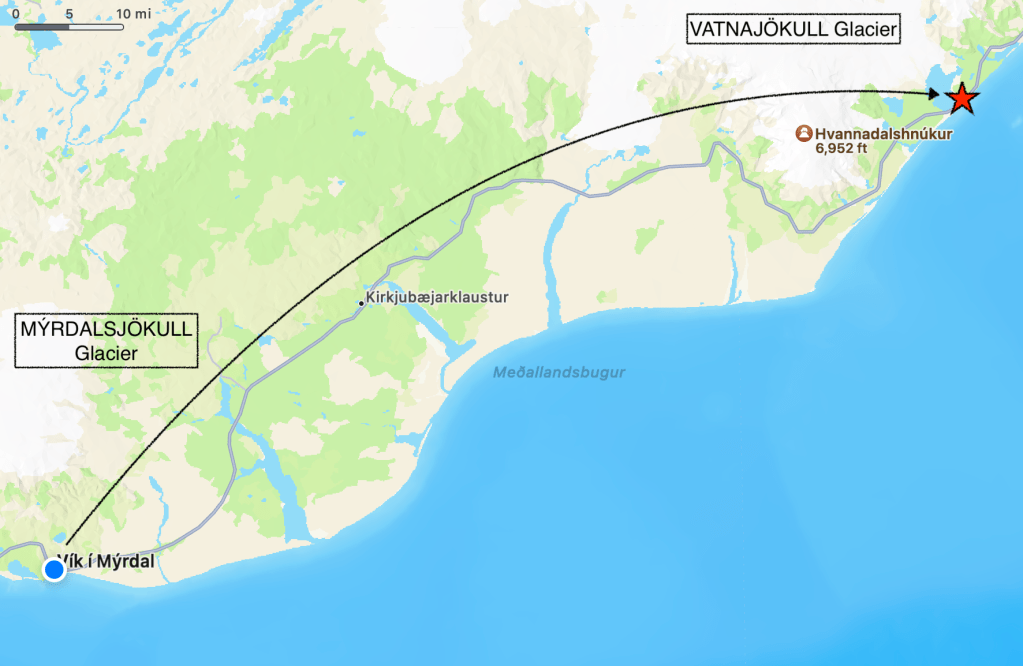
Glacier Lagoon is 2.5 hours east of Vik (which means bay) on the N1, theaforementioned Ring Road.
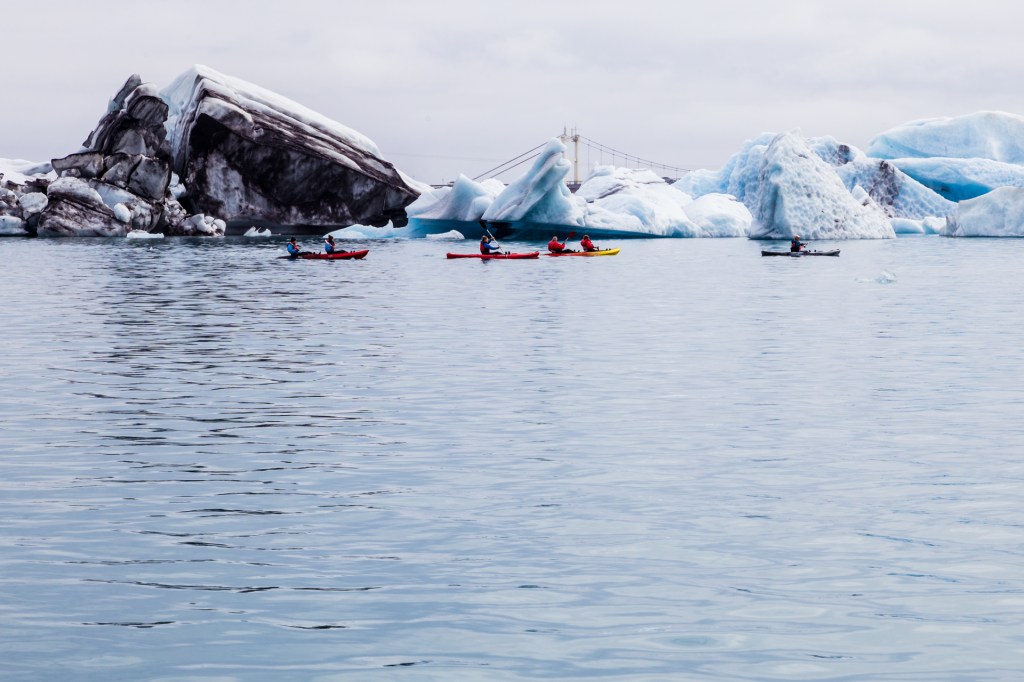
For a small price you can take a duck boat around the lagoon and explore the icebergs. Or, for a higher price, you can take a zodiac and touch them. Be careful as these giants do flip over occasionally. They move around more than you expect given their size. Fortunately you have about 15 minutes at this time of year to be rescued from the balmy 3 degrees Celsius water. In winter you have less time, so be quick about taking a dip.

You can also kayak, which seems crazy stupid but I would totally do it. A guide goes with you, so how dangerous can it be? Also offered were ice cave tours and glacier hikes.
Glaciers tend to terminate in lagoons. The face of the glacier falls into the water layer by layer, in a process called calving. The iceberg slowly melts in the lagoon, which in this case is a chilly mixture of salt and fresh water, before the water molecules are finally returned to the sea. The process, from snow to sweet ocean freedom, can take thousands of years. Glacier means “ice river,” and the process is not unlike rivers in more temperate climates. Rain falls at high elevations and drains its way to the sea. This just takes much, much longer.
Not all the water you see is from melt. Much is runoff from the near constant rain and tidal waters backfilling the lagoon.
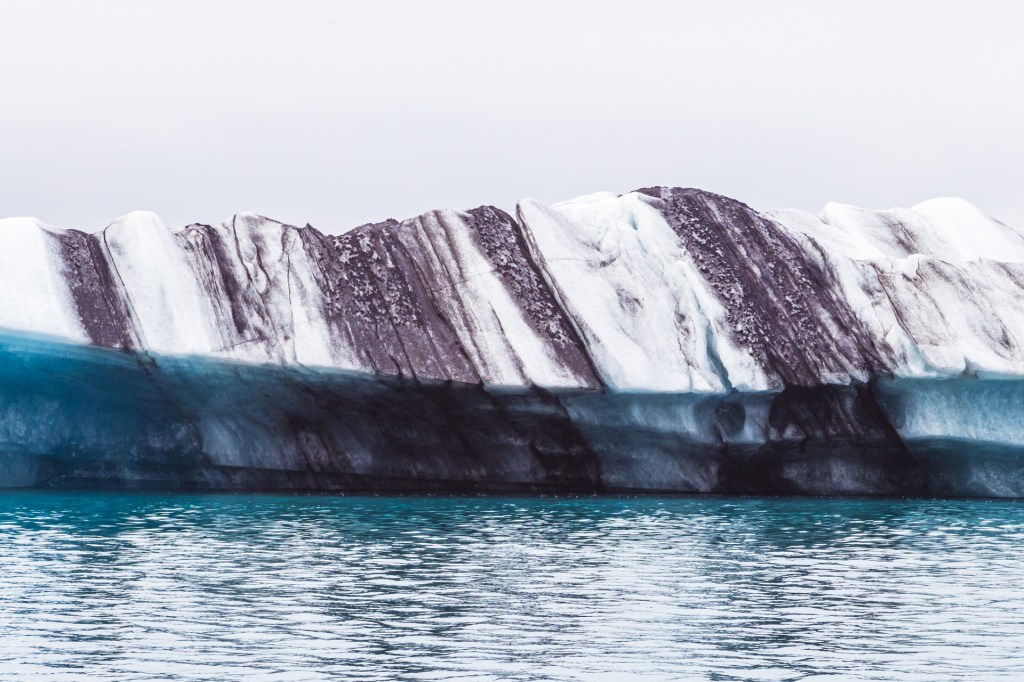
The black stripes are volcanic ash, a unique feature of Icelandic glaciers. Alaska has only white glaciers. Make of that what you will. The ash, unfortunately, contributes to melting because darker colors absorb more sunlight. After an eruption, it is not uncommon for all the calving ice to be totally covered. The stripes creates a neat effect, adding texture and dimension.
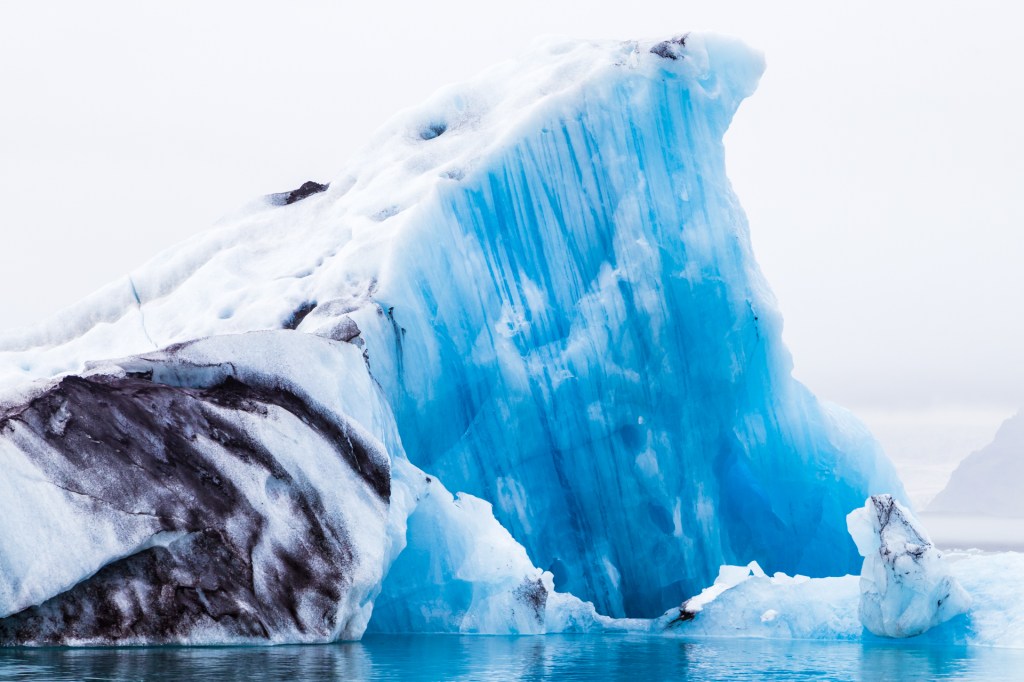
The ice isn’t actually blue. As snow falls, over time it gets compressed and the air gets pushed out. This creates an optical illusion as sunlight bounces around uninterrupted and refracted deep in the iceberg and blah-blah-blah-science, the ice looks blue. It can also look green. Depends on age. For ice to appear blue, there needs to be a lot of it. Since most of us experience ice in cube form, we don’t often see this phenomenon in our regular lives.
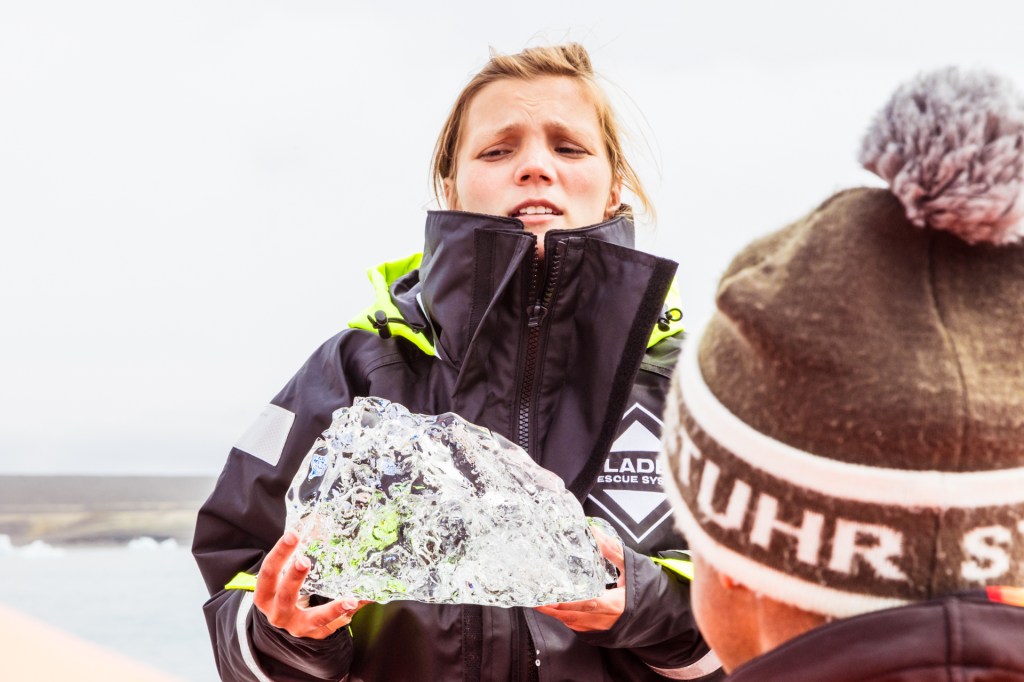
Or in chunk form, as our guide above is showing. This is frozen water, ice in English, or, ís in Islandic. Whereas English uses ice and snow to describe solid precipitation that falls from the sky, here there are dozens of words for subtle variations of ice and snow. It is a neat example of how language shapes how we think about our natural world.
I tried finding a more flattering picture of our guide, but sadly everyone here squints. It’s the light. You have to.
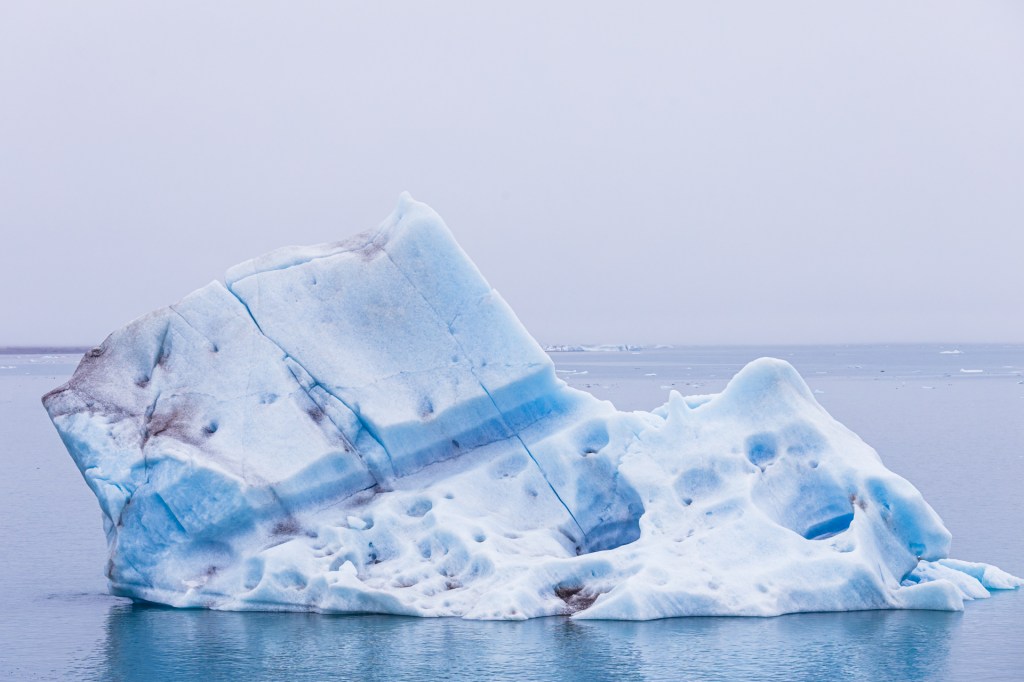
Icebergs come in all shapes and sizes. Calving is a daily occurrence, which can generate mini-tsunamis in the lagoon. This bumps and jostles everything around. Various sea mammals and birds use the bergs to perch when hunting. Life here flourishes. Under the water is an abundance of sea life and an absence of large sea predators. For birds and seals, it’s a good life.
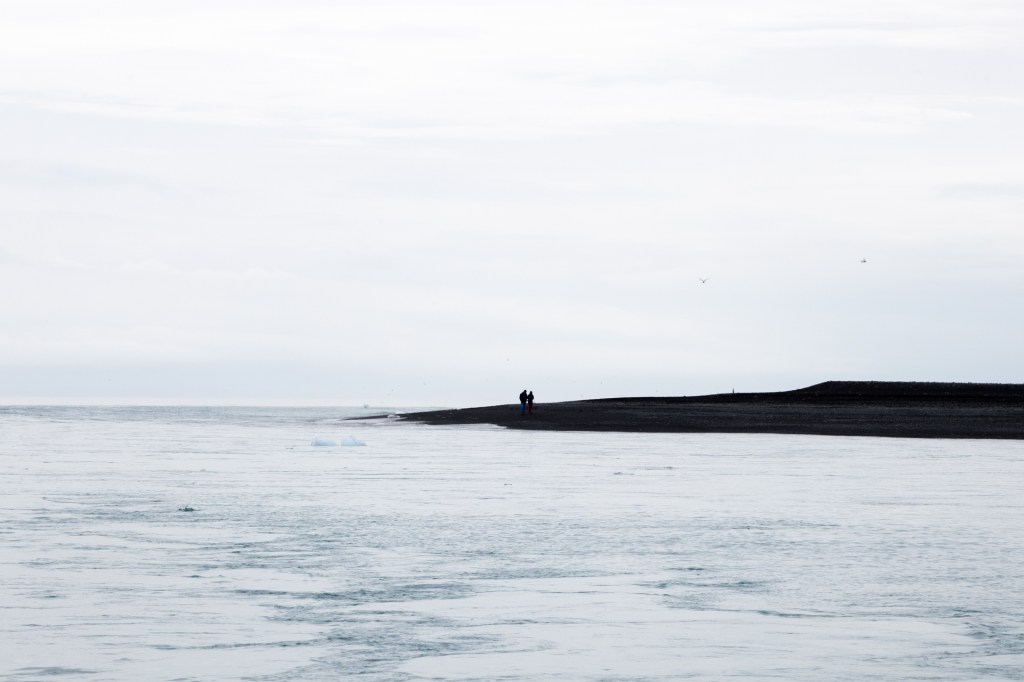
Before heading home, we did a brief walk to Diamond Beach. Sadly no diamonds. Just ice crystals. I threw some ice chunks back into the river and watched them float into the North Atlantic. I felt bad. To have waited so long to return to the ocean only to be beached on shore by low tide … just a terrible fate.
There’s more to say about glaciers. We’ll continue the discussion later.
 Cleared for Departure
You must be logged in to post a comment.