I wanted to discuss Islamic rule in the prior post to give context to the pictures that follow.
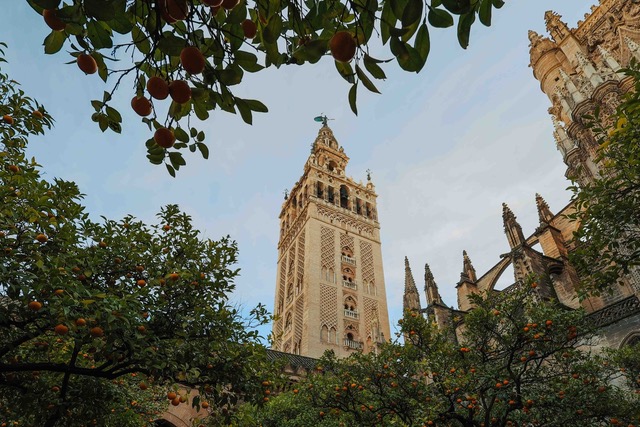
For example at The Cathedral of Seville, we see a minaret common in mosques, repurposed as a bell tower for the Catholic Church.
In the courtyard below are 4 small and 1 large fountain, which were used by Muslims to clean themselves in preparation for prayer.
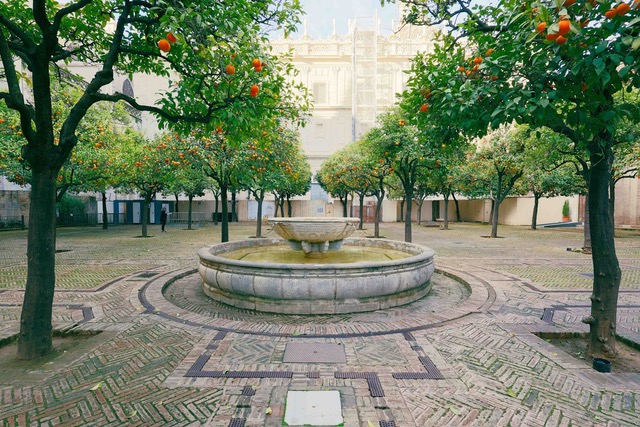
The oranges you see are sour oranges. Nobody eats them directly off the tree. They are everywhere in Sevilla and Granada. Water which feeds the fountains also feeds the trees through channels below the brick. The Muslims valued water as a display of wealth, which makes sense when your baseline is North Africa.
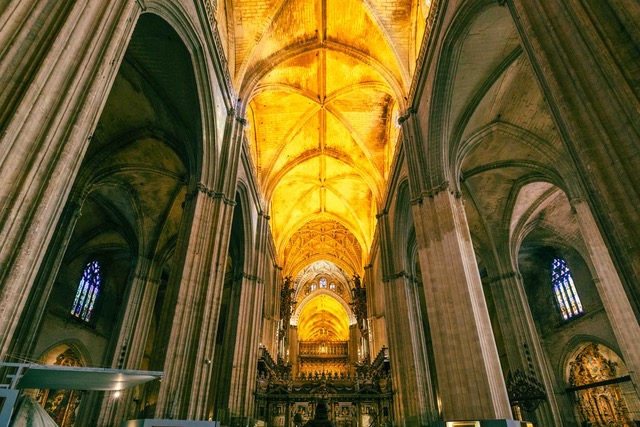
This is the view of the cathedral from the entrance. Tourists enter through a less important side entrance. Like most cathedrals, it is fashioned as a cross with side chapels along the perimeter. Cathedrals seem like a modern day shopping mall, a one stop shop for all your religious needs. The side chapels are the small stores, while the nave and alter the anchor stores, the big reason for coming. Worried about an upcoming trip? Stop by the St. Columbus store, I mean chapel, and make an offering and pray. While here, stop off and confess your sins at the booth. Maybe attend a mid-day mass, too. Or getting Baptized? There’s a store for that.
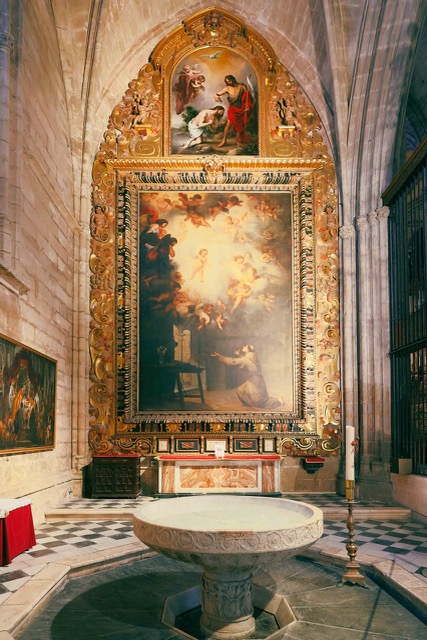
In this side chapel, children are Baptized and welcomed to the faith. Like most malls, there are outbuildings and administrative offices. There might also be meeting places, where parish business is conducted.
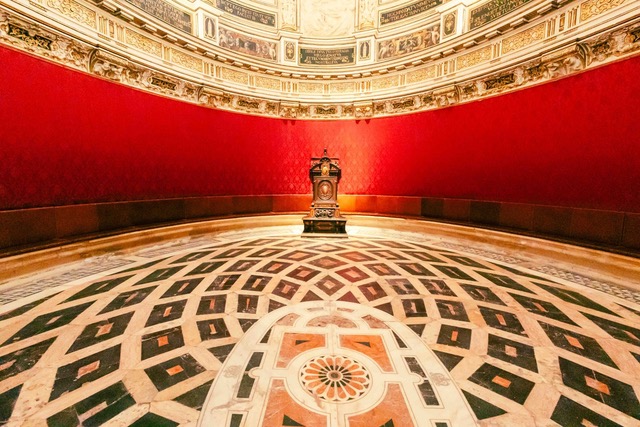
It’s pretty clear where the boss sits in the photo above. In this way the Cathedral was a central part of the average parishioners day, another place to go to conduct (spiritual) transactions between the butcher and the market. This centralized model kept the power in the church, and it’s no surprise they resisted printing technology which could, for the first time, place the Holy Book into the hands of the masses. People could connect with God remotely, which did not please the owners of the expensive and large buildings. I find the parallels to this and the remote work debate going on now in the wake of the pandemic amusing. Truly there is nothing new happening that has not happened before.
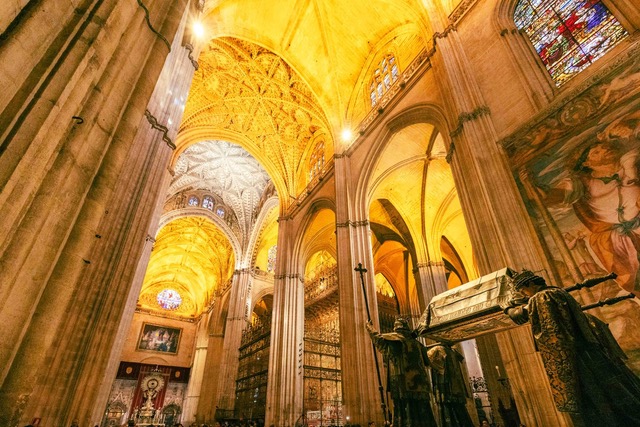
In the foreground in the lower right is the tomb of Christopher Columbus. His body took a circuitous route to end up here, but here he is. This is the man responsible for connecting the world and ushering in our modern era, for better and worse. Columbus had a profound effect on humanity, though had it not been him, it would have been someone else. It was Spain who funded his initial voyages, to find a quicker trade route to India and China. I suspect conducting trade through the Middle East was a huge pain in the ass. Also expensive. Plus, the new regime had recently pissed off all the Muslims by disenfranchising them. The Suez Canal would not be built until the late 1860s, which will remove the need to travel through modern day Syria and Iran on land. Going West was the only option.
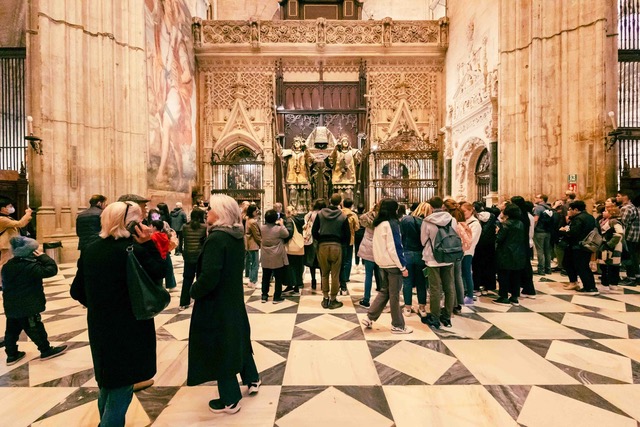
This is the tomb again from the front. Columbus has a lot of visitors.
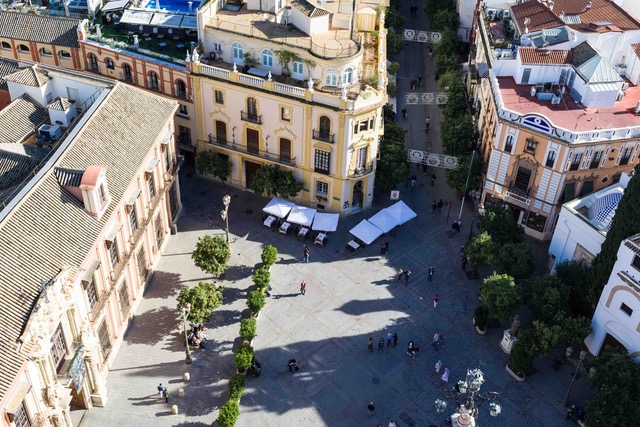
We will depart Seville and head to Granada by train. But first, a few pics of Seville from the minaret bell tower, which involved walking up 36 ramps.

 Cleared for Departure
You must be logged in to post a comment.