The population of Seville is about 680,000 and encompasses approximately 50 square miles. We stayed it the Centro area, which is criss-crossed with these small streets and passageways that defy easy navigation. Much of the city is not like this, and can fit modern cars and has a more conventional appearance. So don’t think all of Seville looks like this. It does not.
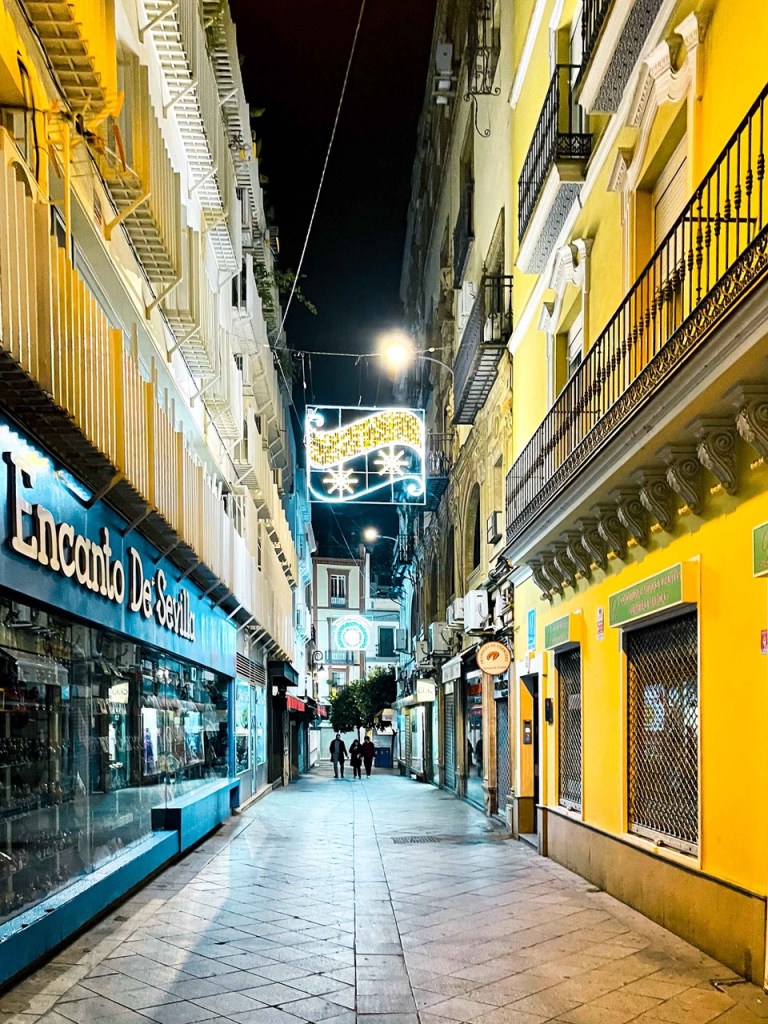
The above street is pedestrian only, with shops and apartments on either side. The streets are narrow because the homes, as originally constructed, opened to interior courtyards. A large street was not considered necessary. As the town has grown and changed, many apartments have lost access to the once ubiquitous courtyards. These homes are dark and tomb-like, and mostly used as AirBnB properties for tourists who don’t know any better. Plus, air conditioning has removed some need for cooling via architectural tricks.
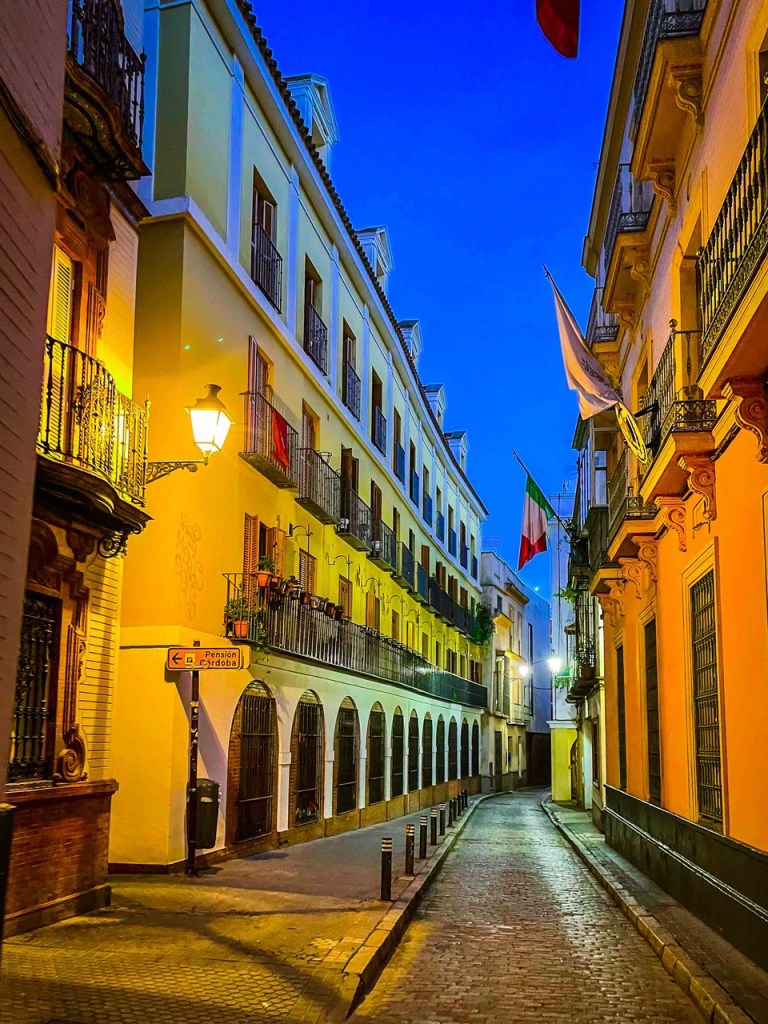
Some corridors allow cabs and delivery vehicles through. When a regular sized car tries, it makes for interesting watching.

The photo above was taken at a coffee stop. I liked the colors and shapes.
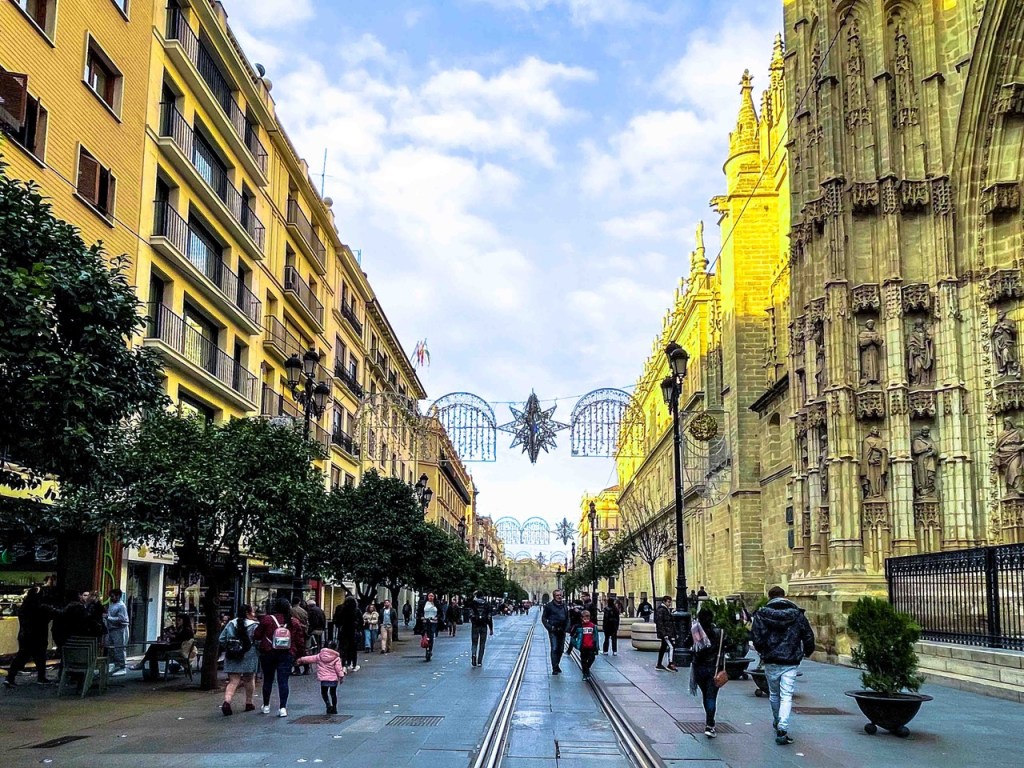
Not all the streets are tiny. Above is a main drag bordering Centro neighborhood. You can see the cathedral’s main entrance to the right as well, which only the royal family and dignitaries use, with light rail track going down the center. To the left of that is a bike lane where people are walking, with occasional bikers yelling at them. Some things are universal in any culture, I suppose. Shops and restaurants are all up and down the left side.

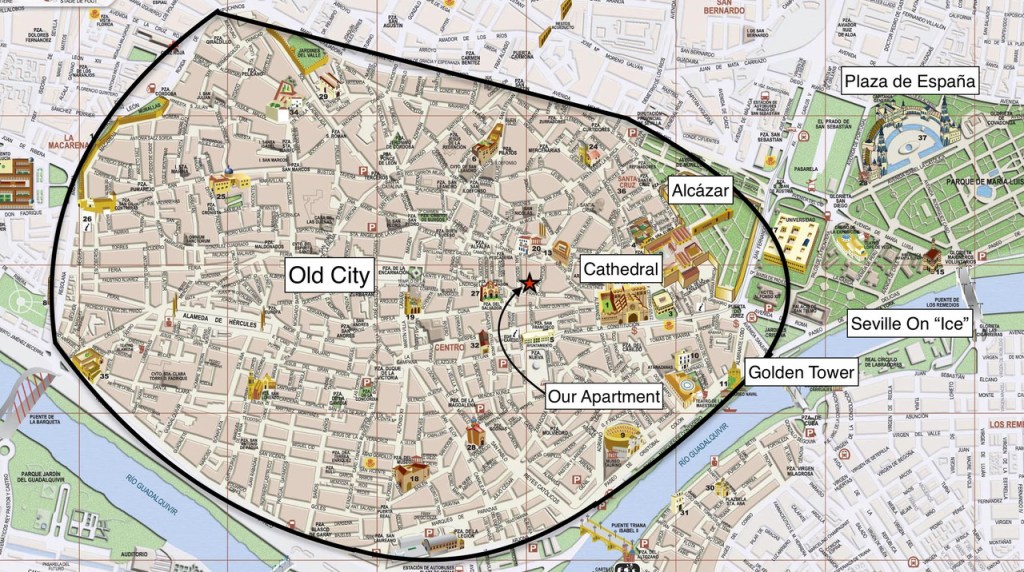
Behold the famous Gold Tower! I jest, it’s just a building in the Arenal neighborhood. As we move away from the old city, the streets get bigger and cars can park. Below is the actual Gold Tower.

Torre del Oro, or The Golden Tower of Seville, is about 35 meters tall and was built in the 12th century by the Almohads. Its purpose was to control shipping, and used to be part of the old city walls. Apparently a heavy chain anchored here extended across the Guadalquivir River and would prevent ships from leaving. A boot, but for boats.
We found a small fair up the river, so we wandered through. Even took a ride on The Ferris Wheel, which was called The Super Noria. That apparently translates to “super ferris wheel.”
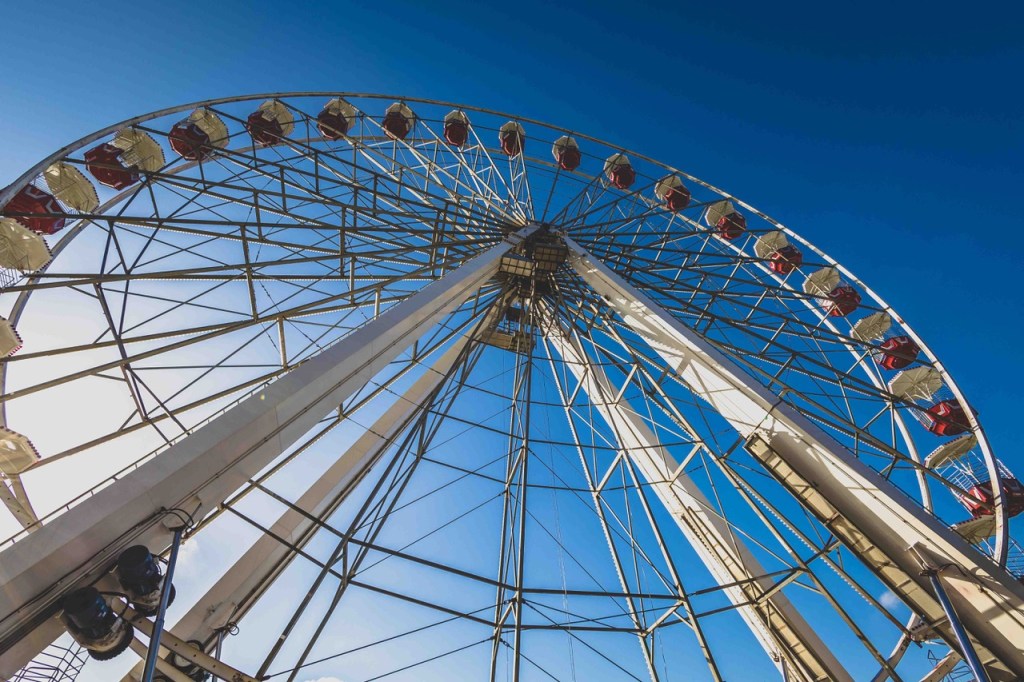
The poor workers did not look thrilled to be working on Christmas Day. I felt for them. The entire fair was called Seville On Ice, ironic considering it was warm enough to wear short sleeve tee-shirts. We did find an ice rink eventually, but it was in rough shape.

Above is a panorama of the Plaza de España. It is semi-circular, which this picture doesn’t quite show. Built in 1928, it showcases all the major architectural styles of Spain — from Baroque and Renaissance to Moorish. It’s a curious building, whose purpose wasn’t quite clear. The wide plaza, however, I’m sure bustles with activities on warm summer nights.
As of 12/25:
Churches: 8
Cathedrals: 0
Miles Walked: 14.29
 Cleared for Departure
You must be logged in to post a comment.