

The Alcazar (pronounced al-Cath-r) is a palace … a large one … which has been in continuous use for, more or less, forever. It begins around 700 as a home to the caliph, built in the newly conquered Seville. A caliph is a ruler who is considered to be a direct successor of the Prophet Muhammad. Over the centuries the palace expands, contracts, and changes due to the prevailing ruler and style of the times. In the above image, the Facade of the Palacio del Rey Don Pedro, you can see what I’m talking about. We’ve got some Islamic flair at the bottom and some Neo-classical mixed in for good measure. The roof line goes for Baroque. This theme of mixture is repeated throughout the complex, which creates an eclectic structure. It stands parallel to the history of Southern Spain, which is also an eclectic mixture of religions and conqueiers.
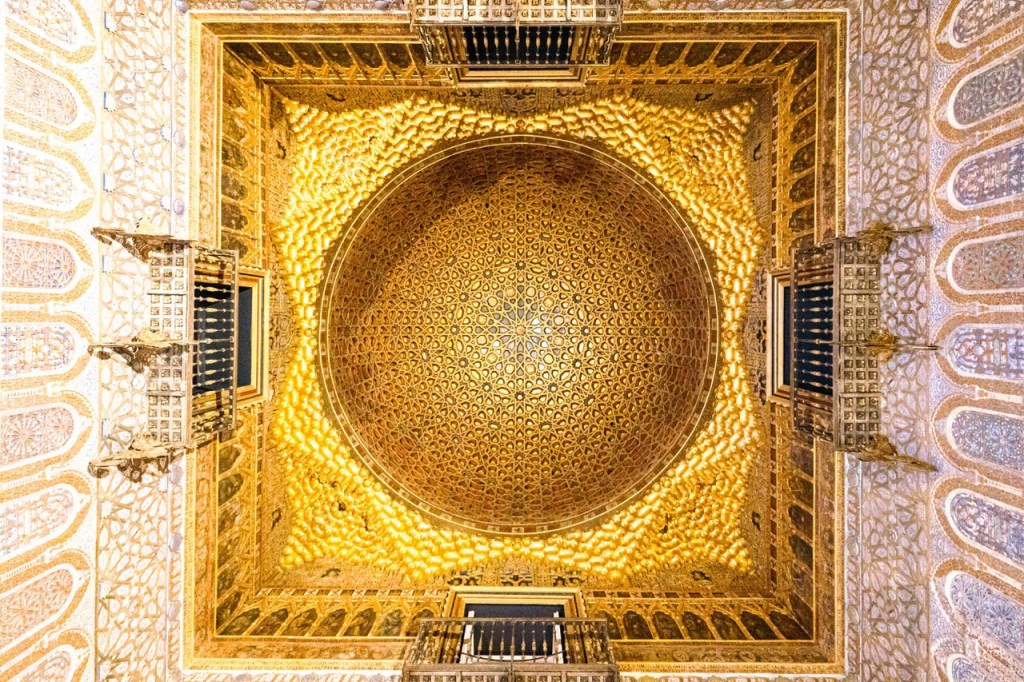
This is Salón de los Embajadores, or Throne Room. A domed ceiling comes from the Islamic tradition, similar to ones found on mosques. The balconies were added later, during the Renaissance, using cast-iron with dragons because why not? This room is at the center of this phase’s construction. It was actually used in Game of Thrones. I was told. I didn’t watch it.

Now you count the various architectural styles above. I’ll wait here. This ceiling was found in The Prince’s Room.

Here is the Patio de las Doncellas, or Courtyard of the Maidens. The second story, only visible in the reflection, was added later and is built in the Renaissance style. The first floor is all Arab, though the columns have been switched out.
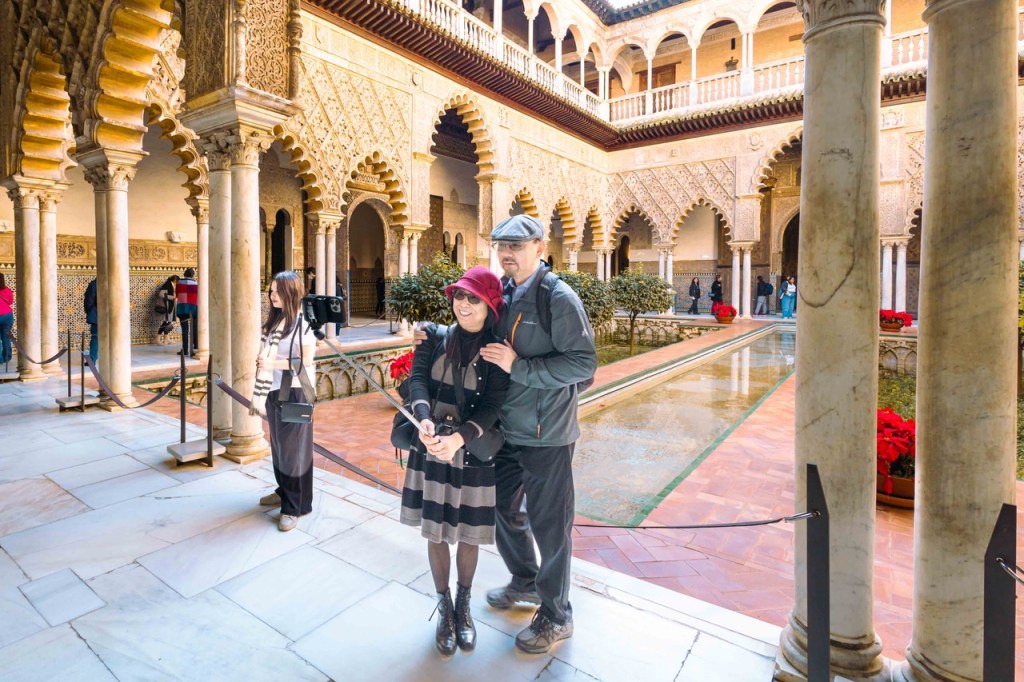
For some reason other tourists get annoyed with me when I do this. Why can’t you also be posing for me? How am I to know you are only posing for your camera and not mine? Asian tourists really love their selfie sticks. Most female Europeans had a male photographer in tow taking pictures of them while they posed using all the latest, flirty gestures. Check out your nearest Instagram for more.

What I find interesting is the various eras have their own wall decorations, which were mainly left intact. The Islamic motif is above and the more traditional Spanish ceramic tile work is below. Interestingly, this style of tile work travels to the Americas and is found in places like Central and South America. The Islamic adornments get left behind. Probably too costly to reproduce. That said, mosques are heavily adorned with geometric shaped tile-work, though it is usually not colorful.

I’m not sure what style this is, but it’s a helluva ceiling. It is wood that’s painted gold. We found it in The Audience Chamber, which is a room dedicated to sailing and the important ships of the Spanish empire.
I know what you’re thinking. With so many styles, how did they leave our Gothic? Well, fear not, fearless reader! Behold!

Yes, it’s a Gothic chapel in the Gothic section of the palace. Phew. No style left behind.
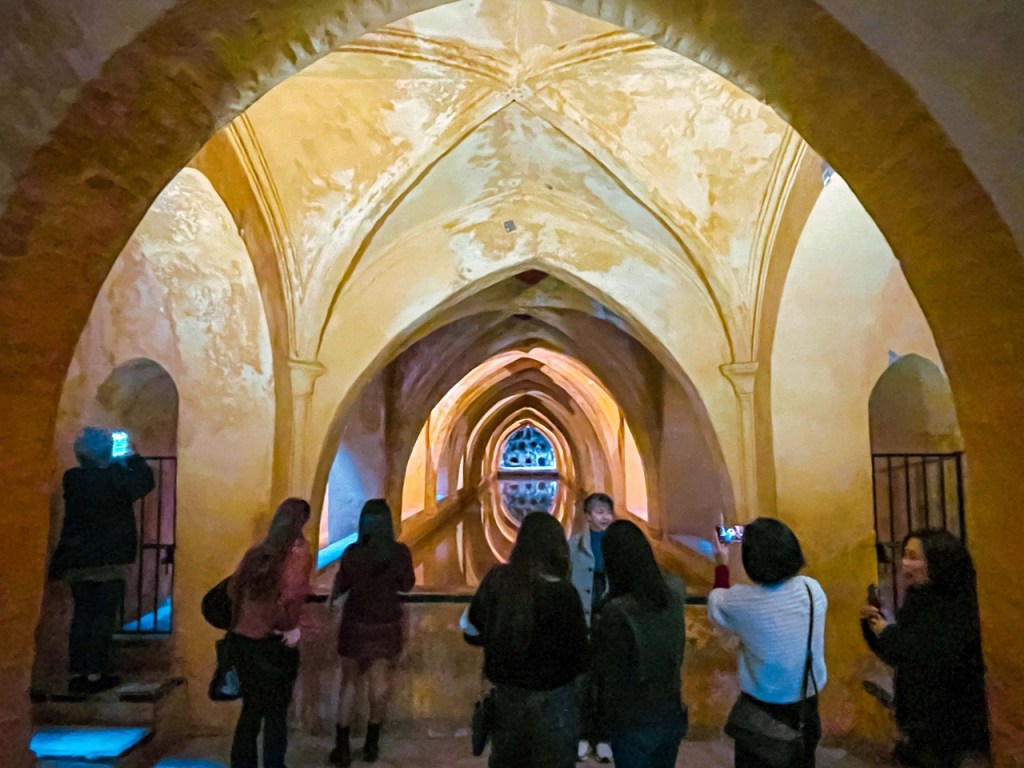
Underneath the Gothic Palace are the Baths. I bet swimming here was very pleasant during hot summers. If the walls could talk … I’m sure they’ve seen their fair share of naughty behavior by Kings and their mistresses. One thing you’ll notice is all the people. Globalization has done many great things for my 401K, but a side effect is that more of the world can travel. I think this is a net positive, but you do have to jockey for position to get the shot from time to time. Patience is required. You can see mom off to the left going her own path, taking the picture less shot, which I can only assume made all the difference.

Democratically, we all took turns taking the exact same picture, shown here.
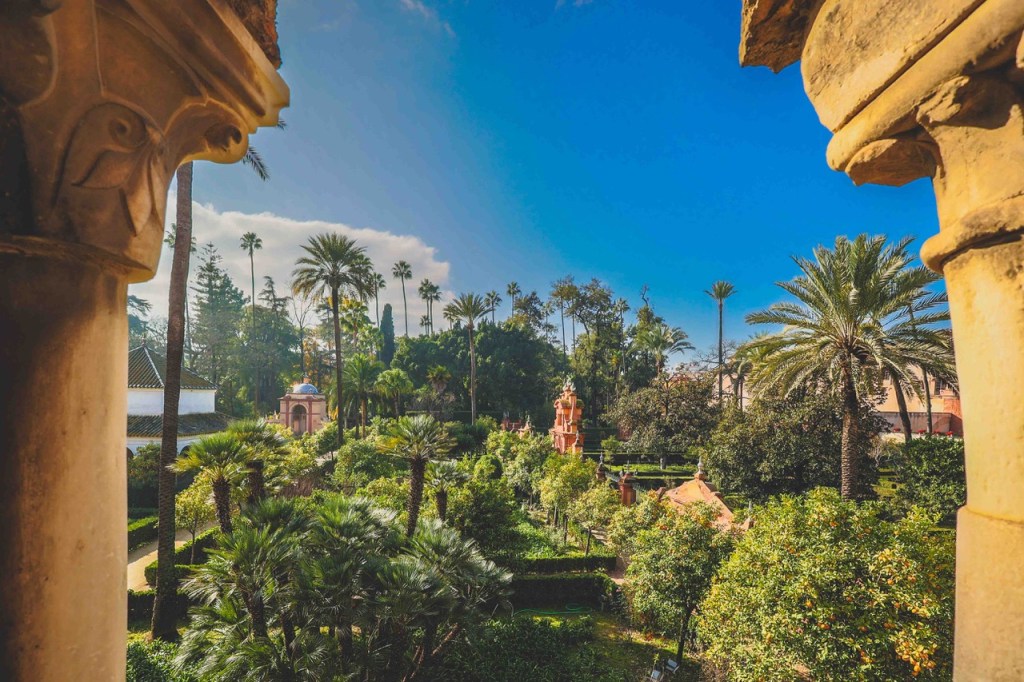
Attached to the palace is an elaborate gardens. It is quite a playground. Many orange and lemon trees grow, watered by an elaborate canal system. Like the palace, it too developed at various stages.
Today the Spanish royal family uses part of the palace when touring the area. There is cultural programing scheduled throughout the year, and the site is available for movies (like Lawrence of Arabia in 1962) if you have the budget. It is the most visited attraction in Seville.
 Cleared for Departure
You must be logged in to post a comment.