We took a helicopter ride from Nxabega to Sandibe, which was the first time RBD and I had flown in one. I found it be very exciting. I asked the pilot all sorts of questions about how they work and what he was doing. We have another helicopter trip tomorrow flying into Maun, before departing to Joburg in South Africa on our return trip home.
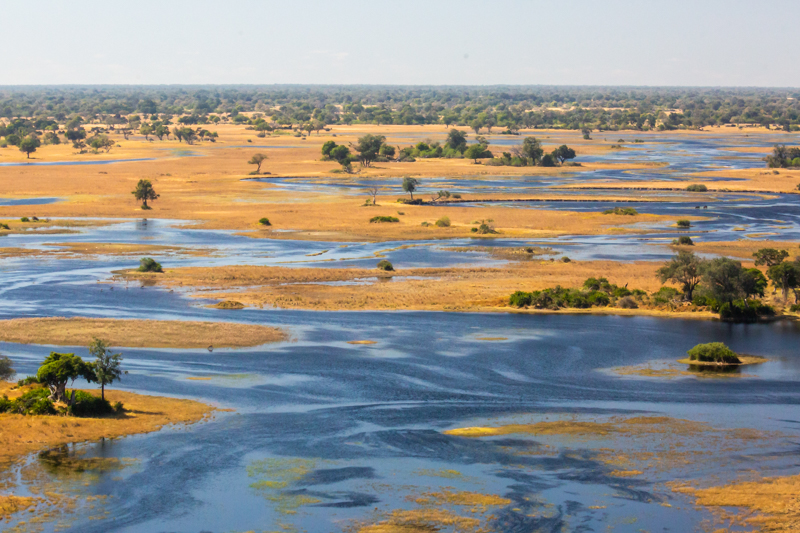
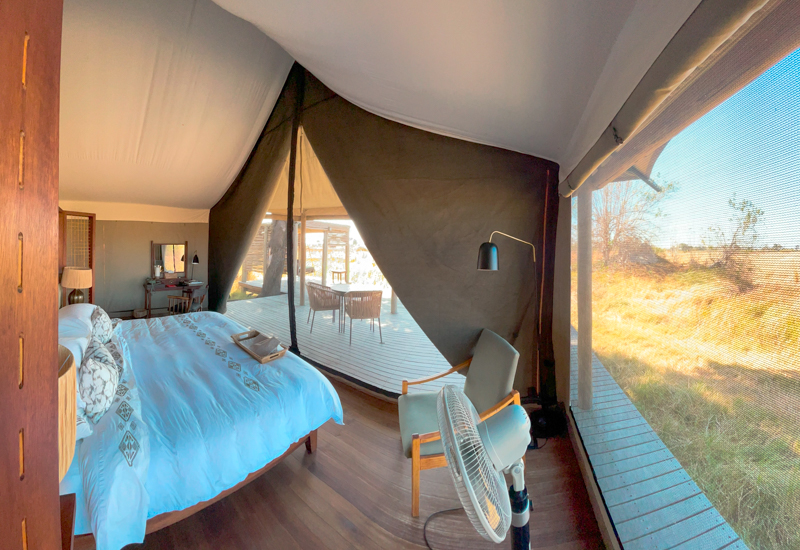
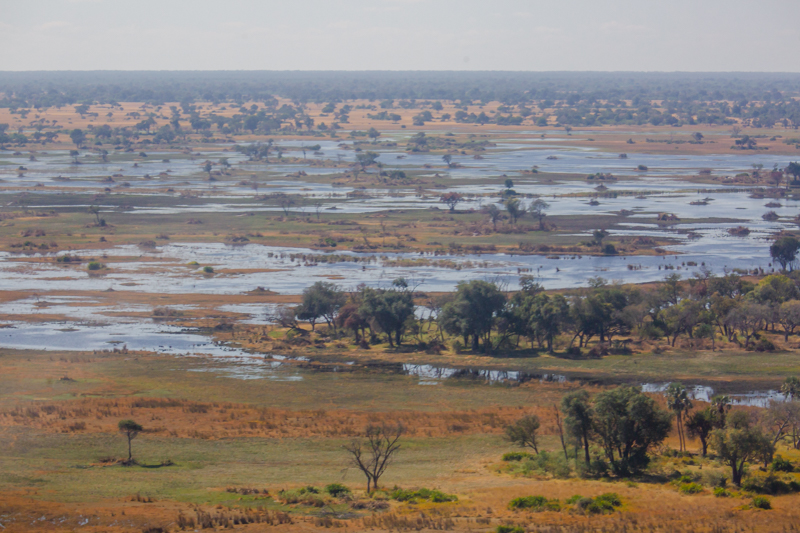
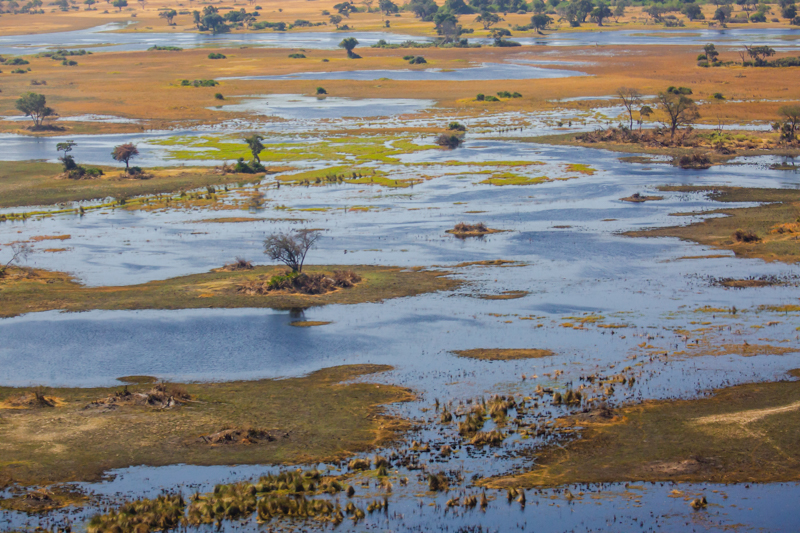
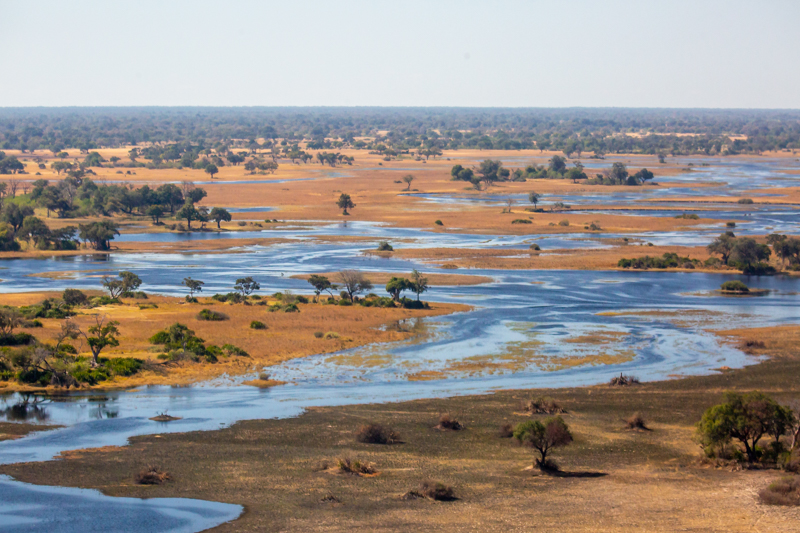
An overview of the area where we’re staying. The flight was only 25 minutes, but to drive that same distance would have taken over 4 very uncomfortable hours.Welcome to the airport, which is somehow nicer than LaGuardia. Cleaner, too. Our “little” canvas tent at Nxbega.The flood waters fill in low lying areas, creating numerous islands which wildlife take advantage of. The clumps of trees in the foreground are the result of termite mounds. There are, perhaps, quadrillions of termites here, which create impressively tall structures. Animals use the mounds for looking around. While hanging out, they poop. Their poop contains undigested seeds, which are germinated by the water and nourished by the poop. Trees grow and little islands begin to form. Over time they form big islands, which becomes the dry land we use to spot animals. Without termites, this land would be more marsh-like. See the Y-shaped tree surrounded by bushes in the middle left of the picture? Termite mound.
The islands and channels of water create interesting animal behavior for territory and navigable crossings. Predator and prey can be squeezed together by the changing land conditions.




 Cleared for Departure
You must be logged in to post a comment.