
Good morning from Paris.
For our last day in this lovely city, we spent time visiting the works of two artists: Banksy, an Englishman, and Georgia O’Keefe, an American. Earlier this week we saw work by Vivan Maier, an American photographer. By some great fortune of Fate, all these exhibits occurred during our visit.
Ms. Maier lived in France and the U.S., so Parisians have some claim to her. She was not well-known during her lifetime and earned money as a nanny. Her photos were recently discovered in an abandoned storage unit. The new owners found hundreds of undeveloped rolls, homemade movies, and audio recordings in the unit. They developed them and were astonished to find a comprehensive catalogue of city life from the 1950s onward. She took over 100,000 images, only a fraction of which are exhibited. She died in 2009 having no heirs as, probably, the most prolific photographer nobody has ever heard of.
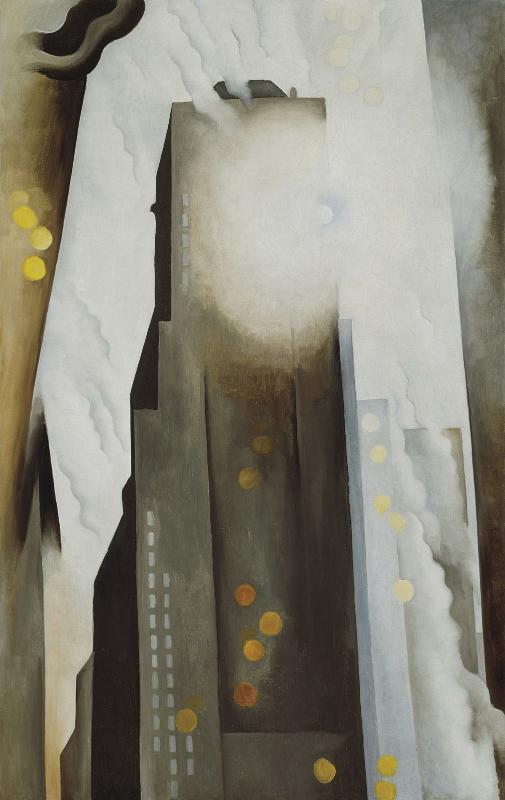
Georgia O’Keefe is the, “Mother of American Modernism,” a title the exhibit curators suggested she never liked. She needs no introduction. Her paintings of New York, flowers, and New Mexican landscapes are well known. She was a trailblazer, and died in 1986 at the age of 98. My favorites of her work are the cityscapes.

Finally, Banksy. Nobody knows who Bansky actually is, though many suspect him to be Robin Gunningham of Bristol, England. I hope it is never confirmed. The anonymity has contributed to his brand; he has become an Everyman, in it for the art and not fame, poking at the status quo, a sentiment all of us share as we actively scurry (rats feature prominently in his work) to perpetuate said status quo. (Particularly if we benefit from it.) There is a sense of amusement, rebellion, and disgust that permeates his works, usually spray painted on walls in cities around the world. I understand his perspective, as I too grapple with feelings of amusement, rebellion, and disgust at my own, privileged existence. His incisive humor and political digs sting, and I love that his art resonates loudly with cognitive dissonance. We should all live in a state with more cognitive dissonance ringing in our heads. It makes us uncomfortable but can lead to new connections forming in the brain. Unfortunately, none of us particularly like being uncomfortable.


After dinner at a quintessential Paris cafe, we lazily walked back to our flat. Our only chore left, packing and cleaning.
 Cleared for Departure
You must be logged in to post a comment.