

TL; DR – The sun rises in the east.
________________________
So here in Hawaii they have this thing called the sun. It’s quite intense. For a fee you can watch it rise. The sun, it turns out, is a giant ball of fuel that’s exploding due to a runaway fusion reaction. It’s just blowing up, all the time, for no reason, and we’re just all cool with it. Fortunately, very few things are in the way of its impressively large blast radius. From Hawaii, the sun appears to rise in the sky. It’s an illusion. The Earth is actually moving downward as you gaze east from the surface, which causes this exploding ball of gas to appear to rise. Heady stuff.
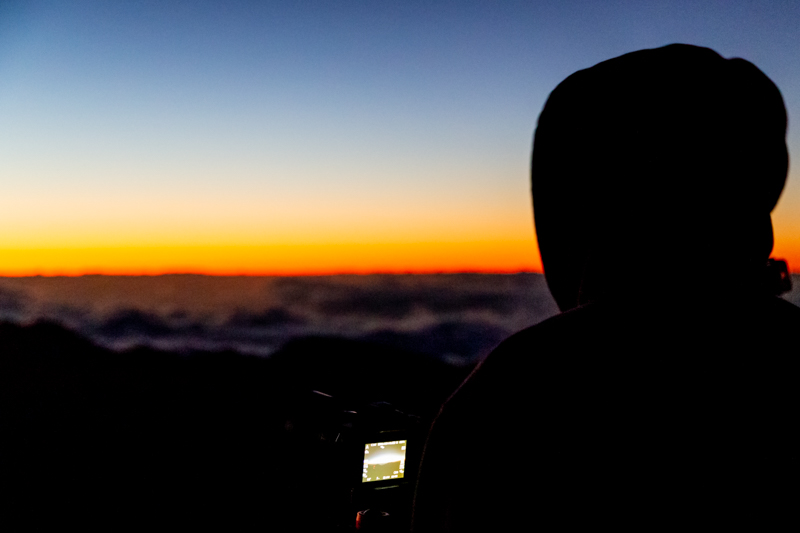
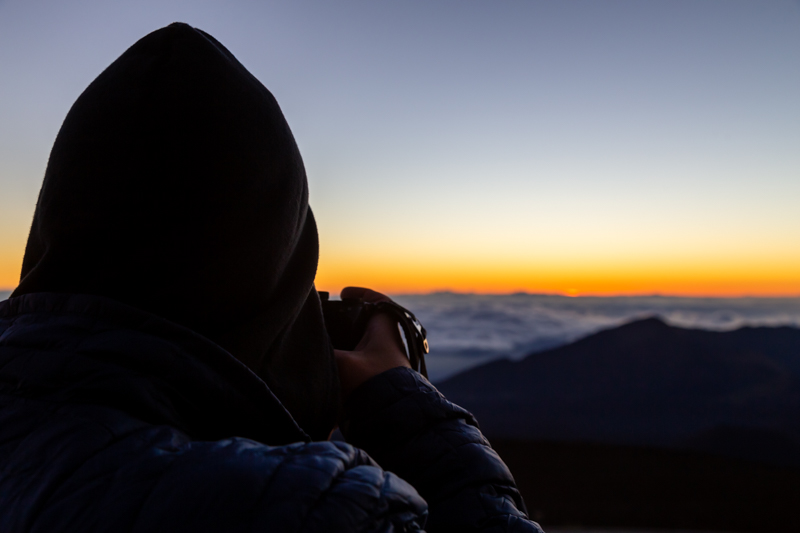
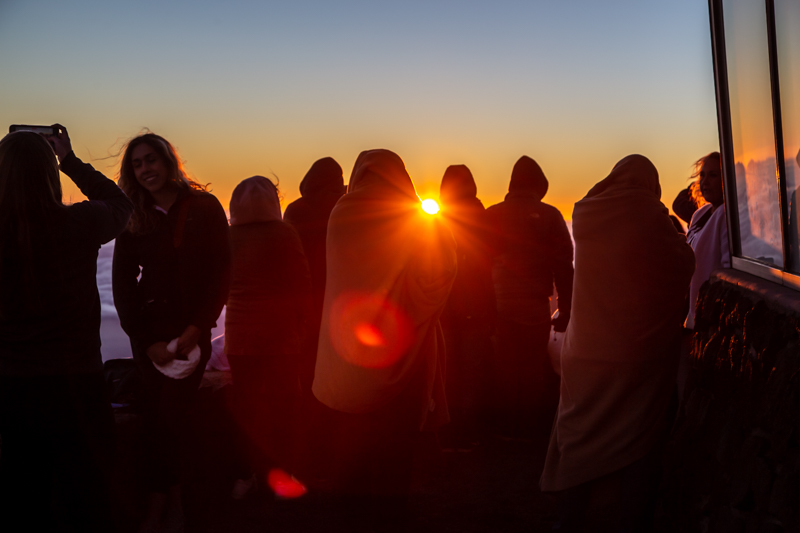
Now, I know what you’re thinking. How can I, Lance, witness this amazing event you so magically describe? Well, have I got some news for you. Apparently, no matter where you are on the Earth, you can watch the sun literally just rise, though times may vary, check local listings. Crazy, right?! Now … if you want to wake up at 2 AM, travel two hours, enter a national park, drive to a height of 10,000 feet above sea level, stand with grumpy strangers in 40 degree, breezy weather and wait for the sun to “rise” while “serious” photographers using not so serious equipment yell at you for getting in their precious shot (of nothing, because it’s still dark) and corrupting their art for this special and unique event that happens only once a day, everyday … well, for that experience you’ll have to come to Maui’s Haleakala Volcano.
The rough contours of Maui feel familiar. It’s a resort-type place, not unlike Vegas. This confirms my theory that if you travel in any one direction long enough, things repeat because humans aren’t creative enough to invent truly new experiences. Big hotels with all the familiar amenities dot the landscape along the coast, with tourist care and feeding stalls, like restaurants and shops, are just inland of that, and real people live further inland still. As we walked through the requisite outlet mall, we passed the also requisite Le Creuset store. Odd store for a tourists, yet it’s always around. I guess people come on vacation and all the fine dining goes to their heads. The thinking goes, “I”m a foodie now, as indicated by the teenage waiter at The Westin who complimented my entre choice, and as a foodie I deserve an expensive, colorful, French pot that cooks things just a little better. Plus, free shipping’s included because foodies, like me, don’t travel with their cookware.”

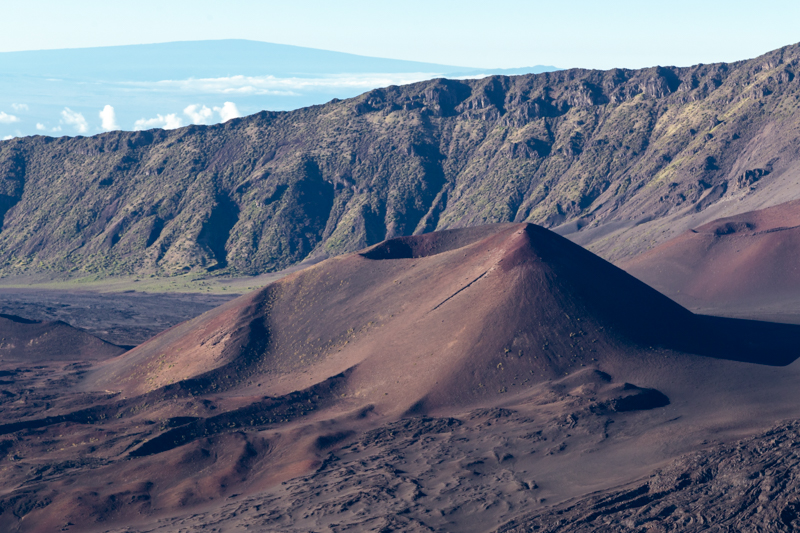
Maui exists because of two now likely extinct volcanoes, Haleakala and the other one. Between them is a causeway which connects the two mountains, which consists of eroded volcanic rock. If the ocean were 70’ high, they would be two separate islands. Haleakala is the taller one, and last erupted 800 years ago. Same “dermatological” reasoning, via a hot spot, but the crust has floated on by and the hot spot is now under The Big Island to the east and south. It is unlikely these giants will ever erupt again and have begun the quick, geologically speaking, process of eroding into the sea, their entire existence a rounding error in the totality of Earth’s time.

10,000 feet is high for humans. We stop working well above this altitude. It’s about the max humans can comfortably live. Planes are pressurized to between 6000 and 8000 feet, and few describe those environments as pleasant. Hiking, or anything else requiring oxygen, is more difficult to do in the thin air. Your heart beats faster trying to oxygenate tissues which can be disconcerting. At this height we are above much of the atmosphere by volume, and approximately 90% of the atmospheric moisture. The clouds are below, really, everything is below you. It is impossible to describe the crispness and stillness of the air. The views of the ocean and Maui just sublime. I could have spent all day sitting in a chair, watching the world below. If I ever make it back here, maybe I will.
I’ll bring a blue Costco, “Tommy Bahama” backpack beach chair (which seems to be the state chair of Hawaii), start a fire, and with my bright orange Le Creuset stockpot make a hearty stew. It’s pretty chilly up there, and I need to buy a good pot anyway. Might as well get it here.


 Cleared for Departure
You must be logged in to post a comment.