If you search “safari” in Google, you get loads of history about Safari … the web browser. It takes changing the search terms to find anything useful. The word safari comes from the Arabic verb “safar,” meaning, “to make a journey.” The Swahili picked up the word, probably from bumping against Arab traders making their rounds up and down the continent. In Swahili, it’s “safariya,” a noun that means long journey. From there we get safari, still in its noun form.
The whole idea of a safari and game drive is odd, something only the British would think up. You sit in these vehicles, which resemble an amphitheater on wheels, and are driven around the bush exploring for hours. A guide or ranger drives while a tracker sits in a chair located on top of the hood opposite the driver. At some point you stop for food and drinks, and can find yourself eating scones and drinking cappuccino, or perhaps a cocktail made from top shelf liquor, around a cloth covered table under a Marula tree overlooking the area. You can’t find a decent scone or cappuccino in entire regions of the U.S., but here, surrounded by miles of absolute wilderness, the British managed to start a tradition of packing “the essentials.” In the mornings I take my cappuccino with a liquor called Amarula (made from the fruit of Marula trees) because, why not? It’s similar to Bailey’s. Though today we had mimosas with freshly squeezed oranges. In the back of our vehicle is enough alcohol to kill a small fraternity.
The original safari involved scores of staff (likely enslaved workers) hauling large volumes of equipment, all for the comfort of the white hunters, who brought back dead animals for study and to satiate their egos. While these animals are now protected, “the hunt” continues and when we find something, like a lion or leopard, our hearts jump just the same as the hunter’s of old did. It’s a thrill. You feel like you won something, a chance to glimpse an animal that evolved to be undetected.
We wake at 5 and are typically mobile by 5:45. Each drive lasts about 3 to 4 hours, and varies depending on activity levels. By 4 we are back on the vehicle and searching again. The late morning and afternoon are spent catching up on sleep and personal hygiene. Apex predators do very little during the day, and the prey mostly graze and lounge in the hot sun. Most activity happens overnight, starting at dusk and ending at dawn. Those are the times we ride around. The schedule is tough, because you must have a bit of self discipline to ensure you don’t drink too much or sleep too little.
We only have one more game drive to go. Tomorrow we depart for Cape Town to see the city sights. I’ll still be sending along pics of animals because I am behind. I am exhausted from the early mornings and late nights, but you dare not miss a drive because that could be the drive where something incredible happens right in front of you.
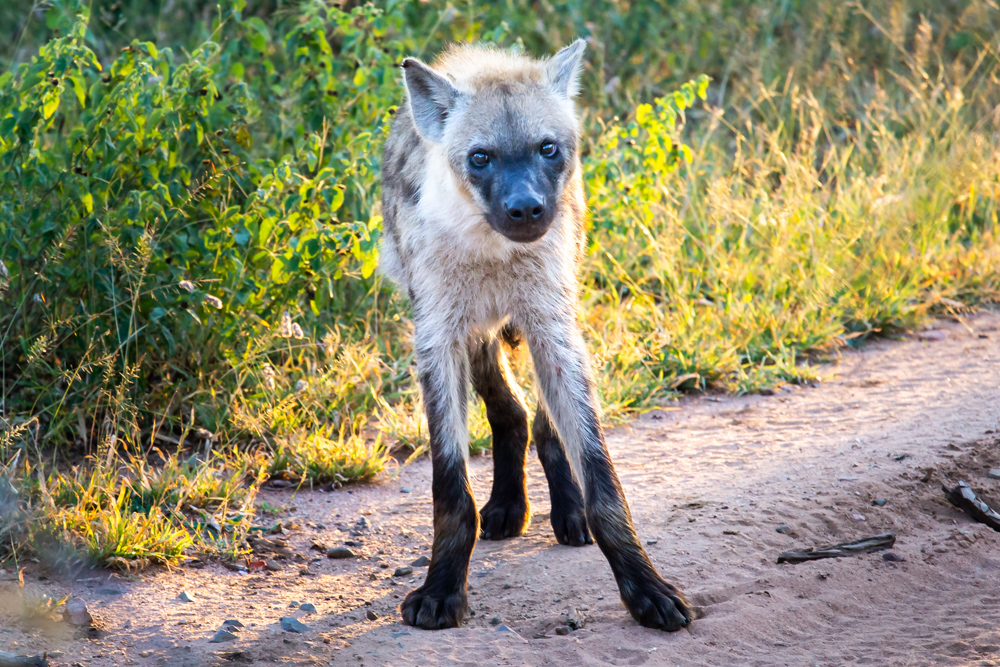
This is a young hyena, following a pack of wild dogs to pick up the food they leave behind.
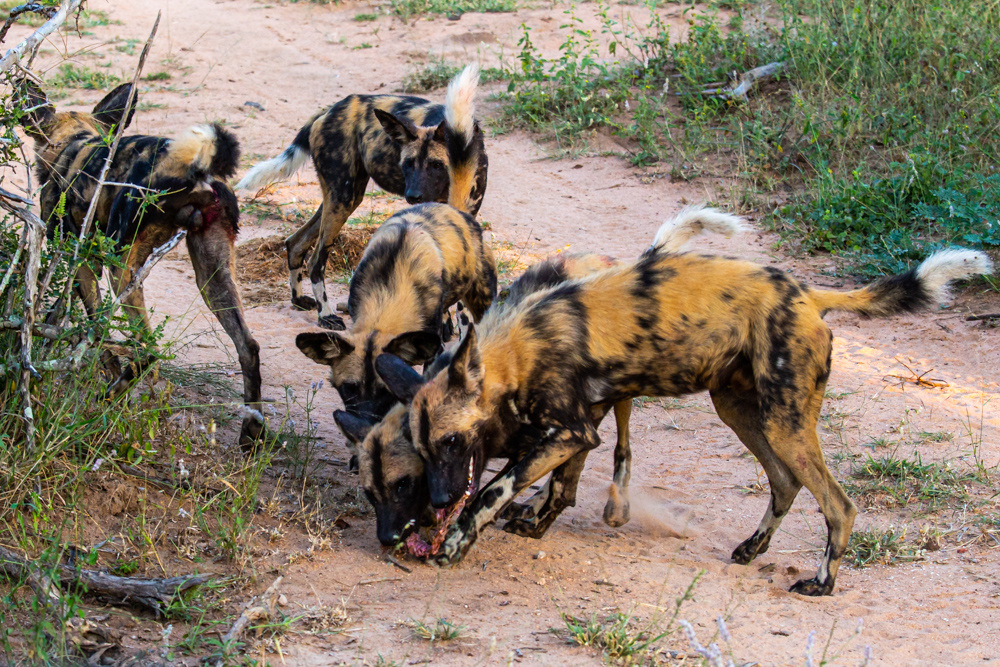
Wild dogs are incredibly rare. They have huge ranges and can go unseen for months. We were fortunate to come across a pack that were frenzied over a recent kill. Some members of the pack chased away the hyenas, who wouldn’t dare take them on, while others ate. Wild dogs are efficient hunters, and have the highest success rate in the bush. They are also hated by farmers, whose helpless animals they slaughter. While protected now, they were once killed on sight by park rangers. The alpha male and female were mating, while the injured runner-up was beating up on smaller, weaker members of the pack in frustration. It was a dramatic scene. Even the trackers had their cell phones out taking video, and those dudes have seen it all.
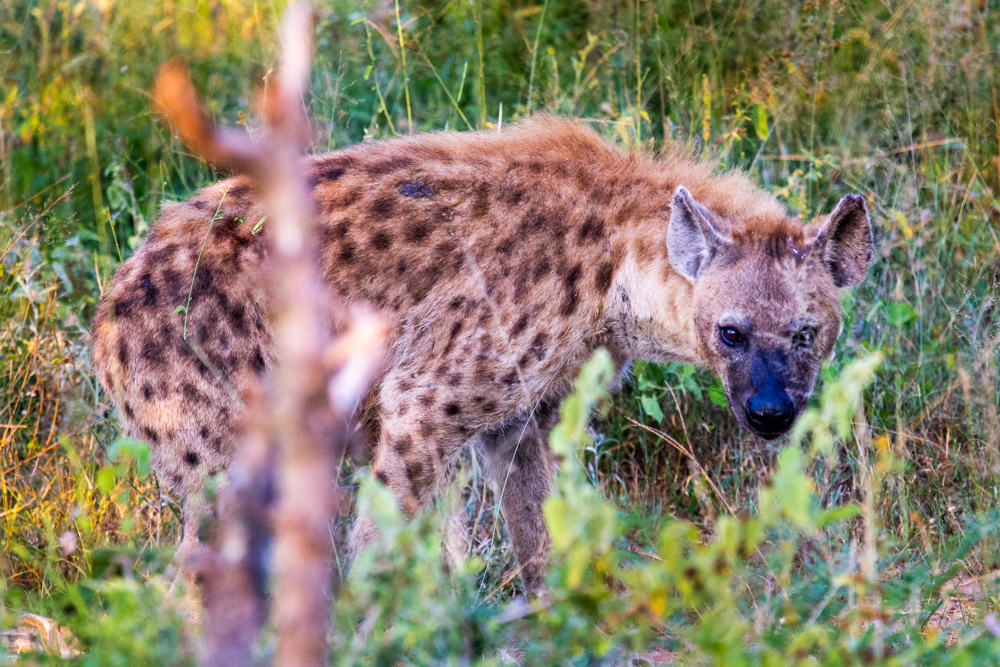
The young hyena and her mum, not pictured, stay on the sidelines while all this canine commotion is going on. They are efficient scavengers, and will wait for the dogs to depart. Nothing is left, however, of the kill.

This mother leopard is annoyed with us. Our vehicle has caused her cub to hide in the tall grass. She is not worried about us, and over the course of the encounter the cub, leaning from his mom’s body language, gets more comfortable with us.

Leopard moms will intentionally their leave young behind to teach them how to track her down. That’s what’s happening here. She is calling to her cub so that her cub can find her. The cub is reluctant because of the vehicle.

A warthog saunters away from us. In the distance, all of Kruger National Park stretches before us.
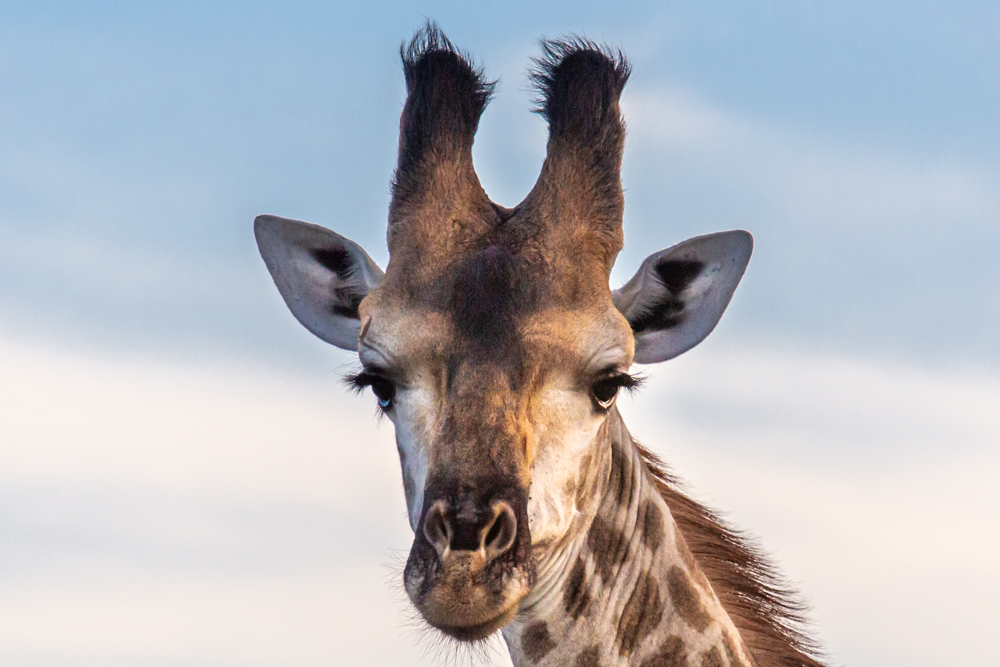
Male giraffe with great lashes.
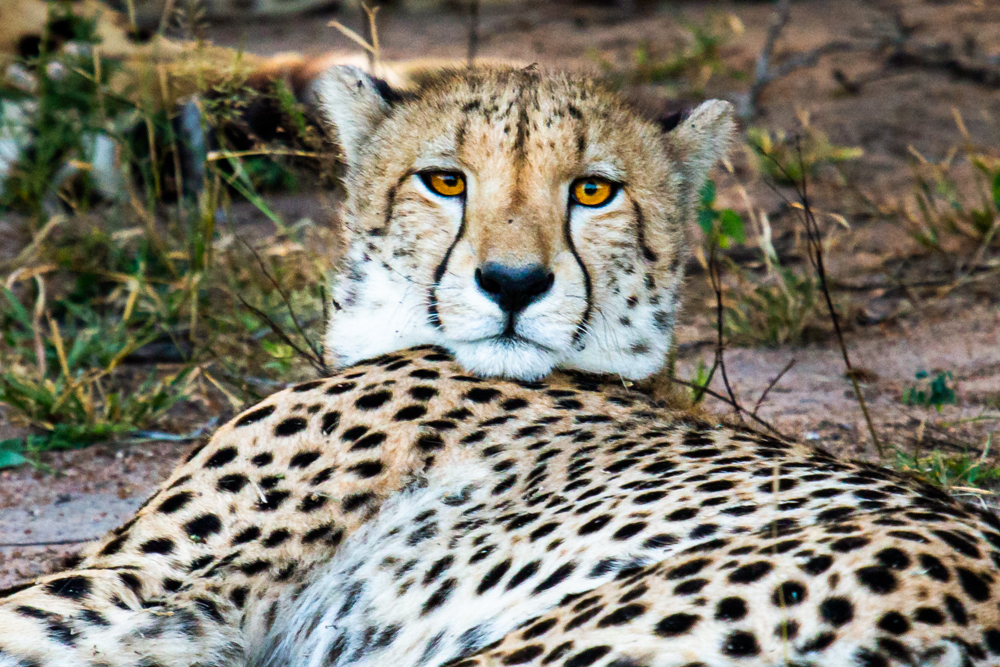
Leopards are the lowest of the apex predators, and hunt mostly at day. This group, a mother and her two young, were winding down for the night.
—
You received this message because you are subscribed to the Google Groups “Cleared For Departure” group.
To unsubscribe from this group and stop receiving emails from it, send an email to cleared_for_departure+unsubscribe@googlegroups.com.
To view this discussion on the web visit https://groups.google.com/d/msgid/cleared_for_departure/D173B419-AF29-4FD9-9A3F-48081465049D%40mac.com.
 Cleared for Departure
You must be logged in to post a comment.