As I write this my fellow passengers are asleep. The airplane is fairly dark, we’ve all been fed, and the flight attendants are doing whatever flight attendants do when there’s only six people in your section. It’s 3 PM in Johannesburg, which means I can switch to wine soon. We have six and a half hours to go. Research says you’re not supposed to eat or drink alcohol on airplanes, which, to me, is like saying you can go to the beach but don’t swim, get in the sun, play in the sand, watch the ocean, and always wear jeans. Like, what the fuck am I supposed to do here?
Welcome to our brothel! Enjoy the locally sourced orange juice. And only that as the other activities might dehydrate you. It’s not healthy.
It turns out we actually were on a KLM plane across the Atlantic. The 787 was swank. The windows dimmed, instead of the ubiquitous plastic sliders. It was very quiet while in flight. The air was indeed more humid. Now we’re on a 777 and I feel how dry the air is comparatively. The plane also — and I don’t know if this makes any sense — felt lighter in the air. When we were skipping through turbulence, it just felt … more buoyant. Where as heavier plans tend to bounce reluctantly in mild chop, we “lightly” skimmed the air’s rumpled currents. When I told this to Rebecca, she looked at me like the malaria pills had turned me crazy. Turns out it is a side effect.

I napped while flying across Europe and The Mediterranean Sea, and woke to find the cabin bathed in a curious mixture of red and yellow. I thought I had slept clear into sunset and was annoyed with myself. After so carefully planning my sleep-wake schedule to reduce jet lag, I’d blown it.

However we had just entered The Sahara, so I didn’t accidentally sleep for 8 hours. Which, in retrospect, seems unlikely on a plane. Sahara is Arabic for desert. In English that makes it The Desert Desert, emphasis goes on the first desert, I believe. Much like the restaurant The Cucina Kitchen, or the drink, Aqua Water, or the famous Fiume River, sometimes translations are best left untranslated.
The Sahara is the approximate size of China. While over a billion people live in China, only a few million live here. I can feel the lack of population below, as if we are traveling through a void. I ride in a moving oasis of the civilized world and gaze out to a land so foreign, it might as well be on another planet. While this oasis is at 37,000 feet, we have passed over numerous other oases of civilization below. All of us, just small blips surrounded by endless sand. Which, if you think about it, sort of tracks with the Earth as an oasis in the “desert” of space.
You know, I think I will cut back on the malaria medicine.
The top temperature ever recorded in the Sahara was <ahem> a “temperate” 136 degrees. That is darn close to the maximum temperature we think a human can survive. Obviously nobody (sane) has ever tested it scientifically, so the actual number may vary. Humid air lowers the number, dry air raises it. We do things like seek shade, drink water, and fan our skin to help our bodies dump heat into the environment. Depending on the humidity, between 105 and 140 no ancillary cooling behavior helps. Prolonged exposure leads to death. At 105 and humid, it takes days and is unlikely. At 150 and dry, you’ll be dead before sunset.
When the brain can’t shed its excess heat, it essentially cooks. Proteins denature, which is what happens when you scramble eggs. But in your head. This is not ideal for cognition.
The Sahara is not the largest desert on Earth, but it is the largest hot desert. The Antarctic is larger but just as dry, though the seasonal averages do differ slightly. Like Antarctica, the Sahara used to be a lush place, with large inland lakes and abundant life. Now, nothing. Maybe every desert was once something else, be it hot or cold.
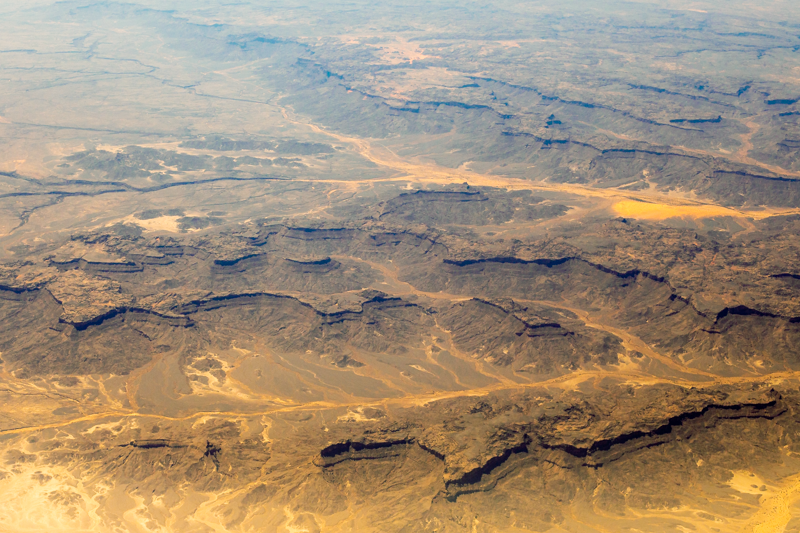
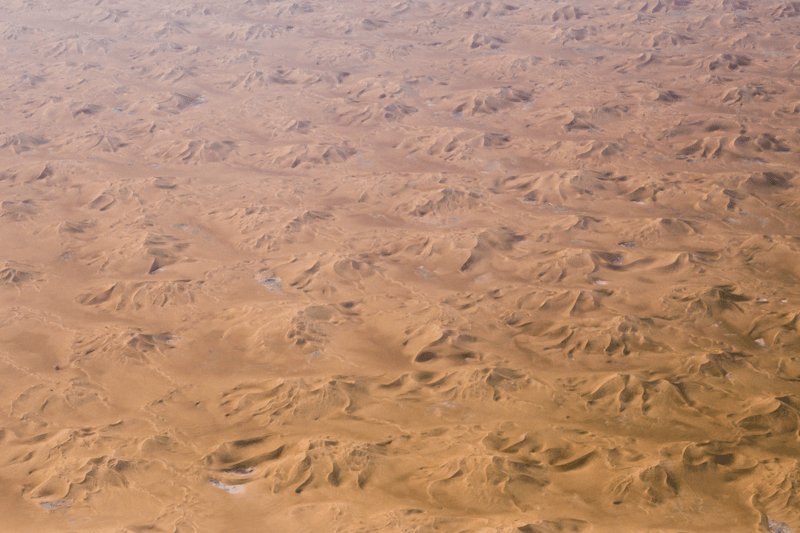
I take pictures when I can, but the altitude and haze make it difficult. Plus, you can never fully capture the infinite. I’ve included some of my vain attempts. I like the Sahara from this vantage point, and it’s not just the air conditioning. You see shapes up here not possible from the ground. The sand flows and undulates. You can trace where rivers once flowed in the barren salt flats and through carved canals. Different areas have distinct features, which are visible from up here. Sometimes the delineation is razor sharp, other times a transition exists. For whatever reason, this place appeals to me. Maybe because half my DNA is Arab? I will not see it again this trip, however, as we fly back over in darkness.
We will soon fly out of the Sahara and over the heart of Africa, the Congo.
We will speak again when we arrive at camp.

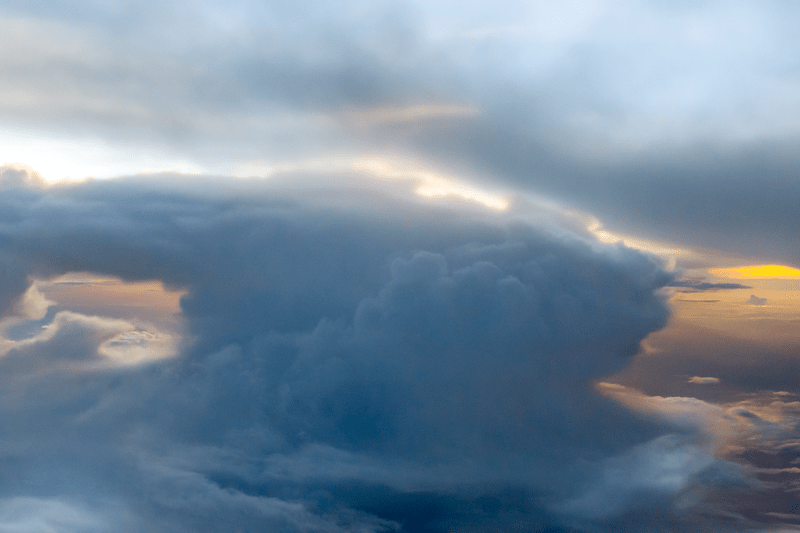
After flying into Central Africa, we started dodging storm clouds. Quite a show.
 Cleared for Departure
You must be logged in to post a comment.