
RBD and I were celebrating our wedding anniversary in The Turks and Caicos Islands, a small chain of coral atolls in the Caribbean Sea that once belonged to the British. Floating in the pool, I looked up at the massive hotel and two things occurred to me simultaneously.
One, this structure was built using entirely foreign money. Two, that’s why you could buy individual units (or groups of units) for a price, unlike a chain hotel like Marriott or Hilton. An investor could park money here, and “the company” would rent out the units to tourists, like me and RBD, for a percentage. With this model in mind, it became apparent which buildings on the island were locally financed and which were not. The non-locally owned businesses and buildings were built to a higher standard, capable of withstanding hurricane force winds. The locally owned businesses were built, more or less, with little regard to any sort of code whatsoever.
So you build these large economic engines in the middle of nowhere (but they have pretty views of white sand beaches) to store and generate wealth for a select few. The locals, who are not rich, run the front desk, cook the food, repair the leaks, clean the beds, and tend the bar. They have jobs but not careers. They make money, but never enough money to change their socio-economic status, to travel internationally, to save for retirement, to even book a room at the place they work. Participating in this model makes me feel uncomfortable.
We bought a house in November in this area, for lots of reasons. One of them was to diversify our investments and help us save for retirement. We plan on retiring to the area, at least part time. So imagine my surprise when it turns out owning a vacation rental in Blowing Rock is essentially the same economic model at work as in Turks. Our house is a small engine compared to those hundred room behemoths, but the similarities are impossible to ignore for anyone willing to look.
Money to purchase the house was generated in another economic zone, in our case New York City. A company rents out the units to tourists and takes a percentage. Local workers do everything for guests. They clean the beds, book the rooms, repair the leaks, and cut the grass. They have jobs but not careers. They make money, but not enough to substantially change their socio-economic status, to travel internationally, to save for retirement, to stay in the homes they clean. (The house our family stayed in cost about a million to build, which for the area makes zero sense since there is not a job available which would allow an average local to carry that kind of mortgage.) The main difference, however, is I am profiting directly, as opposed to floating in a pool idly pondering how a foreign economy works. I’m the carpet-bagger, and this makes me feel more uncomfortable.
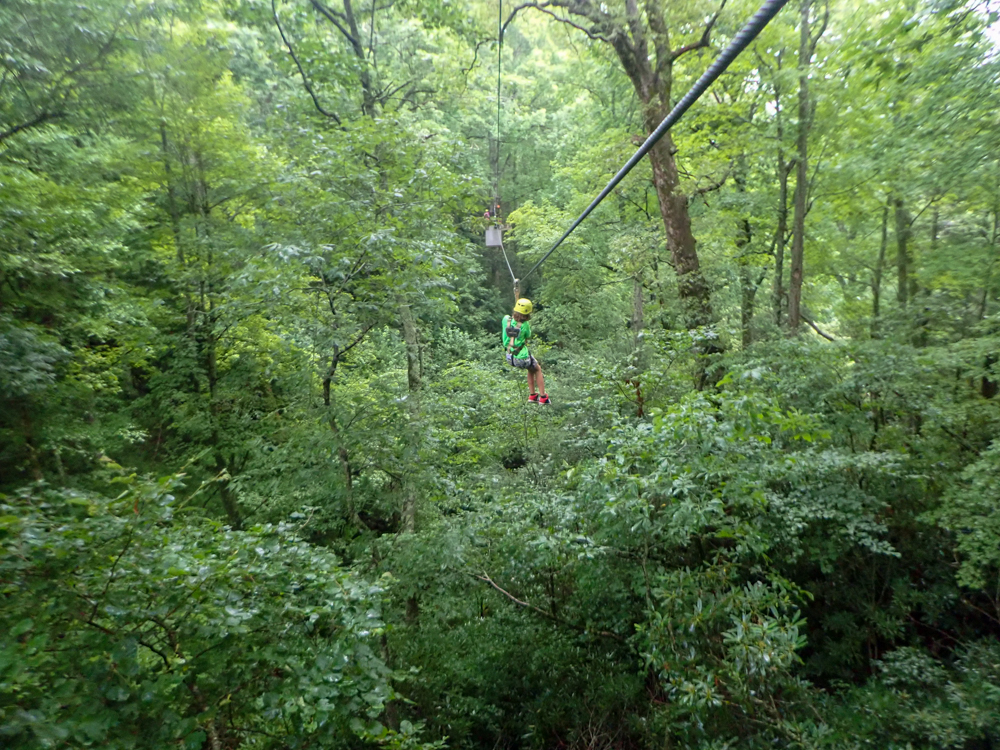
The High Country has hundreds of little economic engines (log homes, ski resort chalets) like ours, all functioning simultaneously. Jobs are generated beyond lodging. Grandfather Mountain has jobs – tour guides, grounds keepers, and ticket takers. The Wilderness Run Alpine Roller Coaster has jobs — ticket takers, bar tenders, ride operators. Magic Mountain Mini Golf has jobs – one lone dude handing out colored balls and putters. High Gravity Adventure has jobs – zip line guides, safety instructors, and shuttle bus drivers. Tourists need food and water, so jobs are generated to cook food, tend bar, and wait tables. So there are local jobs, but let’s not pretend these are careers capable of moving families into the middle class. Or keeping them there as costs, like health care and college tuition, rise.
Is this what my little corner of Appalachia needs? Am I what the High Country needs? Am I guilty of repeating history, and an ugly history at that? Granted, I’ve not murdered anybody for their land. Despite my genuine affection for the area, it feels like I’m barging into the conversation uninvited because I have money and the brashness to do so. New Yorkers do this a lot, most everywhere in the world they go, which is part of our “charm.” Appalachians don’t need jobs, they need modern industry and careers capable of putting their children through college, capable of allowing for families to move (or stay) in the middle class. Watauga County has been doing the tourism thing for a long time, but the data doesn’t show an overwhelmingly positive benefit. According to the Appalachian Regional Commission (ARC), Watauga is listed as “At Risk,” the second lowest classification in a five step scale.
I’ve read wisdom is the ability to hold on to cognitive dissonance. The brain naturally tries to rectify any dissonance created by external circumstances, which explains humanity’s propensity to lie to itself and stay, for long periods of time, in denial about fairly obvious truths. At this point, all I know to do is hold on to the dissonance. I don’t feel wise. Just mostly uncomfortable.
For now, it’ll have to do.





 Cleared for Departure
You must be logged in to post a comment.