Europeans didn’t discover Appalachia or The New World. Plenty of people were living in North, Central, and South America long before Europeans showed up. A small group of humans crossed the Bering Strait land bridge, created by an ice age, approximately 20,000 years ago. This small group expanded into the Americas over the next several millennia. For sake of clarity, I will refer to this group of people as Natives.
Columbus called them Indians, because he thought he had discovered India. He is not revered in Native populations (like he is in European populations) for his arrival marks the beginning of, essentially, a slow genocide that lasted roughly three centuries. However the winners write the textbooks, so Columbus is a hero.
Hernando de Soto is likely the first European to explore the region, looking for gold to glorify his country and pay back the investors who funded all this new world exploration. Central America had largely been a bust in the treasure and gold department.
Rumors of gold had come years prior by Natives living in northwest Florida, called the Apalachee. In 1561 a city, named “Apalatci” was put on early European maps. By 1562 “Apalachen” appeared as a broad, regional label. Thus “Appalachians” became the name of the mountains. “Appalachia” begins being used after the Revolutionary War.
So de Soto decides to figure out what’s what and find some gold and treasure. The expedition largely does not go well. His men baked in the lowlands, and then froze in the mountains. After meeting and cordially hanging out with the Cherokee for two weeks, de Soto demanded they “supply” his men with women. You can imagine how that went over.
What follows is roughly several centuries of systematically killing Native peoples. You know the story, at least parts of it. Treaties are signed, land agreements are agreed to, and then more Europeans just keep on coming. This goes on more or less until the early 1830s. President Andrew Jackson, sick and tired of this Native problem (he grew up in Appalachia), uses the army to forcibly remove the remaining Natives from their lands. This is the Trail of Tears we all studied in middle school. Other Native groups did not get a trail. They were either absorbed into early U.S. society or killed.
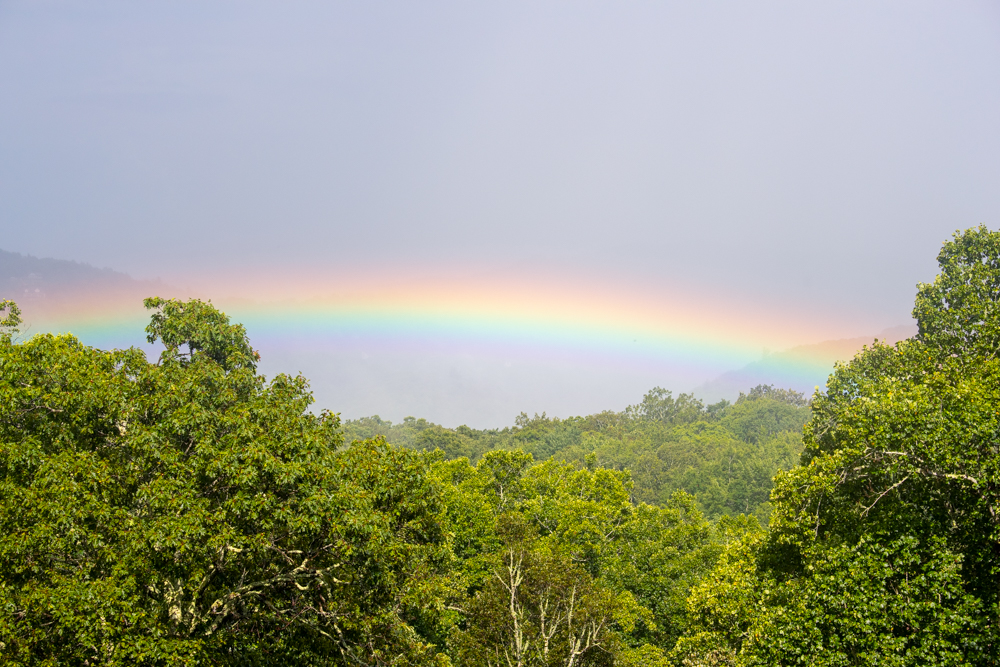
When reading the history, two things occurred to me. The first was how diverse early Appalachia was. As Europe belched waves of people, many settled in different areas of Appalachia. Pennsylvania, a colony still at this point, had a reputation for being very accepting of all religions and peoples. William Penn, a Capitalist through and through, seemed to understand everyone’s money spends the same.
Many of these groups moved southward from Pennsylvania, like the Moravians, who settled in modern day Winston-Salem. The Pennsylvania Dutch were mistaken to be German but actually just spoke German. From the Quakers you get Daniel Boone, which the town of Boone is named after. The Irish, Scottish, and English settled in Central Appalachia, which is where my wife’s story begins. Her red hair, fair skin, and propensity to freckle in sun genetically point to Irish and Scottish heritage. Then, on top of all this, are existing Native populations that differ wildly with Christian European cultures. The colonies in general, but Appalachia specifically, represented an unusual group of people suddenly cohabitating.
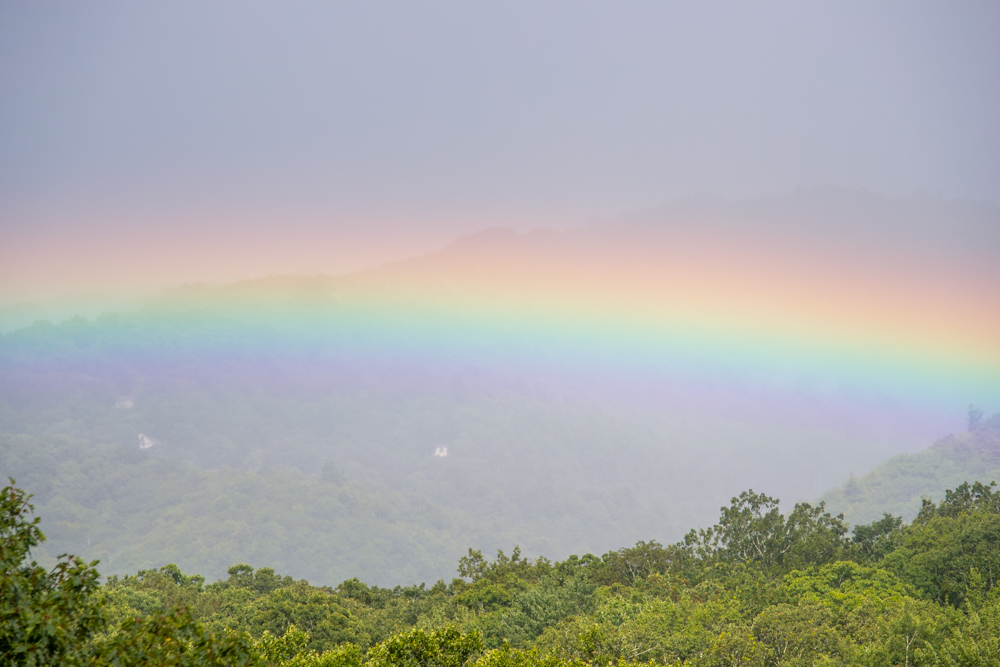
The second point I noticed while researching was just how unprepared the Natives were for Europeans. Europeans had far superior technology. Europeans had far superior immune systems. Europeans had a far more complex economy which focused obsessively on land ownership. The Native people tried to adjust and adapt, but ultimately had no way to comprehend how dangerous the Europeans actually were.
The condition of poor Europeans and their desperation for a newer, better life had no parallel in Native society. I don’t think the average Native American could even imagine what a European city looked like, or just how many Europeans there could possibly be in the world. When your frame of reference is the woods and mountains of Appalachia, try explaining to that person London or Paris. And those are physical places. Abstractions like, “pre-industrial revolution European economics” would prove even more challenging.
The Natives tried, but divided and outmatched, their society weakened from centuries of tiny cuts, finally crumbled when Andrew Jackson took the kill shot. Appalachia was “won.”
The Native population was perceived as a menace, the brown-skinned terrorists of their day, mucking up things for the civilized white folks because they “hated how we lived.” Or “freedom” or “Christianity.” Who can keep the rallying cries apart anymore. Plus, the thought of the Natives and enslaved Africans getting together terrified most everyone not a slave or Native. Many Europeans lived in a constant state of fear, which helped justify, emotionally, removing Natives by whatever means necessary. Stop me when all this sounds familiar.
In retrospect, a country comfortable with enslaving much of central and south continental Africa for free labor would not have to undergo difficult mental gymnastics to “remove” Native populations because it suited them.
This pattern — of tolerating or doing objectively terrible things to people who look, think, and act differently than us — is common throughout human history. Appalachian history is no different. Many of our country’s “original sins” took place here. Today, we are still living with the consequences.
 Cleared for Departure
You must be logged in to post a comment.