
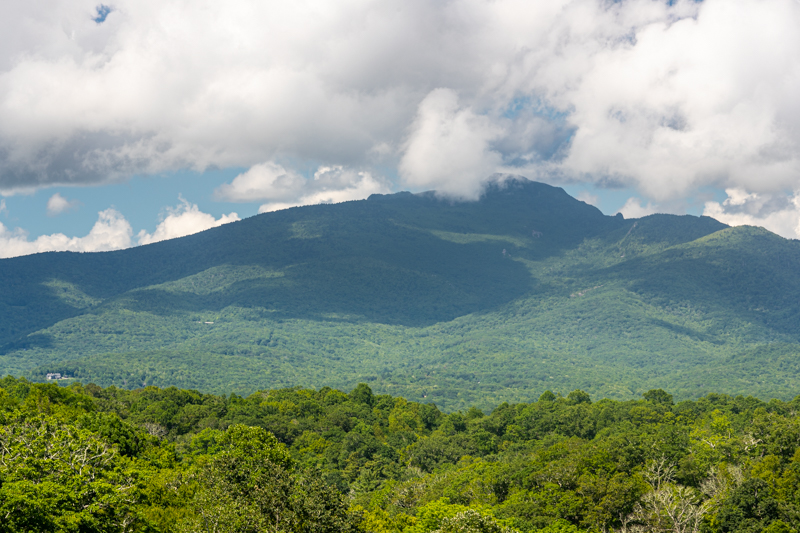
Welcome to Appalachia, home to 25 million people and the oldest mountains in North America. Possibly the oldest in the world, many geologists think so, but research on the subject continues. These mountains began forming 300 million years ago, before the super-continent Pangea and way before the dinosaurs roamed the world. They’ve been around awhile.
Appalachia and The Appalachian Mountains are synonymous but not entirely the same. For the sake of clarity, when discussing the mountains or geological concepts, I will say Appalachian Mountains. Appalachia is the cultural and economic zone that exists in and around these mountains. Finally, when I say Appalachians I mean the people who live here in Appalachia. I do not mean mountains.

Appalachia consists of 205,000 square miles and includes parts of Alabama, Georgia, Kentucky, Maryland, Mississippi, New York, North Carolina, Ohio, Pennsylvania, South Carolina, Tennessee, and Virginia. It includes all of West Virginia, the only state which is entirely Appalachia. In total that’s 420 counties. 42% of the population lives rurally, which is considerably higher than the rest of the U.S. 19% of Appalachians are part of a minority group, whereas in the rest of the U.S. that number is 40%. Overall, Appalachia is whiter and more rural than the rest of the U.S., and not by a little bit.

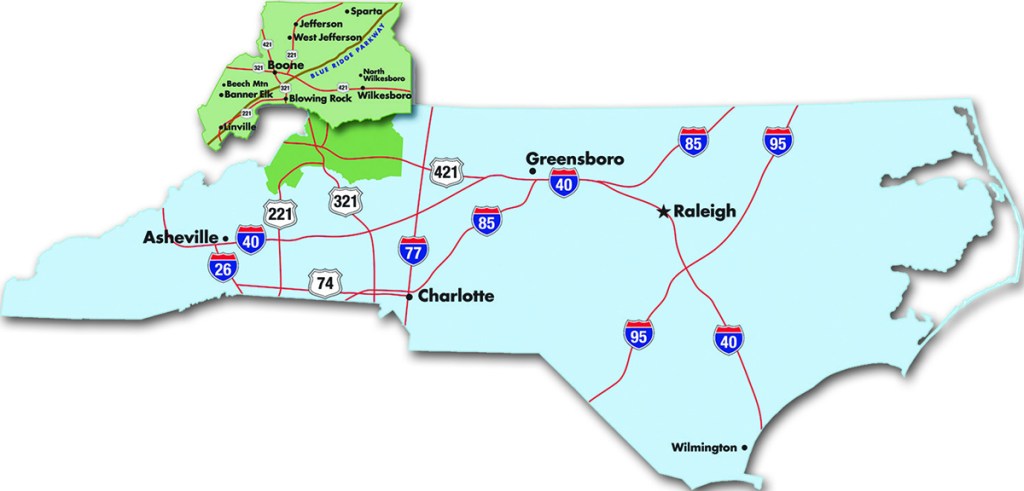
Our part of Appalachia is considered South Central Appalachia (amber). To the north, Central Appalachia (beige). To the south, Southern Appalachia (blue). Clearly, a creative and most descriptive naming convention. As we’ll discover these regions are all unique. We’re staying in Western North Carolina, which is the mountainous part of the state. North Carolina is also well known for its beaches, which are quickly eroding away. Visit soon.

You can see the mountains generally run north to south, with large valleys in-between. These natural corridors formed the highways native peoples used to travel and conduct business, and later Europeans used them when settling the area (by killing the Native Americans first).
Specifically, we are located in Blowing Rock, which is, specifically, located in the High Country of North Carolina, a sub-region of Western North Carolina, which itself is part of Appalachia. (They’ll be a quiz on Tuesday.)
The High Country of North Carolina is high … for the Eastern Seaboard. There are several mountain peaks in the area, like Grandfather Mountain (5945’) and Mount Mitchel (6683’). Blowing Rock is about 3500’ above sea level. Because of this altitude, the climate here is cooler and dryer than even Asheville, part of Western North Carolina but not The High Country. It is not uncommon to wear light sweaters while celebrating 4th of July. Winters last a very, very long time.
Several issues face Appalachia. One is health. Rates of smoking and obesity are higher here than the rest of the U.S. There are fewer doctors by a whopping 65%. That means there are fewer dentists, GPs, and specialists than in other areas to help with all health issues. Thus, complex problems, like diabetes go either undiagnosed or untreated. Appalachia is not uniform. In some counties, like here in Watauga County, things aren’t so bad. However, in Central Appalachia, where poverty rates tend to be highest, things are all much worse. To add to this misery, the gaps between the haves of Appalachia and the have-nots of Appalachia, like in the rest of the country, are widening. We’re not just talking about money here, but longevity and quality of life.
Another issue is education. 30% of the population is functionally illiterate. Traditionally, the economy here has been mining, logging, and farming. None of those professions require advanced degrees, or even a high school education. However, in a very short period coal mining has mostly ceased. Trump promised the area he’d bring coal back, but that was not within his, or anyone else’s, power. The world doesn’t want coal, for climate altering and population sickening reasons. Mining other rocks used in building and road construction still continues. Within 15 miles of where I am right now, four mining operations are running. Farming is a tough way to make a living. Children of farmers don’t grow up to be farmers themselves because they see little future in it.

Poorly educated Appalachian women have a whole host of complex issues to contend with. Because the main, money-making careers are male dominated, women are usually relegated to domestic work. These jobs tend to be lower paying, but, really, hour for hour the pay is about the same as men. Men just work more overtime, which creates an earnings gap. The rates of domestic violence are high, which women bear the brunt. Early marriage and teen pregnancy are also high, which dovetails into the health issue since there are few places teenage women can go. As you can imagine, substance abuse is an issue. Which, again, is made worse by lack of health care facilities.
This all leads to a final issue Appalachia contends with: Image. The hillbilly of Appalachia is a routinely mocked figure outside the region. The accent (which is actually related to the English accent), the clothing, the “simple country ways” elicit derision. “They’re all stupid, inbred Trump supports who deserve what they get,” is a common dismissive many of my friends believe. One friend sends me cartoons of “hillbillies” saying or doing something purportedly dumb or nonsensical, usually with a mocking caption, which somehow explains a truth about this area. This type of cartoon if it depicted Jewish or African-American stereotypes in a similar tone would cause immediate censure. Because of the high drug use, another derogatory phrase, the pillbilly, has come into fashion.
Another, equally, unhelpful image people conjure up is the mythical, mountain man of Appalachia. This older, usually white, man is a main in-touch with the magic of nature and the area’s lore, self-sufficient, rugged, and apolitical. He is takes no prisoners, shows no emotion, but soldiers on with few material possessions and wisdom in his heart from a life fully lived.
It’s a patently absurd stereotype that sells movies but has little bearing on actual people who live in Appalachia. I’d argue it’s harmful but in a more subtle way.

These challenges often define Appalachia but should not. New York is more than angry, entitled liberals who hate guns and Appalachia is more than uneducated dolts who marry their cousins, which, again, I don’t think that’s actually a thing. These trials tell only tell a part of a complex story, a story that involves a really interesting history geologically and culturally.
 Cleared for Departure
You must be logged in to post a comment.