What do Brexit, Parisian street merchants, and The Chunnel have in common?
Brown people.
I hopped the Eurostar to Paris before dawn two days ago. I had to arrive early to clear customs and passport control. If I had known beforehand how much time I needed to budget on either end for all this stamping, I might have reconsidered my day trip. It meant I spent more time traveling than I wanted.
They do what’s called a juxtaposed passport control here, meaning I’m stamped into France at the London train station. Some airports in the Bahamas do this too. I thought it was just easier, but it actually has to do with illegal immigration and human trafficking. Also, I suspect it’s harder to claim asylum, because you’re geographically not in the other country yet. So if I claim asylum to the French authorities, while they worked on my case, I would still be England’s problem. And vise versa. Since it’s unlikely many claim asylum coming from the U.K. into Europe, it’s really meant to block people coming from Europe into the U.K. Traveling through The Chunnel shows another facet of this dynamic. But only on one side .. the French side.
Finished in May of 1994, The Channel Tunnel is 31 miles long. While not the longest tunnel, it is the longest undersea tunnel on the planet. About 60,000 people traverse it every day. In today’s money, it cost about 13 billion dollars to build, and at its peak employed 13,000 workers. It’s still the most expensive public works project ever, and only 80% over budget.
I joke, that’s actually a substantial amount.
The tunnel isn’t straight across, but ramps down and up following the sea floor. So, on average, you’re traveling about 150’ below the sea bottom. Though trains don’t get wet, the tunnel leaks by design. Large pumps must constantly remove water. This means it’s relatively humid down there, which makes maintaining steel rail tracks, or anything metal, costlier.
The Chunnel is actually two separate rail tunnels connected every several hundred meters to a central, maintenance tunnel. All three run parallel to each other. The outer tunnels carry rail traffic on a single track. In the middle, the maintenance tunnel, also serves as an evacuation shelter. Air pressure in this central tube is kept higher to prevent smoke from entering it. (Newer buildings in New York do something similar with stair wells.)
Eurostar trains are capable of 180 M.P.H. Like Amtrak’s Acela train, however, they only go max speed on certain segments. The Chunnel isn’t one of them. Inside, trains may travel no faster than a conservative 99 M.P.H.
Every kilometer there are 4 large pistons connecting the outer two tunnels, which help ameliorate the build-up of air pressure these massive and fast moving trains generate. Think how windy London tube stations are. Now triple the train speed and volume while increasing the tunnel’s circumference a little bit. The pistons equalize pressure by giving the air some place to go — up and across to the other tunnel — where it disperses.
Unfortunately, if the trains were to travel at top speed, the force generated could blow a train going the opposite direction in the other tube off the tracks. Particularly if it had a large wind profile, like a box car of a freight train. Derailments under the sea in tight fitting quarters … not good. Out of an abundance of caution, speeds were capped for passenger trains. I wonder who designed this piston system, and exactly how much trouble they got into for mucking it up? I mean, as screw-ups go, it’s a pretty grand one.
Entering the Chunnel on the British side is unremarkable. One minute, sky, the next, darkness. Leaving on the French side, you see nothing but fencing for miles. Not casual fencing meant to keep people safe. Oh no. This is fencing that, to me, evoked the barriers erected at Nazi concentration camps. Fencing that extended on top of the tracks, too, not just high up the sides. Serious fencing, regularly inspected and maintained. Pristine, ominous, imposing. For what?
It turns out migrants looking for a better life regularly hop a freight train and cruise through to the promised land. This annoyed the shit out of the British, who made France erect miles barriers so paused freight trains wouldn’t pick up stowaways. I don’t know how effective it is, since stories still abound of people hiding in rail cars and going through. One group of people hid inside a tanker car full of chocolate syrup. And survived! Though barely.
So enter Brexit. While the U.S. is embroiled in impeachment proceedings, the U.K. is going through its own existential crisis, Brexit. A lot of news today about “a new deal” from the E.U., but until the House of Commons, the British “House of Representatives” essentially, passes it the brouhaha is just cotton candy flavored with spin and hype. Boris Johnson has driven the narrative of a “great new deal,” (that many suspect is like the old deal but now with even MORE concessions from England) to pressure those in Parliament who would vote no. If the deal fails in Parliament, a simple majority voting nay would do it, he can say he tried and it’s not his fault. Blame Congress, essentially. It’s a tiring political move. We’ll find out Saturday how it works.
What is Brexit about? Well, depends on who you ask. The campaign talked about England’s sovereignty and power to set its own course. Very noble. Manifest destiny. The E.U. was holding back England’s greatness from shining. Makes for thrilling commercials and flyers. What’s it really about? Brown people. Specifically, England’s poor and rural citizens want less of them. It all sounds vaguely familiar.
In England immigrates tend to be Arabs and Indians. In Paris they tend to be Africans. While not absolute, it roughly follows how each superpower carved up the world in the mid 20th century. Currently, as part of the E.U., the English government must accept migrants from any E.U. member nation. When out, England will exercise its own control over immigration.
What makes Brexit tricky is that the English want everything they had with Europe, except the bit about immigration. So the environmental laws, the labor laws, the business laws, the free movement of goods, the free movement of wealthy people, the ability for English citizens to live legally in Europe … let’s keep all that. Just, please, no more poor brown people. Not surprisingly, the E.U. is not particularly thrilled, much like a husband who really, really wants to stay married but also wants a girlfriend or two.
Why are so many people moving around? In the U.S., we see a lot of folks from South and Central America. What’s going on?
The argument has always been better economies. France, England, and Germany have seen huge influxes of people from within Europe (working young people are abandoning places like Italy, Greece, and the Baltic States) and beyond The Continent because here the economies are strong. Follow the money. It leads here. I’d like to offer another solution.
This is climate change. Scientists have been droning on about rising oceans, warmer weather, and wetter, harsher storms. All good points. However, in places like, The Middle East, parts of India, or Sub-Saharan Africa the climate has always been tough. Now it’s becoming lethal, be it from sheer heat or lack of water, and the sanitary issues that then creates.
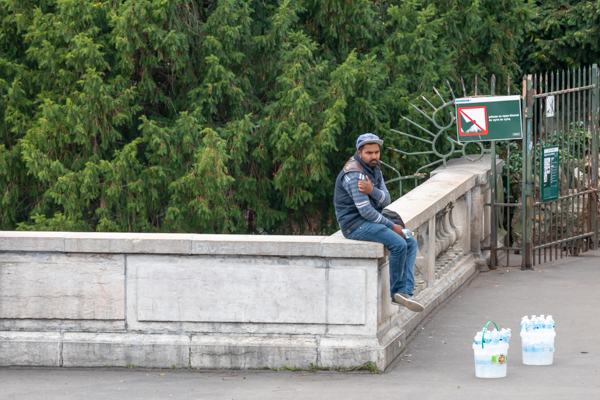
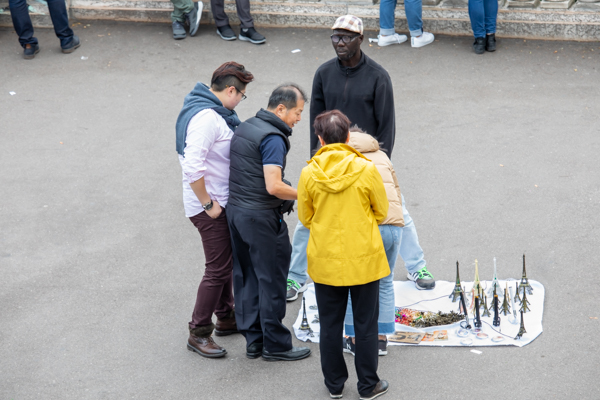
So you’re a parent living in a hot, rapidly drying place with a weak central government. There are no resources you can access, an economy designed for a few wealthy folks at the top, which means you have no way to build wealth. You’ve accepted that you will die poor and miserable. Now your child is ill from a lack of clean water. It hasn’t rained in months. Or there’s civil unrest as people starve or go thirsty. Or it’s rained too much and crops are dead. You do what any parent would when there’s nothing left to fight for. You escape towards a better life. Sure, your life will be hard — be it from farming, meat processing, dry-cleaning, driving cabs, selling tourists trinkets — but your kids will grow up French, or English, or American. They will live on, better, richer, and stronger than you ever could.
There seems to be a limit to how many foreign people a population can absorb over a period of time before destabilizing. Given the effects of climate change, it’s suddenly all happening too fast and our old systems cannot handle the increased volume. Paris, a city of 12 million people, has tens of thousands from Algeria, Morocco, Tunisia, Burkina Faso, Congo, Mali, Turkey, and Pakistan. It is the most multi-cultural city in Europe, but even now there are signs of strain. The English blew past this number, hence, Brexit. The 2008 recession, which hit Europe hard, caused much anti-immigrant sentiment, despite there being no evidence immigrants take jobs from native born workers.
Climate change isn’t just about oceans and beaches. It’s also about our systems of immigration. It is about much more than the weather, and talking around the subject, prattling on about national identities or some such fiction, ignores a problem we all must face.
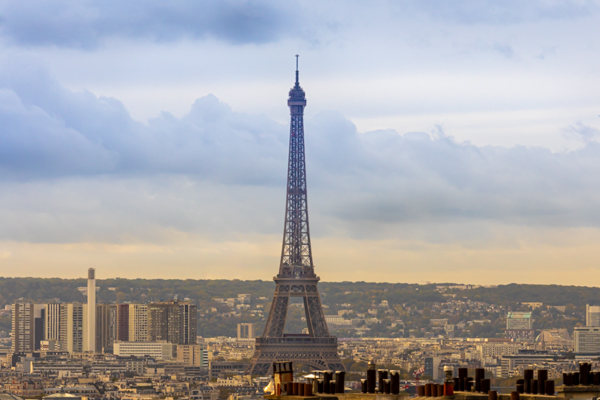
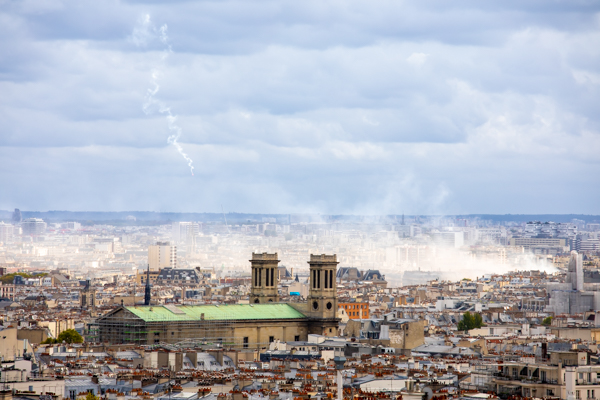
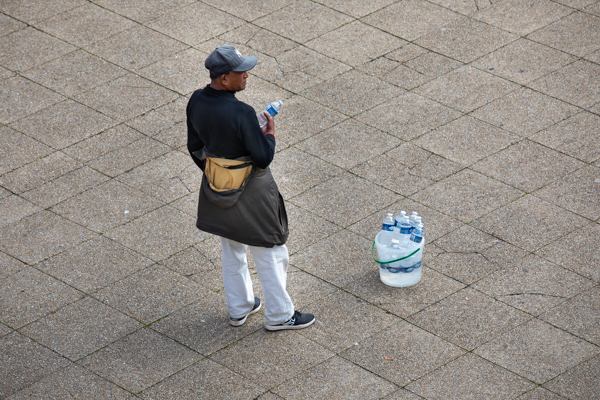
I spent all day in Montmarte, taking pictures of the area and people. The famous church, Sacre Coeur, is shown below.




 Cleared for Departure
You must be logged in to post a comment.