
Before leaving this NFL experience behind, I’d like to discuss the stadium, Tottenham Hotspur Stadium. The Hotspurs play (actual) football in the Premier League in the town of Tottenham, which is north of London.
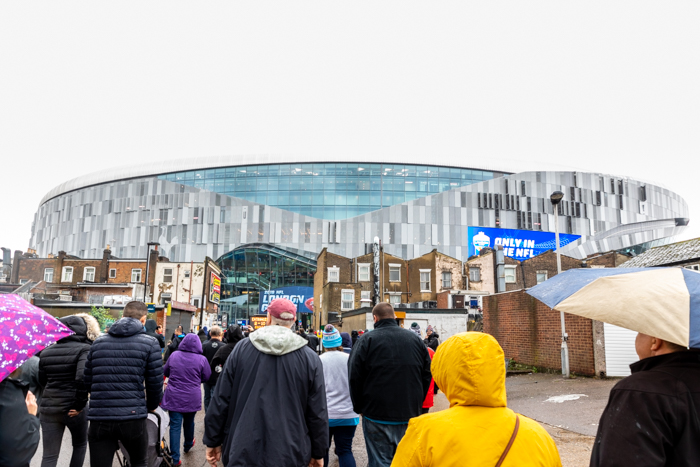
For a cool 400 million, you can change the name to whatever you like. But only for twenty years. After that, you’ll need to pay again … and likely more.
The stadium has two playing surfaces, or pitches. The grass field floats above of the artificial turf the NFL uses. This turf can be used for any event that might cause significant damage to the grass, like a rock concert.
The live field splits into three massive trays, each weighing 3,000 tons, and rolls under the south stands. The turf can live under there for several days. Irrigated water and LED grow lights were built in during construction. I encourage you to check out this video to see the entire process.
Why does the NFL have a special playing surface? They signed a contract to play at least two games per year for ten years. It’s not just the grass. NFL players have separate, permanent locker rooms, different from soccer and rugby players that better accommodate NFL sized teams.
Doesn’t quite mesh with the other English buildings, though.
The stadium cost a billion pounds and seats about 62,000 people. The goal is to revitalize the Tottenham area by building a large roadhouse capable of brining people (and their money) to the area.
So visit the longest bar in Europe, measuring 65 meters, named the Goal Line Bar, and enjoy brews from the stadium’s own microbrewery. (They apparently can pump 10,000 pints a minute.) Be it a game, concert, corporate meeting, or church revival Tottenham Hotspur Stadium is open for business.
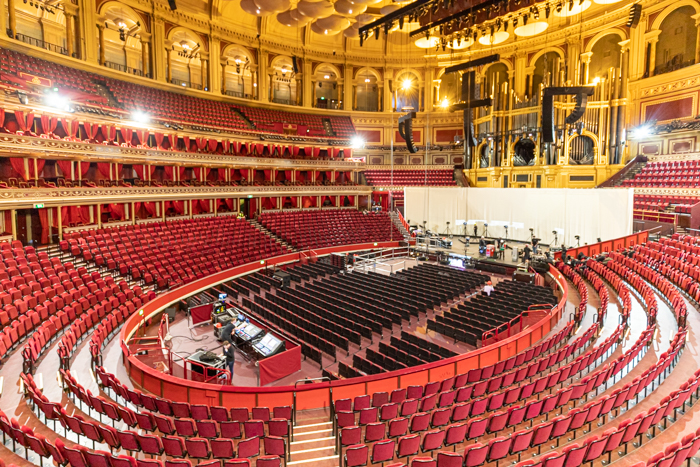
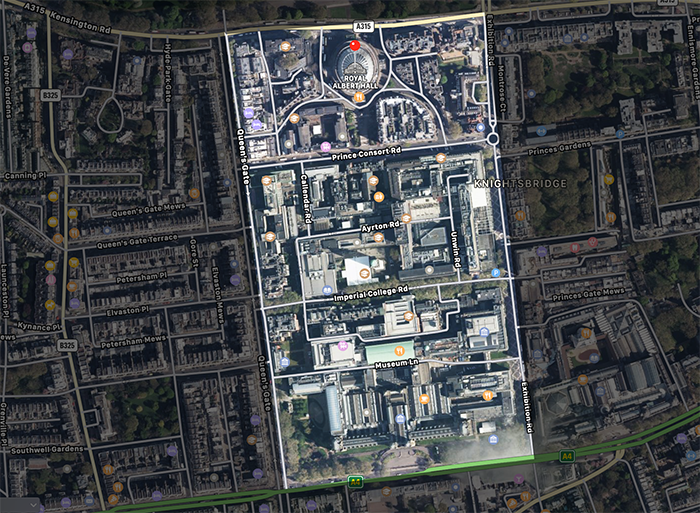
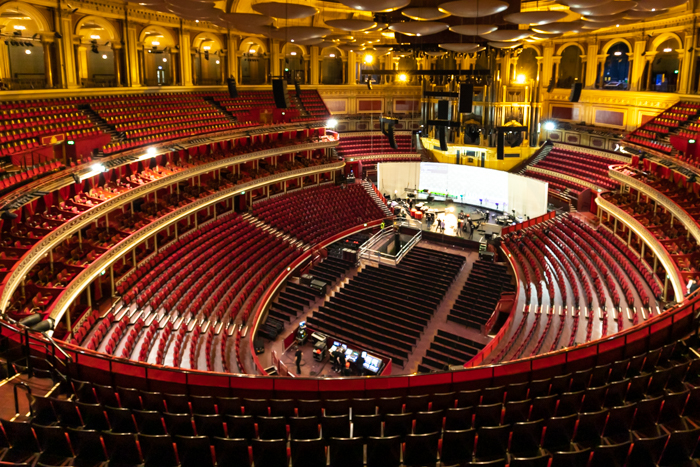
Royal Albert Hall, on the other hand, seats only 5000. Construction began in 1867, and it opened four years later on March 29, 1871. The exterior and interior, largely unchanged since completion, have quite a different aesthetic than Tottenham’s new digs.
There’s an organ, for one.
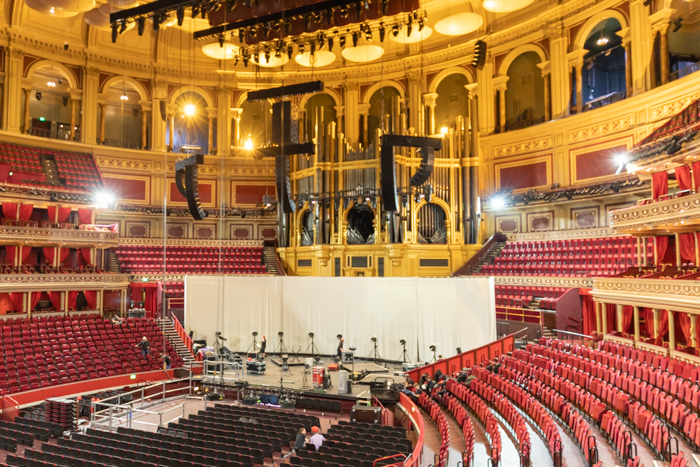
I had an inadvertent private tour, since I alone booked the 9 A.M slot this morning. Alex, my guide, has worked here for ten years but takes time off to act. Of course he’s an actor!
This place is legendary. Almost every famous person who has ever lived (after the late 1800s) has spoken here (Einstein, Churchill), played here (like, every popular band from the U.S. or Commonwealth for a hundred and twenty years), or visited here (most every foreign dignitary living or dead who has visited London and/or the Queen). Some musicians never seem to leave, like Eric Clapton. He’s played over 200 times since 1964 and currently holds the record for most concerts. Some artists just return year after year to play concerts even when not touring or promoting a new album. They just like it. It feels intimate. Every seat is great. And close. And the acoustics …
… are actually terrible, as built. Before the “mushrooms,” as the staff calls them, were installed, you couldn’t hear a damn thing. It took six seconds for sound to travel from the stage to the back galleries, taking a lengthy detour up in the curved ceiling, before coming back down in an acoustic mess of noise. The mushrooms reflect sound back down, preventing it from getting lost up there.
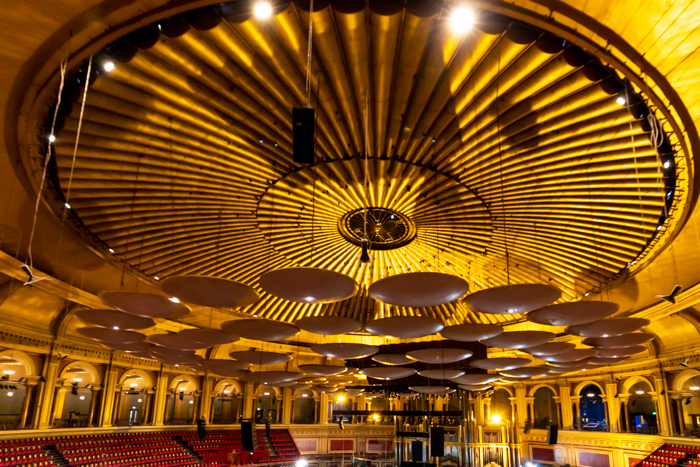
Computers, software, and knowledgeable technicians now manufacture a stellar acoustical experience. It takes, however, serious processing power and lots of speakers to achieve this sublime perfection.
Queen Victoria named Royal Albert Hall (RAH) after her husband, Prince Albert, who died suddenly of typhoid in his 40s. His work promoting the arts and sciences is why the hall exists at all. He died before completion, as did the main architect. His assistant, who’d never built much of anything, finished the project.
Queen Victoria reappropriated all the money raised for the hall into a monument for him, which stands loudly and proudly across the street. Ironically, he hated statues and monuments, but nobody questioned the Queen’s use of the funds. The monument took two years more to construct than the entire hall.
Before construction could be completed, they needed more money. A rental program was crafted. 1,300 individuals in the Kensington neighborhood (read: super rich) could rent for 900 years, at the cost of 100 pounds, one seat. That’s four years’ salary to a typical laborer at the time. Those families still have use of the seats today, and essentially form the RAH corporation’s board. They pay now 1500 per year for “seat maintenance,” and are generally entrusted with managing the care and fiscal upkeep of the venue.
These renters receive tickets to 60% of all RAH performances and events. The other 40% tends to be charity concerts, dinners, and functions. They can do whatever they like with that ticket, and will continue to have that option for approximately 750 more years. The Queen is one such renter. Anyone in her service, at any level, can request to use the Queen’s box for a performance. Just ask. And pay 5 quid. It’s the busiest box in the entire hall.
I also visited Kew Gardens today, and will discuss it later. Also, tomorrow, I venture to Paris on the Eurostar through The Chunnel. I’m going to wear my nice pants, because it’s Paris.
 Cleared for Departure
You must be logged in to post a comment.