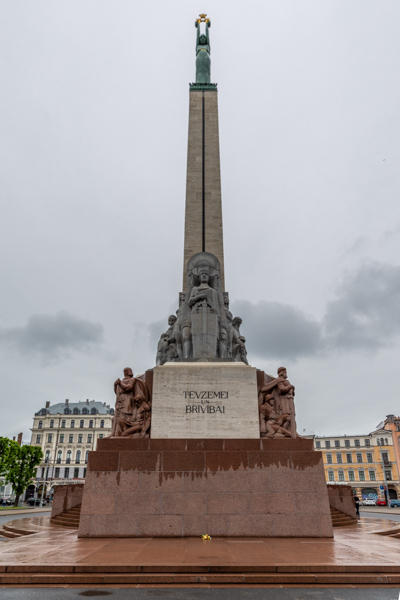
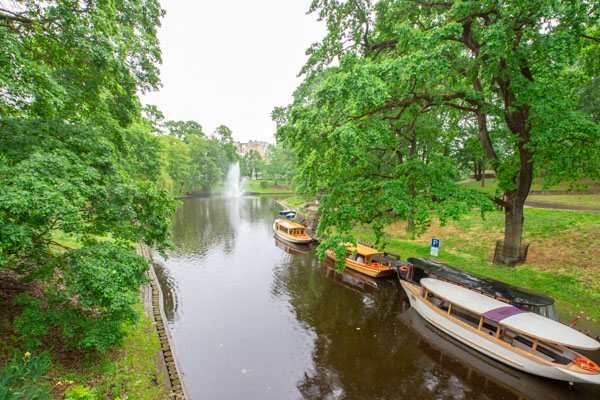
It rained much of the day. Not a heavy rain, more a persistent drip. It was a challenging environment for photography.
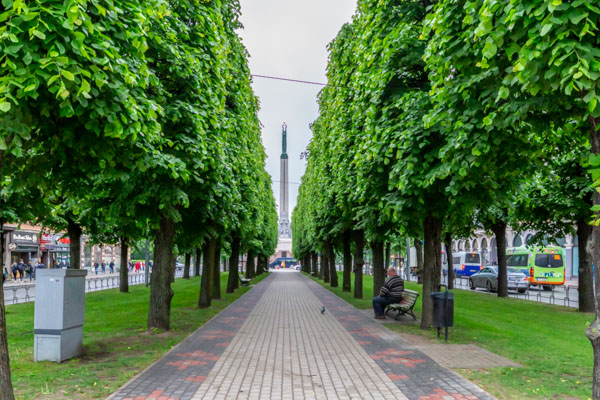
Riga did come to life today. Many more cars and people filled her streets. It certainly felt less like The Rapture.
Riga is home to roughly 600,000 residents, which makes it the most populous city in the Baltic region. The total population of Latvia is about 2 million. The country’s population has been declining for many decades. People mostly leave due to economic reasons, i.e. they can get a higher paying job elsewhere.
Latvia has been continuously occupied since the 1200s. Generally speaking, it has been passed around by various powers for centuries. First, the Germans. Then the Swedish, who considered it their empire’s “bread basket.” Poland came in and kicked the Swedes out. Then Russia stepped in and ran things. Mina, my great-grandmother, lived during this time period.
Riga’s location makes it desirable. It sits on a large bay, The Bay of Riga, which is important for trade. The port does not freeze over in winter, allowing year-round access to a number of Northern European cities. It remains active today.
Latvia finally gained independence in 1918. Things went pretty well after a few years of unrest. The economy recovered from The Great Depression and the democratic government did its job. This all changed in 1939.
The Soviets came first. Hitler and Stalin signed an agreement which gave the Baltic region to them. Mind you, this agreement only involved Hitler and Stalin, who failed to consult anyone actually in the Baltic region regarding their feelings on the matter. The changes away from independence and capitalism were immediate and unwelcome.
So when Hitler made his infamous and colossally stupid move to invade Russia, initially the Latvians were hopeful that Germany would restore their independence. The Germans dangled that promise to gain popular support and help kicking the Soviets out. However, it was all a ruse.
Germany started rounding up Jews, Gypsies, and the mentally and physically disabled. Latvia had 94,000 Jews, who made up 5% of the population. Most were murdered via mass executions. Because the Jewish population was much more integrated and numerous in Latvia than in Germany, people noticed and it angered them. A resistance blossomed.
The Germans also conscripted Latvians for use in the military. The Soviets had done the same thing. Thus, you could have families fighting against each other, a brother on Germany’s side fighting against a brother conscripted into the Soviet army. Both sides considered Latvians expendable. They died by the tens of thousands, at much higher rates than their masters.
Eventually Hitler’s insanity and military ineptness caught up with him and the German war machine failed. The Soviets moved back in and took control pseudo-democratically. Moscow jailed or killed everyone in the Latvian government who spoke against them, installed all new people in what we would think of as their Senate, and, shockingly, that body voted to join the USSR! Unanimously, too! (The population was not impressed.) World War II ended for almost everyone, but for Latvia’s people it marked the beginning of a 50 year occupation.
To quell the resistance within Latvia, the Soviets systemically deported “bandits” (we would say terrorists today, which at the time evoked the same emotional response in the general population) without due process. People disappeared into the far reaches of the Soviet empire in Gulags — the Guantanamo Bay(s) of its day — often near mines, to do hard labor. Most never returned home. So many Latvians were forcibly deported that the population became endangered. Native Russians back-filled the missing Latvians, reaching about 50% of the population in Riga and 20% in the countryside. Latvians are almost a minority in their own country, even today. Tension between the two groups is high.
Everything non-Soviet was banned, including initially the Latvian language. That didn’t last long, however. Western books, art, music, and non-Communist political ideology, all became criminal to own, use, or speak of. The Latvian press was shut down; the “fake news” of its day. Life was miserable, the economy strictly (and ineffectively) controlled. Industry was created, but mostly to benefit the Russian people, where the goods from these new factories were sent.
With all the Soviets tried to do, they never managed to fully quell the Resistance. Peaceful protests began in the late 1980s as Soviet power ebbed. They gave it up in 1990, and on May 4 Latvia became independent once more. The Berlin Wall had fallen the year prior, and The Soviet Union would officially collapse a year and change later. Latvia rejoined Europe, where it always felt it belonged. The long occupation was over, but the aftermath continues today.
Suffice to say, Latvians are still annoyed. The language they use in the Museum of the Occupation pulls no punches when discussing WW II and its aftermath. “War crimes,” “crimes against humanity,” “human rights violations,” “illegal acts,” are just a few. Latvians want you to know what happened was absolutely not cool. It must be tough to realize nobody cared enough about your country to prevent a world power from waltzing in and doing what they pleased. The American in me chafes at this idea of having to accept foreign invaders because to fight would be too destructive, too costly.
The economy here has mostly reverted back to a free market. In 1992 inflation was around 500%, by 2003 about 2%. The GDP per capita is about $20,000. Low by Europe’s standards, but improved since 1991. Latvia was hit hard by the 2008 recession, which decimated its economy and exacerbated the population exodus, which had begun in the 1990s. While the economy has improved, unemployment remains high. The government has tried programs to bring its people home, but their effectiveness is questionable.
Two steps forward, one step back … a phenomenon the Latvian people know all too well.

 Cleared for Departure
You must be logged in to post a comment.