
Send help! It’s been days since I ate a refined grain or sugar (they have sugar here, but it’s much less refined than what we’re used to). The shakes are starting, I fear psychosis cannot be far behind. I would give a redundant organ for a bagel. You know, don’t send help. Send bread.
I kid, I kid.
Sort of.
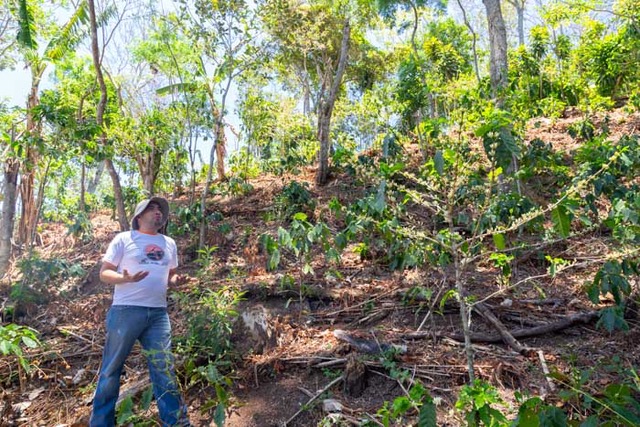
We started the day touring a coffee plantation. Gabriel, the farmer, had so many interesting things to say I wanted to grab a camera and interview the man properly. His thoughts about farming and coffee were just fascinating. He started off by saying, “Coffee production is a luxury product, a massive waste of resources, and, even though we’re organic, it’s a bullshit label made up by marketing peoples.” I could tell this wasn’t going to be your average tour.
The Waste of Coffee
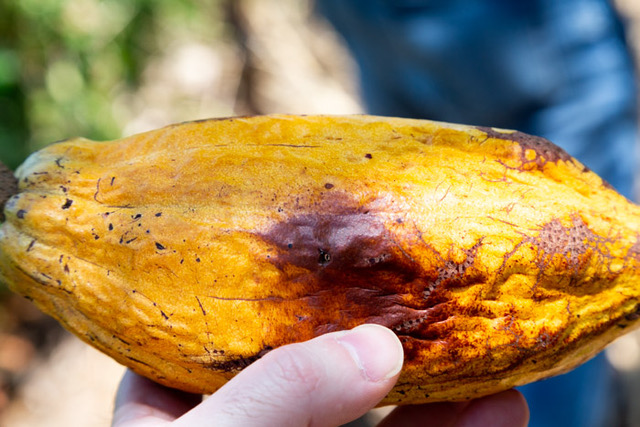
Gabriel started off by pointing out that coffee, almost every aspect of it, is a massive waste. Coffee is a fruit resembling a cherry, but nobody eats the fruit. Farmers throw it away. The rest of the plant, like the leaves, are also not used. What’s left is a bean, but more accurately a seed.
The seed is processed and its outer layers, the pulp, thrown away. One technique, known as The Wet Method, can use tremendous amounts of water. By some estimates for every 1 cup of coffee, a 1,000 liters of water are needed. After all this you have green coffee, which can be stored for two years.
Coffee, then, is shipped all over the world by middlemen. After all, who drinks locally grown coffee? Nobody can accurately account for the carbon footprint of all this transportation.
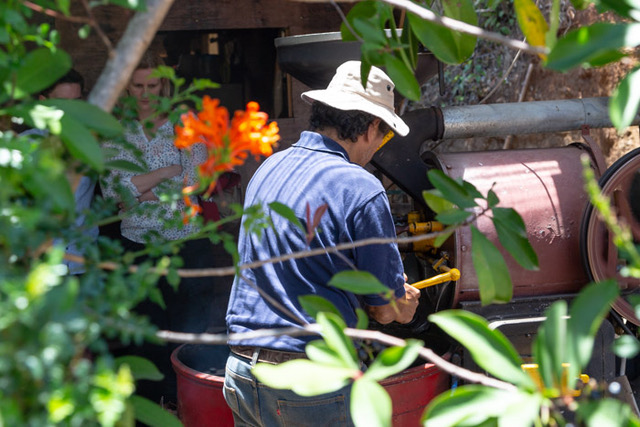
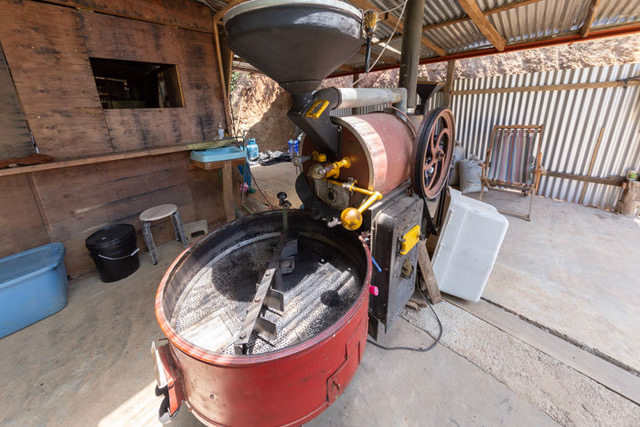
Roasting coffee burns off more of the bean. It literally evaporates up in smoke, a wonderful smelling smoke to be sure, but it ain’t ending up in your drink. So with this delicious, exotic coffee you grind it down and pass water through it, meaning only very small particles ever make it into your drink, which is mostly water. Sometimes bourbon. Or milk. Once brewed, the coffee grounds are tossed.
Let’s not forget the sugar packets, filters, stirrers, and paper cups. All usually trashed after a single use. Once we’re done, we use water to clean everything.
Sardonically Gabriel mused people often don’t eat meat because of environmental concerns but love, love, love their frappla-cappa-mocha-chinos, unaware of the extreme waste involved.
Gabriel’s farm is actively trying to reduce the waste. We sampled coffee tea, made from the leaves of the coffee plant. We tried coffee wine, made from the discarded fruit. We tasted coffee flour, created by milling parts of the seed that are discarded. I’m here to say, it was all pretty darn tasty. Coffee fruit is sweeter in Brixs than grapes. And who wouldn’t want caffeinated bread? We could charge millennials like $30/loaf.
To Organic or Not to Organic?
Personally I’ve always been skeptical of organic labeling. It wreaks of marketing buzzwords and made-up concerns. “Chemicals” are bad, “conventional farming” is bad, but the truth is more subtle.
Farming is hard. Our method of farming, using monocultures, all in nice, tidy rows, make it slightly easier but require the use of chemicals to protect the plants from pests, disease, mold, and fungus. The “organic” label means a farmer cannot use those chemicals, but the pests don’t care. So what do farmers use instead, since they have to use something? Toxic mold and fungus mostly. Is this better? It’s debatable.
While these substances are natural, that doesn’t mean they’re safe. Puffer Fish are natural, and eating the wrong part of it will kill you. Arsenic, lead, mercury — all natural, all deadly to humans. Are chemicals bad? Aspirin is a chemical. So is water. So is beer. Christ, I’d kill for a beer right now. “Chemical” has become a buzzword. That makes me skeptical, and Gabriel echoed that thought.
Setting aside the marketing-created consternation, organic farming generally means less money for the farmer. This is not a way to encourage people to farm. In Costa Rica ten years ago 10% of farmers were organic, now it’s less than 1%.
And that organic certification? Meaningless without strong governmental oversight. Here farms are inspected once a year, and are told a month out when the inspection will occur. Surprising to nobody, cheating occurs. These farmers aren’t evil liars, but rather trying to make an impossible situation work. Who made that situation impossible? We did.
The Variables of Coffee
We did actually learn how to make coffee, too. There are four variables to coffee making: Grain size, water temperature, brewing time, and amount of coffee. Let’s tackle each of these individually.
A finer grind generally equates to greater bitterness. How you make coffee often determines the coarseness, though. French press, generally coarser. Espressos, generally finer. The bitterness can be offset, though, by other variables.
Like water temperature. The hotter the water, the more bitter the coffee. If you use boiling water, much of the flavors are destroyed. Optimal temperatures are around 90 degrees Celsius.
The amount of coffee also affects flavors. Too little coffee and the brew will skew towards bitter and less flavorful. More coffee, more flavor and less bitterness.
Brewing time affects caffeine levels. An espresso, generally brewed very quickly (the coffee is ground very fine usually), has only a small to moderate amount of caffeine. Cold brew, brewed overnight and at cold temperatures, has a great deal of caffeine.
Roasting time also greatly affects coffee flavor, but not in a way you’d expect. Darker roasts are cooked for longer. That means more smoke is vented away, and that smoke is filled with flavors you’ll never taste. Darker roasts are more consistent crop to crop, and preferred by commercial outfits due to the ease of standardization. Lighter roasts, however, retain much of the flavors but that flavor can vary wildly, depending on uncontrollable variables like rainfall amount or average temperatures.
Ultimately there’s no absolute right way to make coffee. The best cup of coffee is the one you like drinking.
Gabriel’s final note was to say when you choose to farm something, you by default do not farm something else. The world needs food, but struggling farmers opt to grow flowers and luxury products, like coffee, instead. You can’t blame them, they have to pay their bills same as us. However, that means people go hungry.
Scandal has rocked the property. The Yoga instructor, a young lady from Montreal, has disappeared. Gone. Vanished. Room, empty. Suitcases, nowhere to be found. She arrived here a few days ago for a two month residency. At dinner she was telling other guests how much she loved this place, but her boyfriend was very unhappy she’d be gone for so long. We think she left for the airport in the middle of the night.
I guess having a strong mind-body connection doesn’t automatically equate to high EQ. When a significant other says my way or the highway, you should always choose the highway. Especially when you’re a fucking twenty-something working professionally in another country to further develop your craft and resumè. I hope she’s alright. I feel bad for her. She seemed nice, if young and clueless. I fear she will likely come to regret this rash decision for the rest of her life.
The staff are very sorry and are booking someone else for the 4 PM class.
Today is my and RBD ten year anniversary.
Till next time …
 Cleared for Departure
You must be logged in to post a comment.