
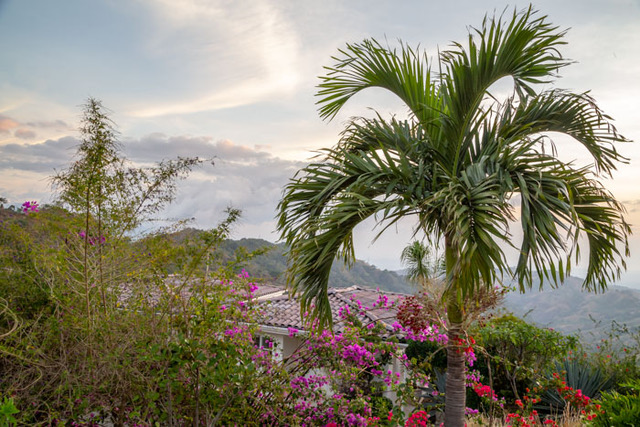
Good morning from Costa Rica. The entire encampment is at the 8 AM yoga class. Rebel that I am, I thought I’d write to you all. The temperature is cool still, aided by a strong breeze. Sounds of birds surround me. I told RBD, “Well, we aren’t in Kansas anymore,” to which she replied, “You’ve never been to Kansas.” Marrying a Virgo, I should have known.
Translated into English, Costa Rica means “rich coast.” It’s a bit of a misnomer. There is no abundance of precious metals here. Legend has it when Columbus landed here, he saw a few natives wearing elaborate jewelry, so he named this area Costa Rica. Not particularly creative, and as it turns out, accurate. He “borrowed” the jewels from the locals and left. I suspect he forgot to return them.
About 4.3 million people call this small country home. It’s about double the population of Brooklyn, in an area about the size of Lake Michigan. Half the population lives in and around the capital, San Jose, in a region called the Central Plateau. Historically speaking, people have lived in this relatively flat area for hundreds of years, probably because of its climate and ease of farming.
20% of the population here lives beneath the poverty line, a little higher than the U.S., but it depends on how you calculate it. The average wage is $10 dollars a day, the highest in Central America.
Costa Rica abolished their army in 1940 and spent that money in two other places. Education, for one. Per student, Costa Rica spends double on education what most industrialized countries do. The results are clear. The population here is extremely well-educated. Most everyone is bilingual, and if not totally bilingual their English is way better than your Spanish. Literacy rates here are the highest in Central America. Because of this investment, their economy is surprisingly diversified.
The second area is health care. The government controls 70% of the health care market, the epitome of dreaded socialized medicine. (Private hospitals and insurances still exist, though, if you have money.) Again, the results are clear. Costa Rica is one of the healthiest countries in the world. Consistently the population ranks near or at the top in well-being and quality-of-life surveys. Many U.S. citizens come here for procedures, contributing to the development of a burgeoning medical tourism industry.
Given our current debate about health care in the U.S., I want to ask locals if all the Fox News talking-points about the evils of socialized medicine are true. After all, I have no clue how any of it works. My hypothesis is that those concerns exist, but are exaggerated for Fox News’ audience.
It’s not all rosy. Big government folks will note Costa Rica has some of the harshest restrictions on smoking, a limit to personal freedom. Also, the country’s debt load is high, which caused a liquidity crisis a few years ago. Funding health care for every wage earning citizen (and their dependents) and great education do have costs that cannot be ignored.
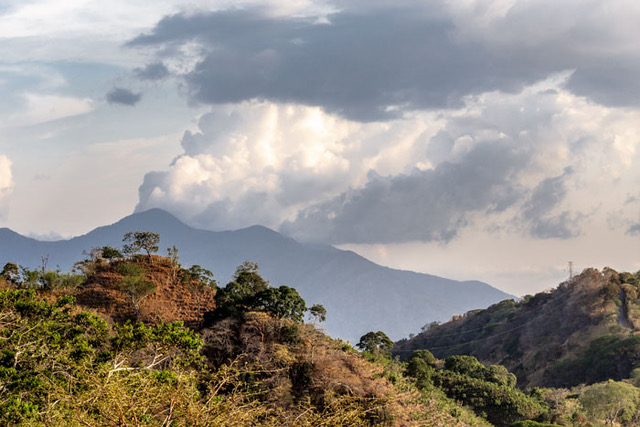
Our hotel is nestled below the peaks of Tilaran Mountains, near Alajuela. It is remote, but not as remote as other places we’ve traveled. (Looking at you Doubtful Sound.) There’s cell service, not that my phone is on.
The abundance of life here cannot be ignored. Frogs, lizards, scorpions (found one in our room), birds, and pet peacocks …


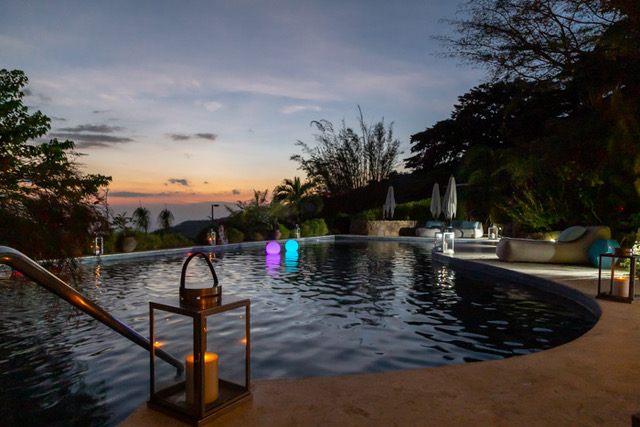
There are two peacocks which roam the property, like cats or dogs might. They are a couple, and they sleep in the tree above the pool. As I write this, they’re hanging out near me, pecking at my laptop charger. The male decided to show off his plumage, seemingly aware I was taking pictures. All RBD or myself can see are the cold, dead eyes of ancient dinosaurs, just biding their time before they attack and take back this world.

We’re off to tour a coffee plantation.
Thanks for reading!
 Cleared for Departure
You must be logged in to post a comment.