
After a two hour drive to Stewart Island and a one hour ferry ride, we arrived at Oban on Stewart Island. RBD’s first words to me were, “Why are we here again?” As you can see below, downtown is a little different than what we’re used to.
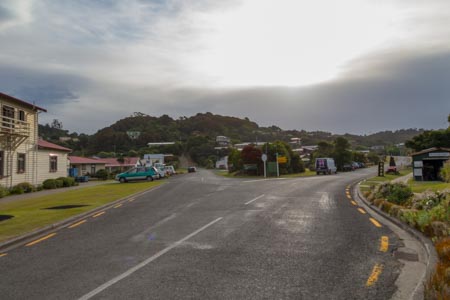
The answer isn’t very clear to me, either. I wanted to see how people lived so far south, on the extreme end of New Zealand, in such a remote place. From my research, I was interested in the trails, the flora, and the wildlife. So … here we were.
Inhabitants have lived on Stewart Island since the 13th century. The Maori named the Island “Te Punga o te Waka a Maui,” which translates to “The anchor of Maui’s canoe.” (This ties into New Zealand’s creation myth.)
Abundant marine life drew people here. Today rock lobster and abalone are the primary export; eco-tourism also plays a large part. Great Whites raise their pups in these waters. About a quarter of New Zealand’s Kiwi birds live on the islands surrounding Stewart. This place boasts a massive diversity of non-human life.
About 400 people live on Stewart Island (which is geographically larger than Oahu), primary in the town of Oban. Today, much of the island is a nature preserve, and the surrounding islands are sanctuaries for New Zealand endangered birds. Many are pest-free to varying degrees.
Why live here? I asked anyone I could. Most said the lifestyle. Some came for the job, either in tourism or fishing. Some, the climate which differs from the mainland. One woman said, “The light,” and I instantly knew what she meant. The sun sets well past 10 here, and it isn’t fully dark until after midnight. Dawn begins around 3 am. During the day the sun shines a most brilliant, pure blue unlike anything I’ve ever seen. I am convinced this much light mucks with people’s sanity, since nobody really sleeps a full eight. Well, that and isolation. The natives all looked a little “off” — clearly my kind of people.
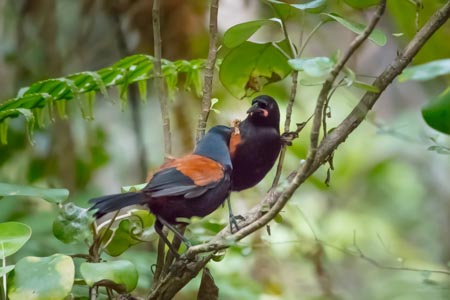
We started with a tramp on Ulva Island. RBD and I walked extremely slowly, pausing often to listen for birds. It was grueling, but our patience was often rewarded. We saw almost every bird species available to see on Ulva.
Now, I’m not really a bird person. I don’t get excited about seeing the White Tailed Boodle Hicky or Blue Footed Bobble Quacker. I do, however, enjoy hunting animals (non-lethally) and capturing their image. I think it the opposite of zoos, which I dislike very much. The animals always look depressed and one razor blade short of ending it all and finding sweet, sweet relief. Here, however, we entered their habitat as guests. Frequently pausing and listening, I was surprised and grateful for how the island’s residents showed themselves.
After a brief recovery and dinner, we boarded a boat to go Kiwi hunting by night. Guides came with us. I found the whole thing a bit theatrical … like snipe hunting. However, we did see a Kiwi, a most interesting bird.
Really more velociraptor than bird, the group watched it go about its business for several minutes. The Maori legend venerates Kiwis. The Gods asked all the birds if they would give up the ability of flight to eat bugs on the forest floor, thereby protecting the precious trees. Only the Kiwi said yes, and by doing so earned the top spot in Maori lore.
It finds food by shoving its long beak into the ground while searching for insects. It possess poor night vision, but a great sense of smell and hearing, and taps the ground to seismically sense movement below. Since the Kiwi doesn’t fly, its feathers don’t interlock. Thus the Kiwi looks almost furry.
After our first siting, we continued hunting for them but to no avail. Overall, I enjoyed the romping about in darkness, staring up at the crystal clear Milky Way, while maybe seeing a most curious creature. The weather was perfect.
We got home for a quick five hour sleep before departing on the 8 am ferry for a drive back to Queenstown.


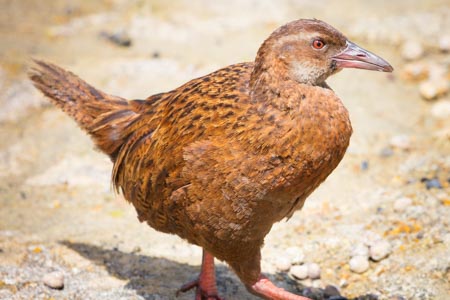
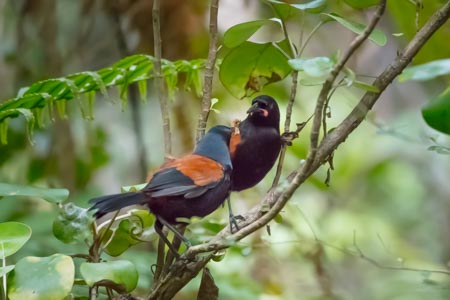
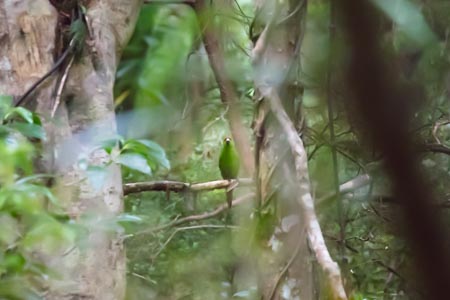

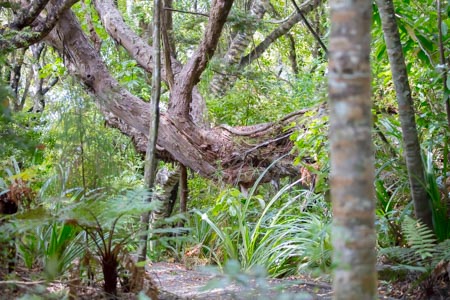
The area receives about 70” of rain, creating extremely dense rainforests similar to Doubtful Sound in Fiordland. Without a pre-built trail, tramping through here would be dangerous and difficult. It is also warmer than mainland New Zealand, usually never dipping below freezing and receives little snow despite its latitude.
One correction from last time, I said “stokes” but meant “stoats” as the most gruesome pest. They are a part of the weasel family.
 Cleared for Departure
You must be logged in to post a comment.