A.k.a. Doubtful Silence
We awoke to the anchor of the ship being hoisted. Hard to sleep through that. It drones on for minutes and rattles your soul.
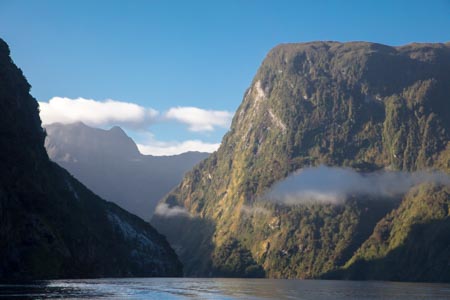
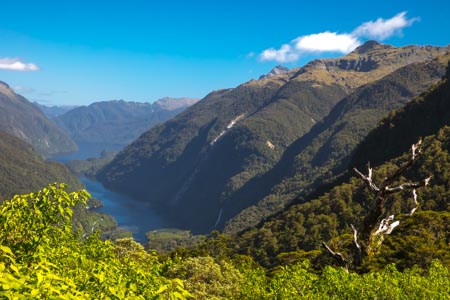
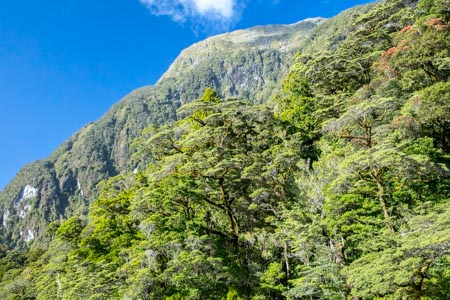
After herding us through breakfast, we were herded to the outside of the ship to experience the sounds of the fiord. The crew shut the ship down completely and we floated, listening to the birds and waterfalls for five glorious minutes. I was amazed how loud and how alive the fiord sounded. The din of humans and our technology crowds so much out.
One notable sound was missing … birds. Birds here never developed the “flight or fight” response, because ground predators didn’t exist. The greatest threat came from the sky, so birds learned to freeze when threatened, a safe bet in the dense rain forrest. This worked for millions of years, until early settlers introduced foreign species.
The Polynesians introduced rats (an easy food source for long sea voyages via canoe). Once here they ate the huge birds instead and let the rats go. The English brought rabbits (so they could hunt and feel more at home), and later brought stokes (to kill the now out of control rabbits who had no natural predators.) Killing rabbits is openly encouraged. “The only speed bump you speed up for,” our guide said. You might think, “Aw, but they’re so sweet looking I could never kill a little bunny-wunny,” and, I guess, they are cute, maybe, but only if by themselves. In mass with no hungry predator above them on the food chain, they lose all cuteness due to their morbidly impressive destructive capabilities. I’ve seen fields of rabbits growing unchecked … not good.
So the stokes preferred the birds that froze more than rabbits. Super easy to kill. Their numbers ballooned. Rats and possums eat eggs, which birds put on the ground since they can’t fly. Their numbers grew too. Soon everything was unbalanced. Thus, many species of native birds are extinct or threatened. Cook reported the sounds of birds “deafening” when sailing off the coast of Doubtful Sound. Now, merely the ghostly silence of falling water.
Some island sanctuaries exist off the coast that are pest-free, though that is a relative term. Rats always threaten these sanctuaries by swimming across from the mainland. Traps here are lethal, fairly high-tech, and abundant. The battle never stops.
Some Kiwis are resigned and cannot be bothered. They consider The Department of Conservation a nuisance, a government organization telling them how to live their lives which they resent. (Doesn’t that sound familiar?)
Others feel it their personal mission to restore the native bird population and help restore the ecosystem, even if that means killing one possum, mice, stoke, or rat at a time for the rest of their lives.
The silence ended when the Captain turned the generator on. Our tour of Doubtful Sound had concluded.
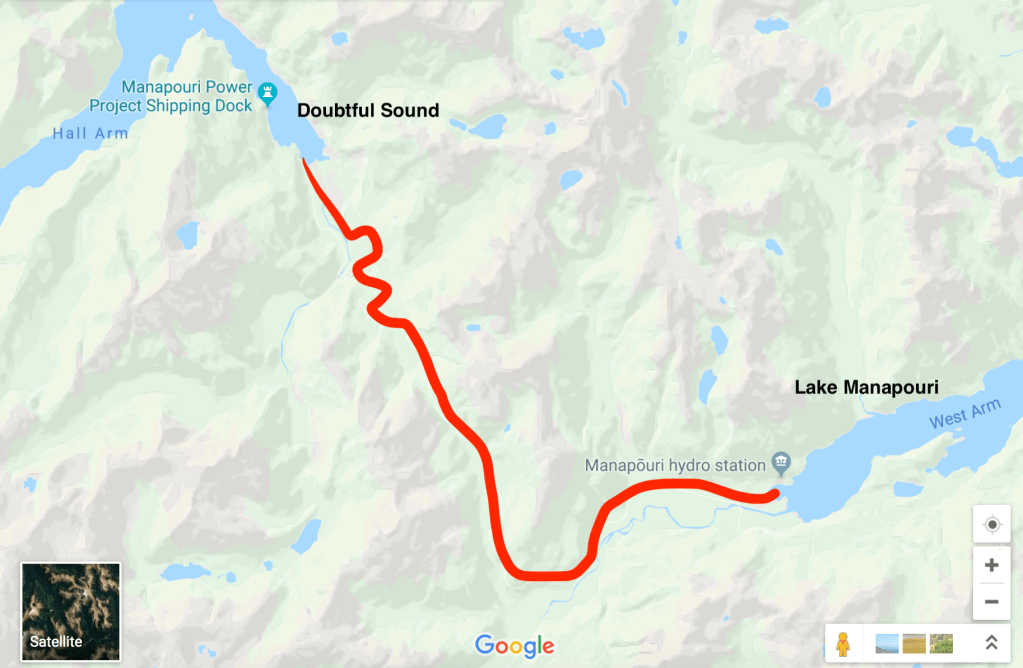
We docked, headed again over the Wilmot Pass and back to civilization. I highlighted the route, sort of. I may have taken some liberties.
We sixty-five strangers, who will never see each other again, shared a profound moment. The boat ride back across Lake Manapouri felt subdued.
RBD and I rejoined our car and headed south towards Stewart Island.


 Cleared for Departure
You must be logged in to post a comment.